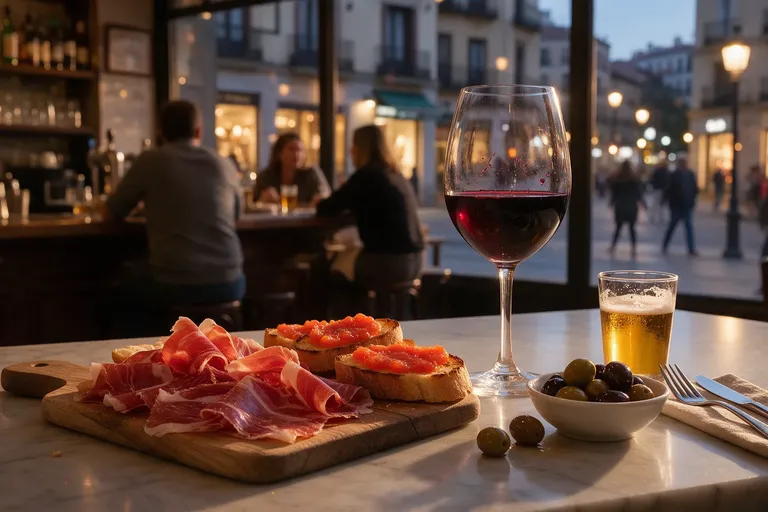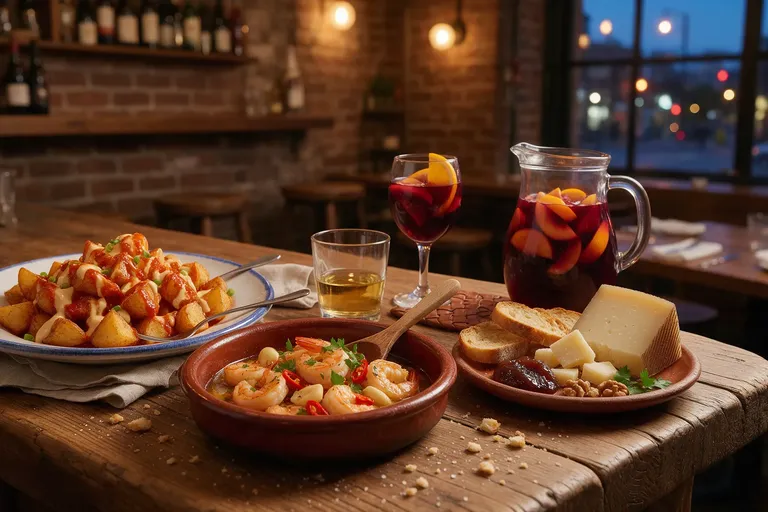
Two listings hint at how long Japan has been doing this. One of our Kyoto restaurants dates its opening to 2008, "just after the Spanish cuisine boom in Japan", and a Yokohama restaurant in the directory has been open since 1970. Tokyo now has sixteen Spanish restaurants on restaurantsfromspain.com, and they are not spread evenly.
Thirteen of those sixteen share a description, a website or a stated affiliation with at least one other restaurant on the list. Which cluster a place sits in tells you more about what you will eat than its neighbourhood does, so start there.
Three clusters account for thirteen of the sixteen listings
- Vidrio — seven listings. Five carry the Vidrio name; two more, El Chateo Ginza and El Chateo del Puente, are listed under the same website and the same description word for word. That description is short and honest: the restaurants are run in Japan by people who have been to Spain many times and want to bring authentic Spanish bars and restaurants to Japanese diners, and they have won awards at competitions held in Spain.
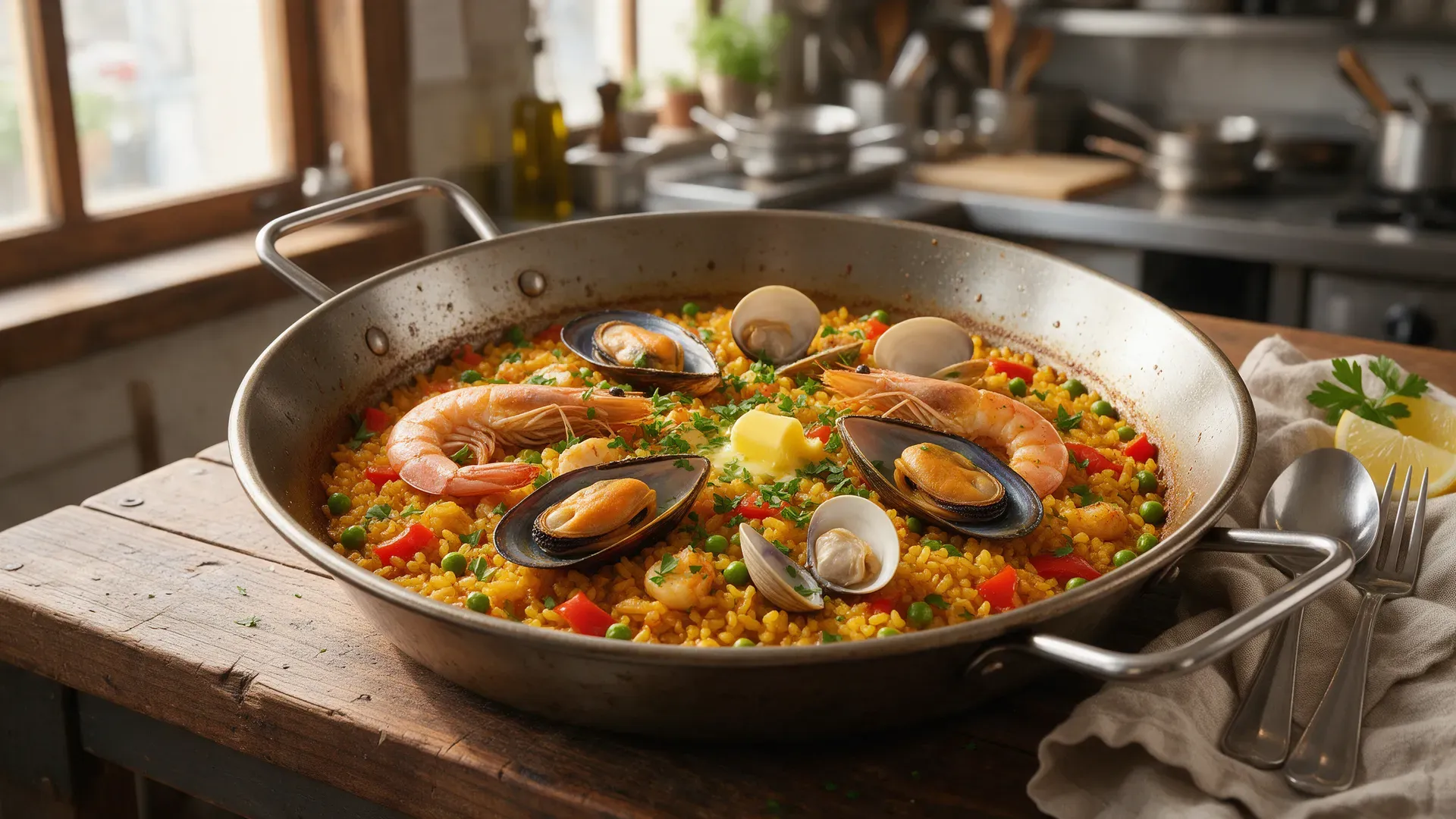
- The arrocerias — four restaurants, and this one is not an inference: each of their records says there are four restaurants of the same group, and each describes a classic Spanish restaurant specialising in paella and rice dishes. If you want rice rather than tapas, start here.
- Bikini — two branches, both describing casual Catalan cooking presented under the supervision of Josep Barahona Vines.
That leaves three with no shared affiliation identified in their records: Masia in Ginza, Bar de Ollaria in Ebisu and Ogasawara-tei in Shinjuku. They are also the three most specific records on the list.
Chuo ward: Ginza and Nihonbashi
Ginza has the densest cluster in the city, which is what you would expect from Tokyo's most expensive few blocks.
- Masia (8F Ginza Belvia Building, 2-4-6 Ginza) is the most clearly argued restaurant of the lot. It builds its menu on mar y montana — sea and mountain — the Catalan habit of putting seafood and meat on the same plate, and chef Mateu Villaret sums up the approach as Catalan roots, Spanish soul and Japanese produce.
- Arroceria La Panza (1-15-8 1F, Ginza) is the flagship of the four-restaurant rice group.
- El Chateo Ginza (T8 Ginza Building 1F, 3-2-12 Ginza) and Vidrio Ginza (Plaza 58 Building B1, 5-8-17 Ginza) are both Vidrio group.
- Vidrio Mitsukoshi sits on the 11th floor of the Ginza Mitsukoshi department store, which is a very Tokyo place for a Spanish restaurant to be.
- Bikini Picar is a short walk north in COREDO Muromachi, Nihonbashi.
Chiyoda: Marunouchi and Kanda
Bar Portillo de Espana is in Marunouchi Terrace, in the office district between Tokyo Station and the Imperial Palace, and belongs to the rice group. El Chateo del Puente is in Kanda Awajicho, a quieter, older part of the same ward.
Shibuya, Meguro and Minato
This is where the city's drinking neighbourhoods are, and where the smaller bars sit.
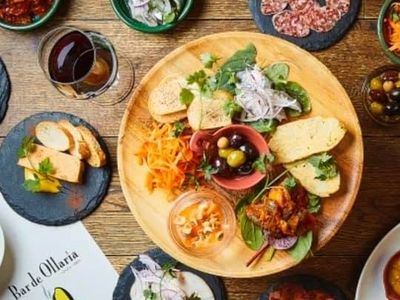
- Bar de Ollaria in Ebisu is a tapas and ollas bar with a large selection of sherry. An olla is a cooking pot, so the name promises stews, and a serious sherry list is still rare anywhere outside Andalusia.
- Restaurante Arroceria Sal y Amor is in Daikanyama, and Bar Portillo de Sal y Amor is one neighbourhood south in Aobadai, Meguro. Both are rice-group restaurants.
- Vidrio Shibuya is in Udagawa-cho, off the crossing.
- BIKINI SIS is in Roppongi Hills, Minato, and is the group's other Tokyo branch.
Shinjuku, Toshima and out west
Ogasawara-tei in Kawadacho, Shinjuku is the one starred restaurant in the Tokyo set — as of the 2019 Michelin Guide Tokyo it had held a star for twelve years in a row, with Gonzalo Alvarez cooking. It is also the only Spanish listing in the whole of Shinjuku, which is a strange gap for a ward that size.
North and west of the centre the density drops off fast: Vidrio Ikebukuro on the 8th floor of the Yodobashi HD Building in Toshima, and Vidrio Kichijoji out in Musashino.
Worth the train: Japan beyond Tokyo
Some of the most interesting Spanish cooking in Japan is not in Tokyo at all.
- DukkAh in Osaka is listed in the Michelin Guide as a Spanish restaurant with a Bib Gourmand. Chef-owner Eiichi Matsumoto focuses on Galicia, Cantabria, the Basque Country, Navarra and the northern Mediterranean, and named the place after a spice mixture as a metaphor for how many cultures went into Spanish cooking.
- Restaurante Estella-Karuizawa is an hour from Tokyo by shinkansen. It opened in 2012; owner-chef Sato trained under Javier Sierra, Carlos Valenti, Miguel Jimenez and Pedro Larumbe.
- Rias by Kokotxa in Ise-Shima, Mie, cooks New Basque food from local seafood, with chefs travelling between Japan and Spain. Izurun, on the top floor of Hotel VISON in the same prefecture, is another homage to San Sebastian.
- El Bogavante 346 and Bodega El Lagar are both in Nakagyo-ku, Kyoto. Casa de Fujimori in Yokohama has been open since 1970 and takes its logo from Sancho Panza.
All of them are on the Japan page, along with listings in Nagoya and Niigata.