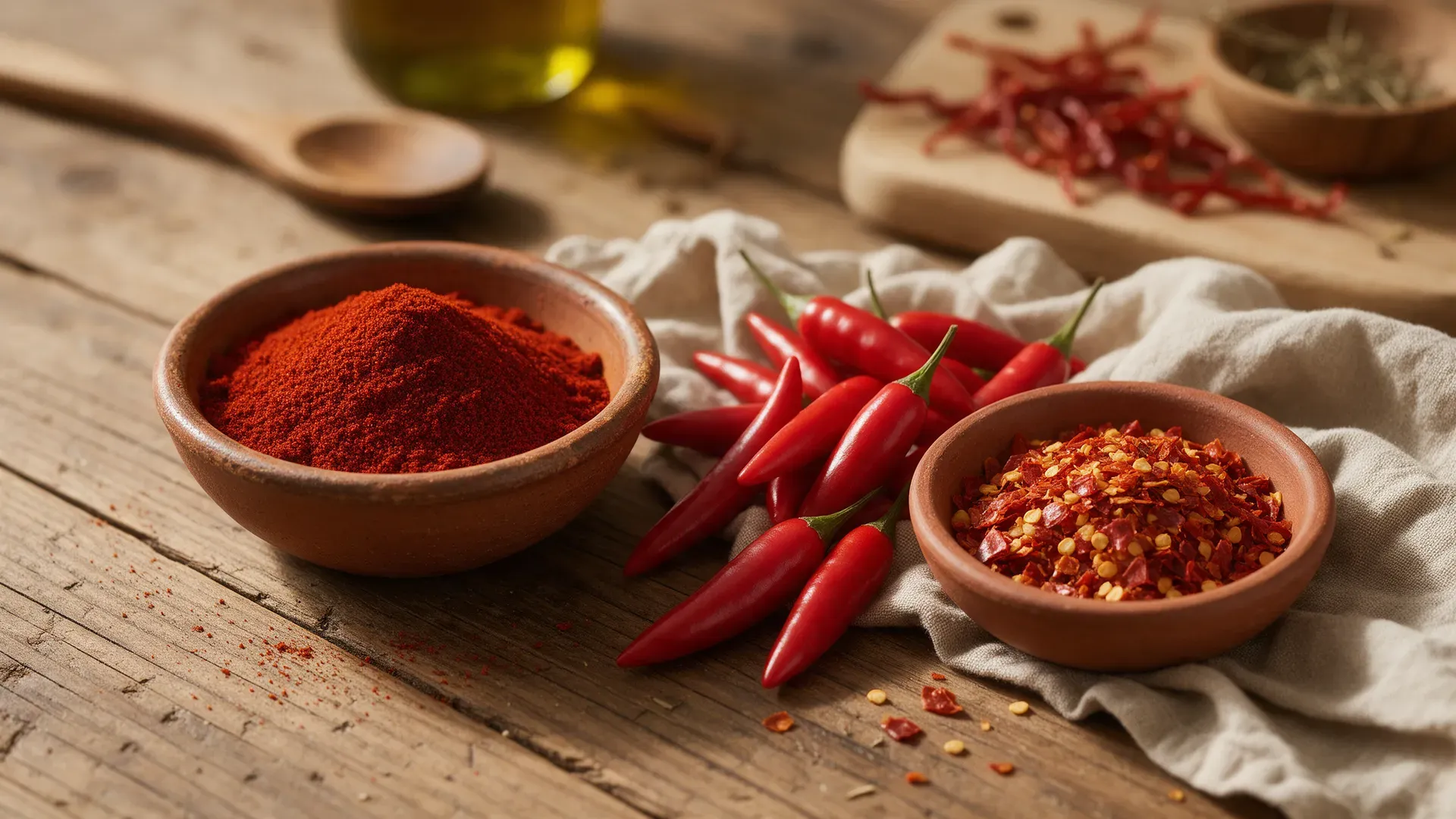
Thai food and Spanish food both depend on the chilli, and neither country grew one before the 1500s. Chillies are native to the Americas. They reached Spain after Columbus's voyages, and Portuguese and Spanish trade carried them on to Asia during the sixteenth century. Before that, Thai cooks got their heat from peppercorns and other spices.
What each country did with the plant afterwards is very different. If you grew up with Thai food and sit down in a Spanish restaurant, knowing the difference helps you order.
Spain: colour, sweetness and smoke
Most Spanish cooking uses peppers for flavour and colour rather than heat. The main form is pimentón, dried and ground red pepper, sold in three styles: dulce (sweet), agridulce (bittersweet) and picante (hot). Even the hot one is gentle by Thai standards.
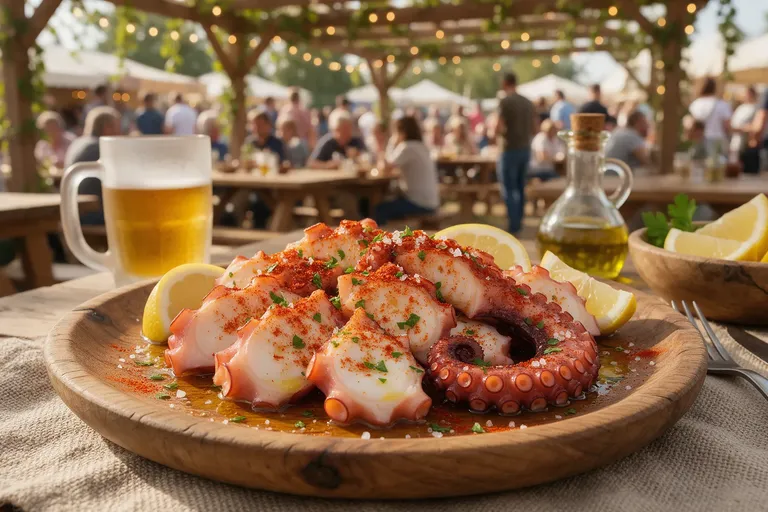
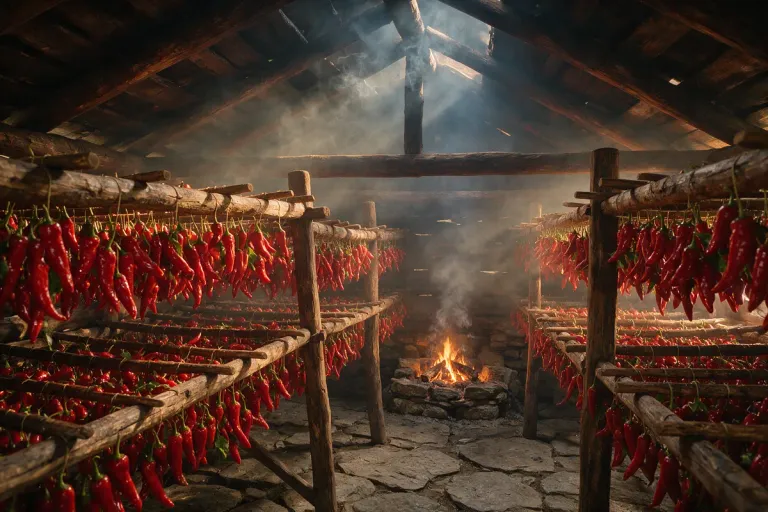
Two pimentóns have protected designations of origin. Pimentón de la Vera, from Extremadura, is dried over oak fires, which gives it a strong smoky taste. Pimentón de Murcia is not smoked. Pimentón is what makes chorizo red, and it is dusted over pulpo a la gallega just before it is served.
Fresh and dried peppers show up too:
- Pimientos de Padrón from Galicia are fried whole and salted. The Spanish saying is that some are hot and some are not, and you only find out by eating them.
- Guindillas, thin pickled green peppers from the Basque Country, are part of the gilda, a skewer with an anchovy and an olive.
- Ñoras, small round dried red peppers, go into Valencian rice dishes and Catalan romesco sauce. They add colour and a sweet, earthy taste, not heat.
Thailand: heat first
Thai cooking treats the chilli as a main source of heat. Prik kee noo, the small bird's eye chilli, goes into som tam, curry pastes and dipping sauces. Prik haeng (dried chillies) are toasted and pounded. Prik pon, ground roasted chilli, sits on the table at noodle shops so people can add as much as they want. A whole family of nam prik relishes is built on chillies pounded with garlic, shallots, shrimp paste or fish sauce.
Both countries also have smoky, roasted chilli flavours. Thai cooks toast dried chillies for relishes, and La Vera producers smoke their peppers over oak. In both cases drying and heat give a deeper taste than the fresh pepper. The difference is how hot the result is.
Ordering Spanish food with a Thai palate
Thai diners sometimes find Spanish food mild. A few pointers:
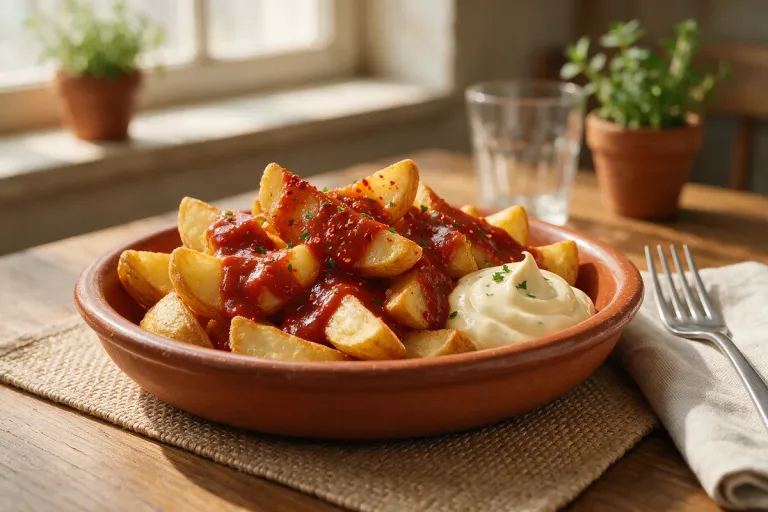
- Patatas bravas is where Spanish bars show the most heat. The sauce varies a lot from place to place. Ask whether it is picante.
- Gambas al ajillo (prawns in garlic and olive oil) usually include dried chilli. Thai diners tend to like the garlic-and-chilli oil.
- Padrón peppers are the closest thing to a chilli gamble on the menu.
- Do not expect Spanish restaurants to add heat on request the way a Thai kitchen would. Pimentón picante or guindillas on the side are the realistic options.
Ingredients that overlap
Garlic is essential in both kitchens. Spain has sopa de ajo and garlic prawns. Thai cooks use fried garlic and pound raw garlic into pastes. Both cuisines also salt and dry seafood: Spanish mojama is salt-cured tuna, and Thai kitchens rely on dried shrimp and fish. The flavours are not the same, but the method will feel familiar.
If you are in Bangkok and want to try this yourself, our Bangkok listings and our guide to Spanish food in Bangkok are good places to start.
Where to taste the Spanish side
- Escocesa in Stoke Newington, London, lists piquant patatas bravas as a menu staple.
- Tomiño Taberna Gallega in SoHo serves pimientos de Padrón and pulpo a feira.
- Barcelona Wine Bar New Haven cooks with imported pimentón and piquillo peppers.