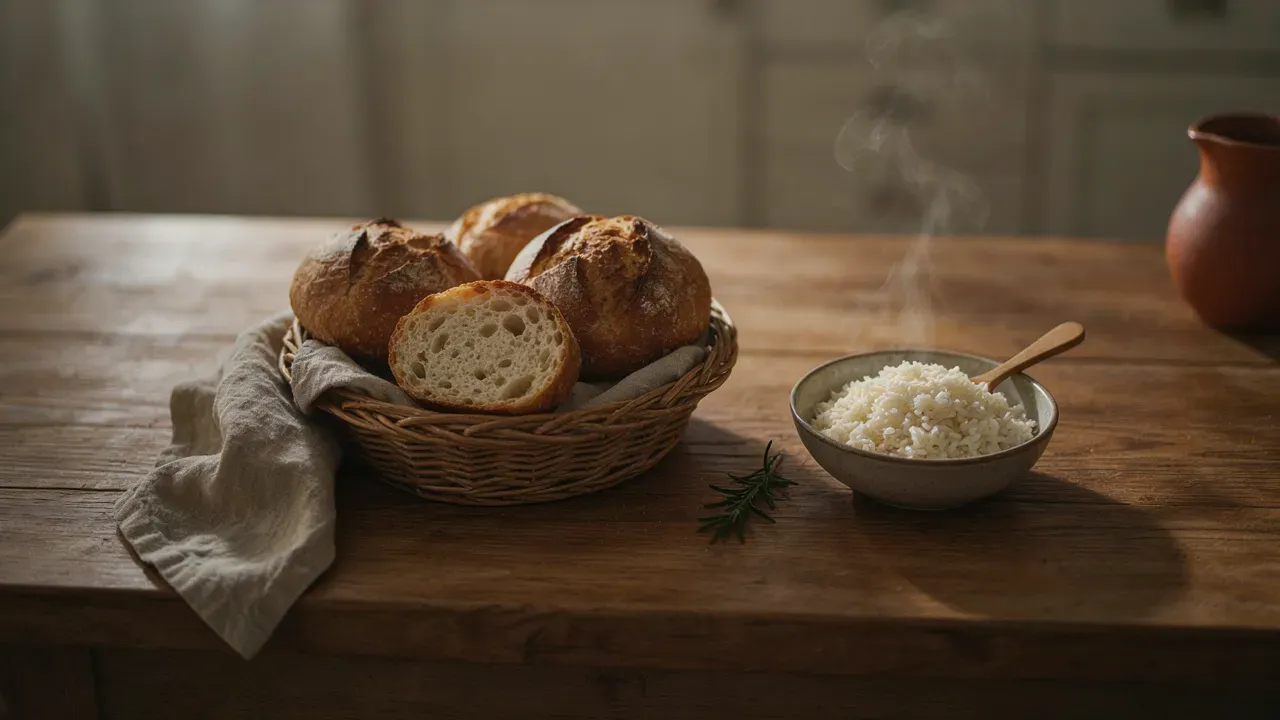
Sit down in a Spanish restaurant and bread usually arrives without anyone asking. At a Thai meal, rice is usually at the centre of the table. Both are staples, but they do very different jobs, and knowing the difference helps when you order.
Bread in Spain: a tool as much as a side
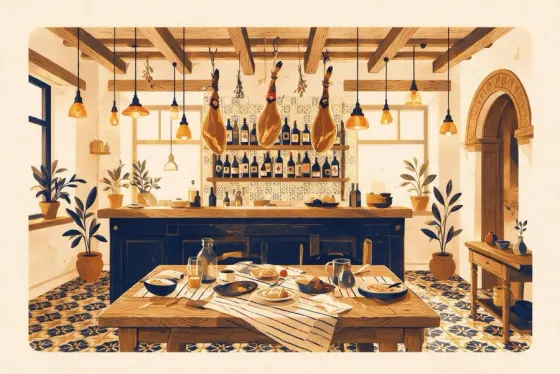
In Spain bread is part of almost every meal, and many restaurants bring a basket as a matter of course. Some add a small charge for it on the bill, so it is worth knowing that it is not always free. Its main job is practical: you tear off a piece and use it to mop up whatever is left on the plate. Spanish has a verb for it, mojar, to dip. The garlic oil left after gambas al ajillo is the classic case.
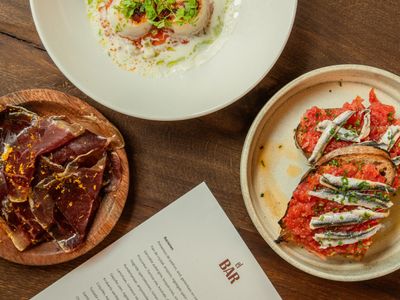
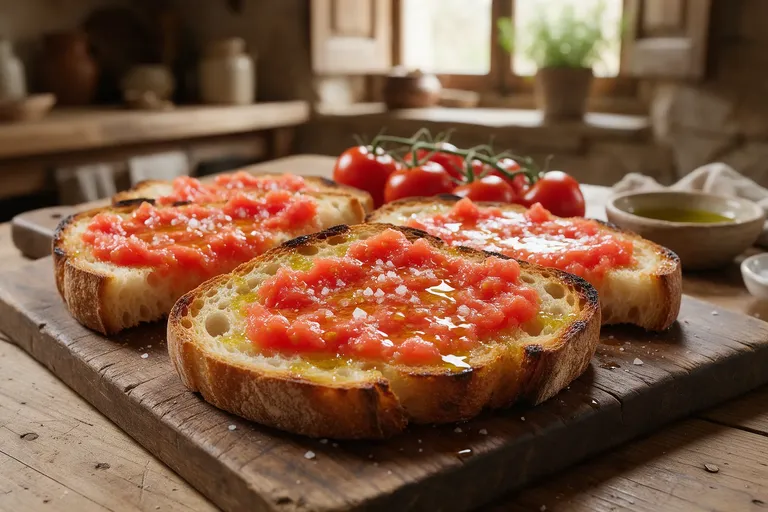
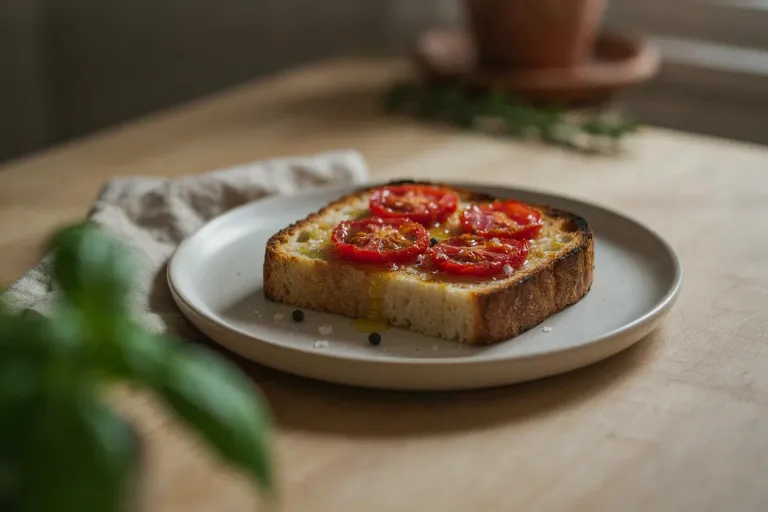
Bread is also the base of many tapas. Basque pintxos are often built on a slice of bread, and in Catalonia pan con tomate (pa amb tomàquet) is bread, often toasted, rubbed with ripe tomato and dressed with olive oil and salt.
Bread as an ingredient
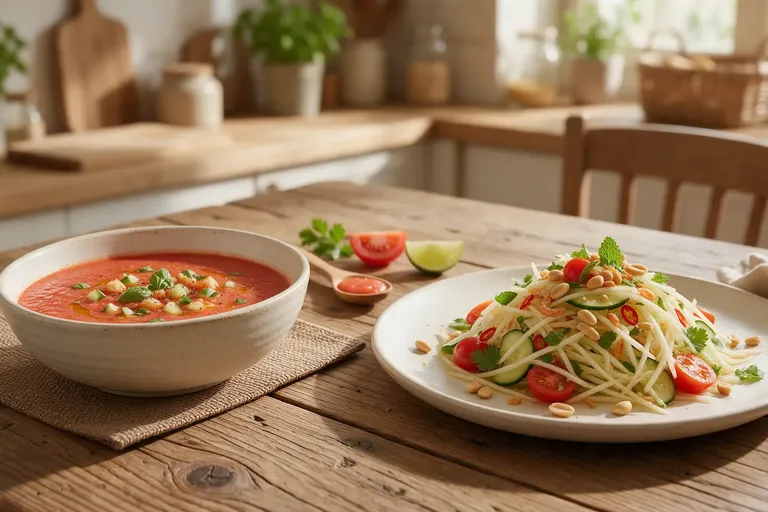
Spanish cooks have long used day-old bread rather than throwing it away. Gazpacho is often made with bread, and salmorejo uses much more of it, which is why it is thick enough to hold a topping of chopped egg and ham. Ajoblanco blends bread with almonds, garlic and oil. Migas are pieces of day-old bread fried with garlic and often pork, a dish with roots in rural cooking. Sopa de ajo, garlic soup, is made with stale bread, pimentón and often an egg.
Rice in Thailand: the meal itself
Thai meals usually work the other way round. Rice is the centre, and many of the other dishes are kap khao, literally things to go with rice. The everyday phrase for eating is "kin khao," eat rice, and "kin khao rue yang?" (have you eaten yet?) is a common greeting.
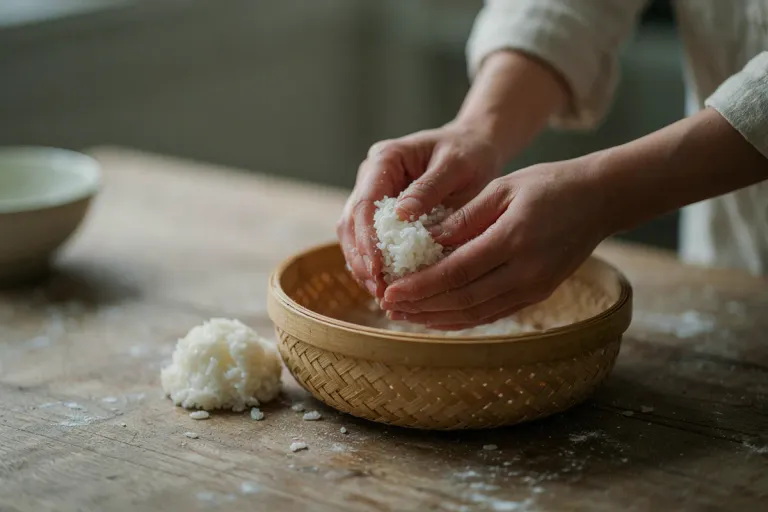
Which rice depends on the region. Steamed jasmine rice, khao hom mali, is the default in Bangkok and much of the country, while sticky rice, khao niao, is the staple in the north and northeast. Sticky rice is usually eaten by hand, pressed into a small ball and used to pick up food. In that sense it does a job close to Spanish bread. We compare the grains themselves in bomba and hom mali.
Where rice and bread swap places
Spain cooks plenty of rice too, often as a dish in its own right: paella and many other rice dishes are served as a main course. Bread is more often the side. Thailand has bread, khanom pang, but it is mostly a snack. Toasted or steamed bread with sangkhaya, a pandan or coconut custard, is a common example.
So at a Spanish table, rice is often the dish and bread the accompaniment. At a Thai table, rice usually goes with most of the other dishes.
Ordering tips
- Save some bread for saucy dishes like gambas al ajillo or anything served in a cazuela.
- If you order paella in a Spanish restaurant, it is usually served as a main course rather than a side for other plates.
- Check the bill: a bread charge is normal in some Spanish restaurants.
Where to try Spanish bread dishes
- Escocesa, London: the menu staples listed include pan con tomate, patatas bravas and tortilla.
- Poster Bar by José, London: José Pizarro's café at the Royal Academy lists pan con tomate among its small plates.
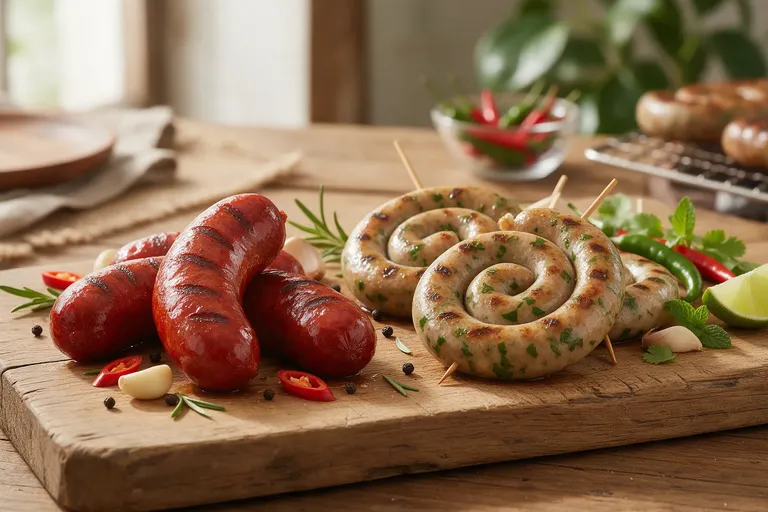
- El Bar, The Hague: the menu features croquetas, pan con tomate and chorizo in cider.
- Ajoblanco, Mexico City: named after the almond gazpacho of Málaga and Extremadura, and its listed specialties include homemade bread.