When a wine list outside Spain carries a Galician wine, it is often an Albariño from Rías Baixas. We covered that in our Albariño guide. But Galicia has five denominations of origin (DOs), and the other four make wines that suit Galician food just as well. If a Spanish restaurant has a regional list, these are the names worth knowing.
Ribeiro: the old tavern white
Ribeiro is in Ourense province, along the valleys of the Miño and its tributaries the Avia and Arnoia. It is one of Spain's oldest wine areas and was shipping wine abroad long before Rías Baixas became an export name.
Most Ribeiro is white, and the main grape is Treixadura, often blended with Albariño, Loureira, Godello, Torrontés or Lado. The DO also covers a small amount of red and a sweet wine made from dried grapes, Tostado.
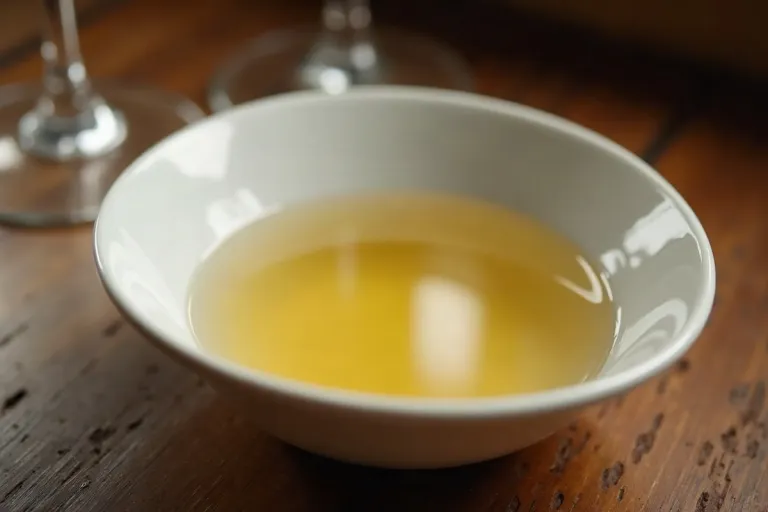
In Galicia, a young Ribeiro is traditionally poured into a cunca, a shallow white ceramic bowl, rather than a glass. You will see cuncas in Galician taverns abroad too, sometimes only as decoration.
Ribeira Sacra: Mencía on the canyon walls
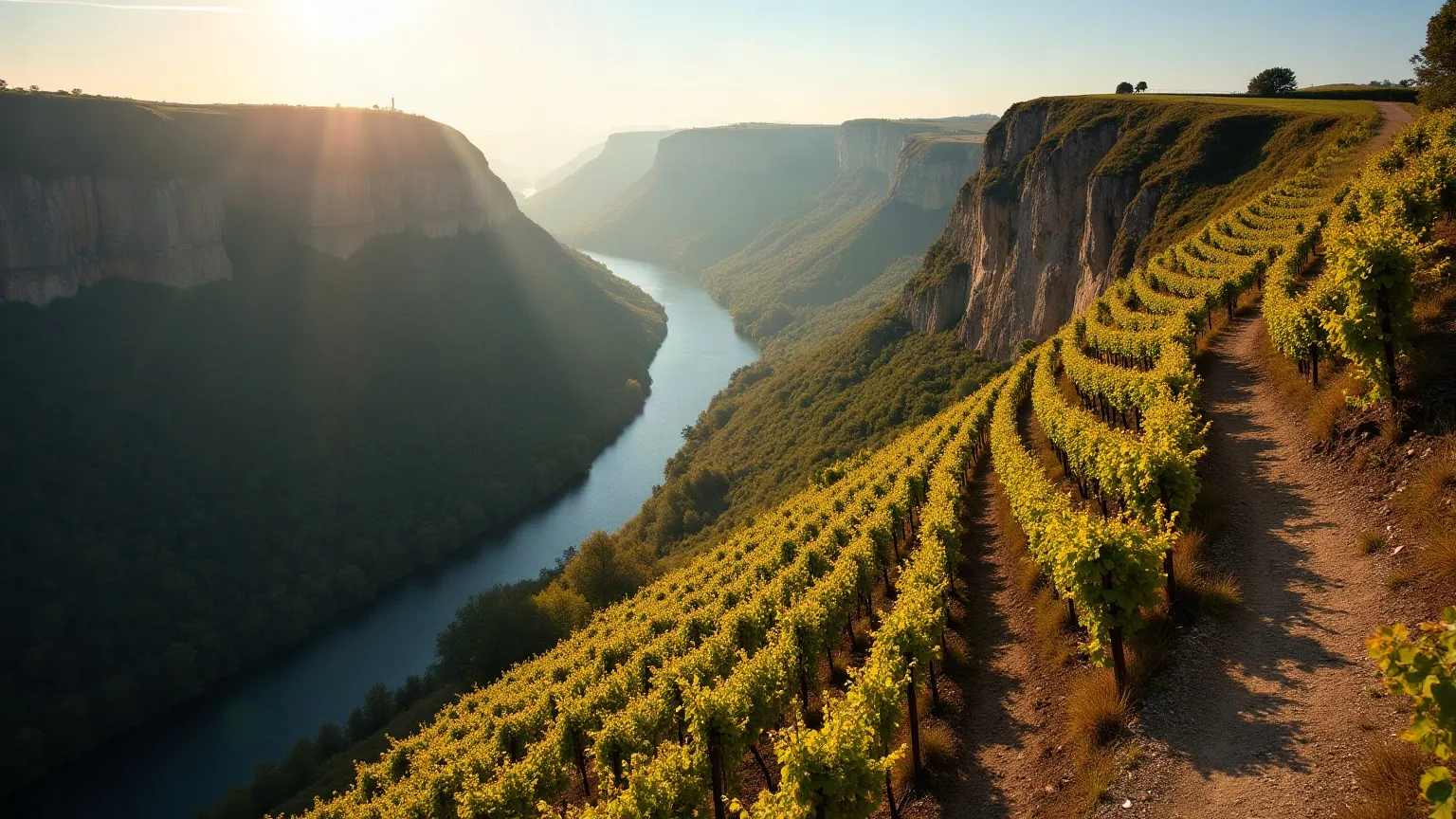
Ribeira Sacra straddles Lugo and Ourense provinces, where the Miño and Sil rivers cut deep canyons. Vines grow on stone terraces built into slopes so steep that much of the work is done by hand. Locals call it heroic viticulture.
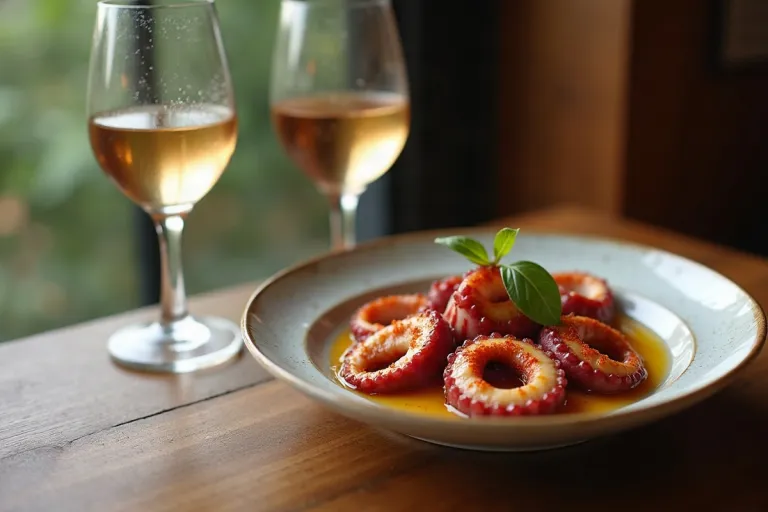
The main grape is Mencía, a red. Ribeira Sacra Mencía is usually lighter in body than a Rioja or Ribera del Duero red, which makes it a good match for Galician food: octopus, empanada, pork and grilled fish. Mencía is also the main red grape of Bierzo, just over the border in León. Bierzo belongs to Castilla y León, not Galicia, but the two areas are often listed side by side.
Valdeorras and Monterrei: Godello and the border
Valdeorras is in eastern Ourense, on the Sil. Its signature white is Godello. By the 1970s the grape was rarely planted, and a group of local growers worked to recover it. Today Godello is planted in several Spanish regions and appears on lists well beyond Galicia. Valdeorras also makes Mencía reds.
Monterrei is in the south of Ourense, by the Portuguese border. Its whites use Godello and Treixadura, and its reds Mencía among others.
Reading a Galician wine list
- Grape names and place names are different things. The DO on the label tells you where the wine is from; the grape alone does not.
- If the only Galician wine is an Albariño, ask whether there is a Ribeiro or a Godello as well.
- Godello is closely linked with Valdeorras but is also grown in Monterrei, Bierzo and other regions.
- Mencía is the red grape of Ribeira Sacra and Bierzo and is grown elsewhere too, so check the DO.
- After dinner, Galician restaurants may offer orujo (aguardiente), the spirit distilled from grape pomace, or licor café. Queimada is orujo set alight with sugar, lemon peel and coffee beans, traditionally while a spell, the conxuro, is recited.
Galician kitchens where these wines belong
None of the records below lists its wine list by grape, so ask what they pour. These are venues in our directory whose own records mention Galician cooking.
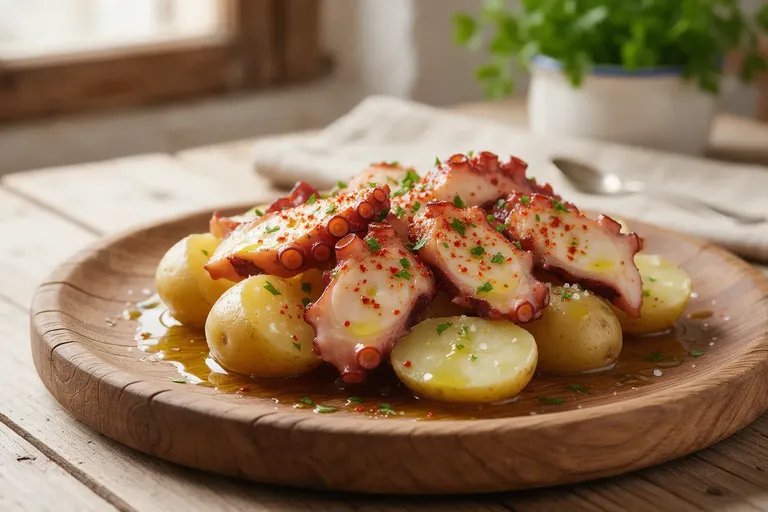
- Tomiño Taberna Gallega, New York: its record lists pulpo a feira, almejas a la marinera, tortilla de Betanzos and pimientos de Padrón, and names Galician chef Lucía Freitas as chief counselor.
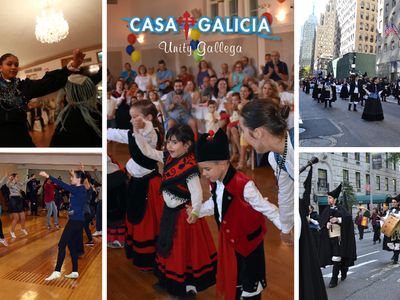
- Casa Galicia, Queens, New York: a Galician cultural centre founded in 1940 whose restaurant serves traditional Galician and Spanish cooking.
- Restaurante Lar Gallego, Mexico City: traditional Spanish cooking with a special focus on Galician dishes, per its record.
- Morriña - Taberna Galega, Poznań: a Galician tavern run by Iago, from Ferrol, with Camino de Santiago signs and scallop shells on the walls.
- Bar El Sella Doctores, Mexico City: Spanish family recipes with Mexican influences; its record lists Galician-style octopus and scallops alongside a selection of Spanish wines.