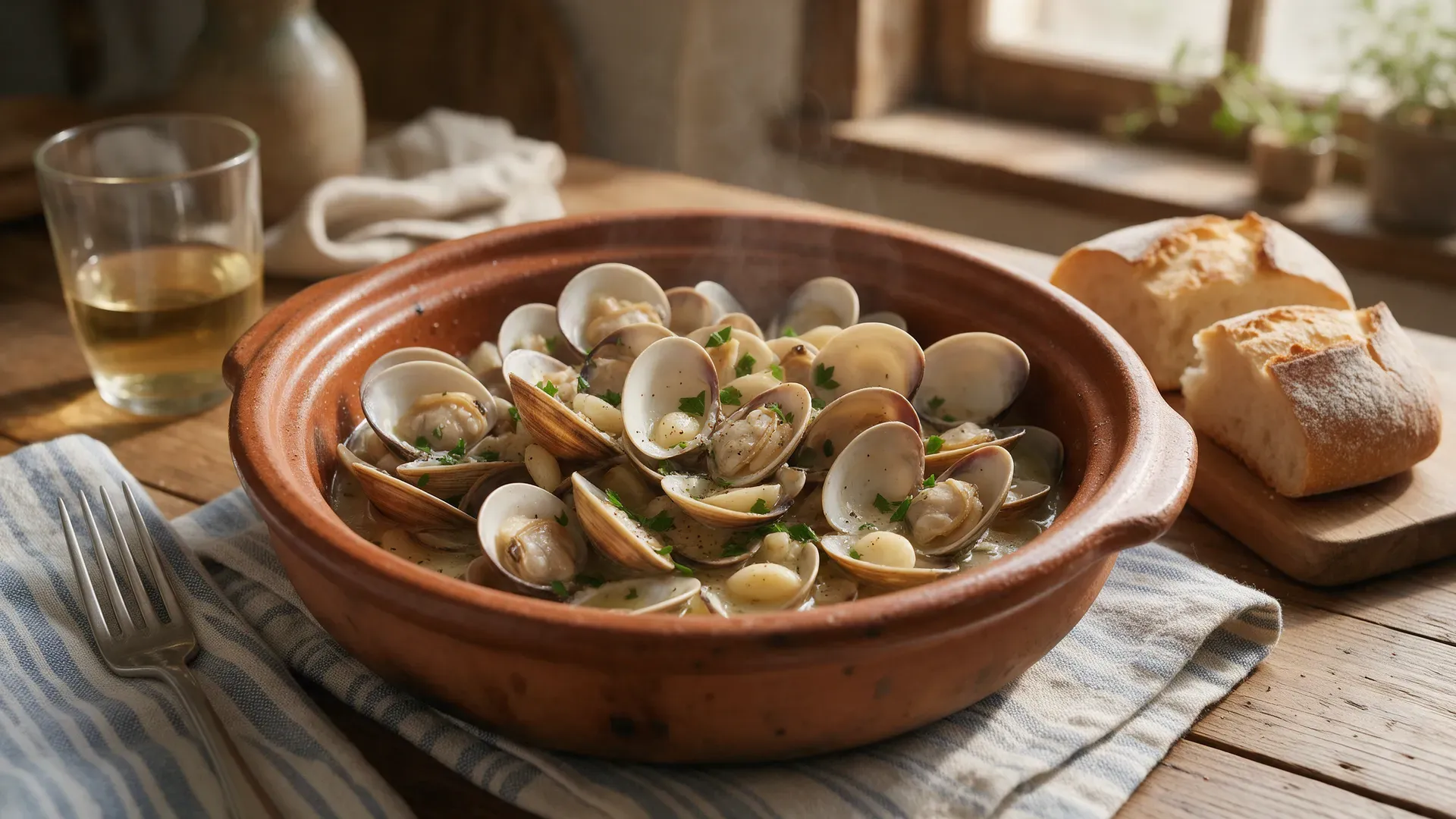
Clams are on menus in Spain and in Thailand, and the two kitchens treat them in a similar way. The clams go into a hot pan with a sauce, cook just until the shells open, and come to the table with something to soak up the liquid. The flavours are where they part. This post sets the two dishes side by side and lists three restaurants in our directory whose listings mention clams.
The Spanish dish: almejas a la marinera
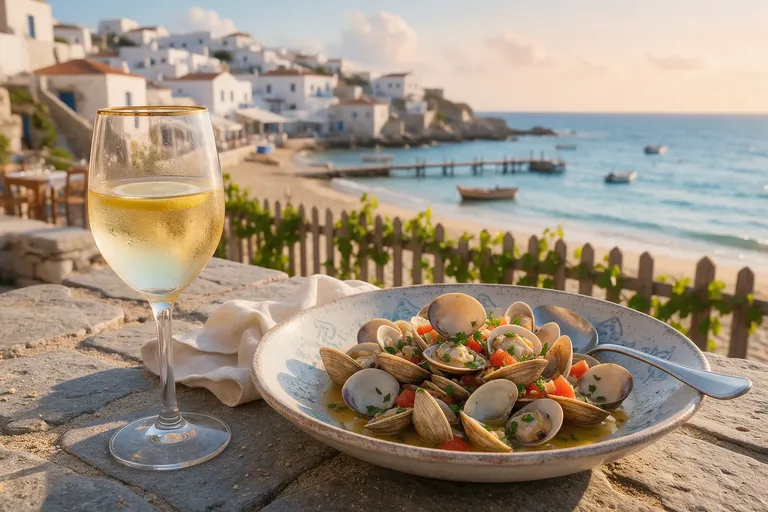
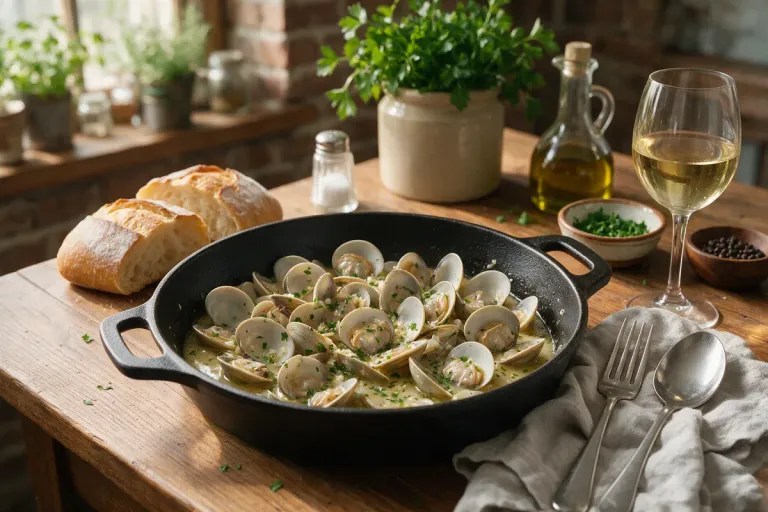
Our almejas a la marinera dish page calls it sailor-style clams, a classic of Spain's northern and Atlantic coasts, particularly Galicia, where clams are dug from tidal flats. The clams are opened in a sauce of garlic, onion, white wine and paprika, thickened with a little flour or bread. The dish page describes it as a festive tapa that often appears at Christmas and celebrations.
The sauce is the point. It is meant to be mopped up with bread, so order some if it doesn't arrive with the dish.
The Thai dish: hoi lai phat nam phrik phao
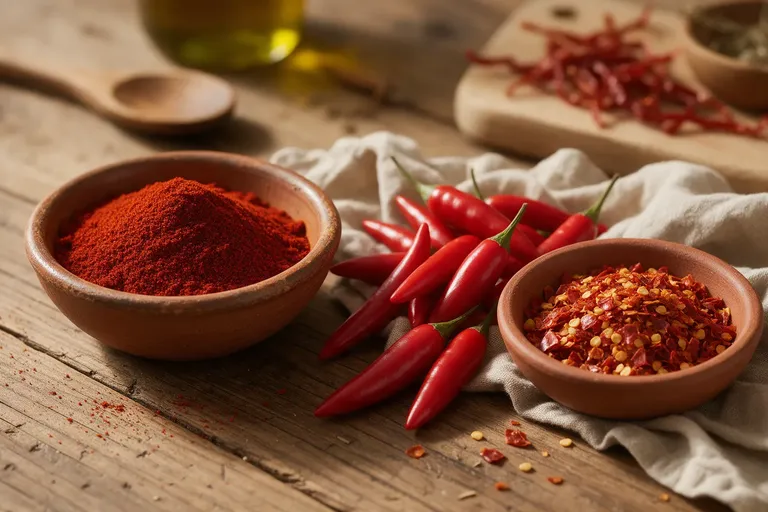
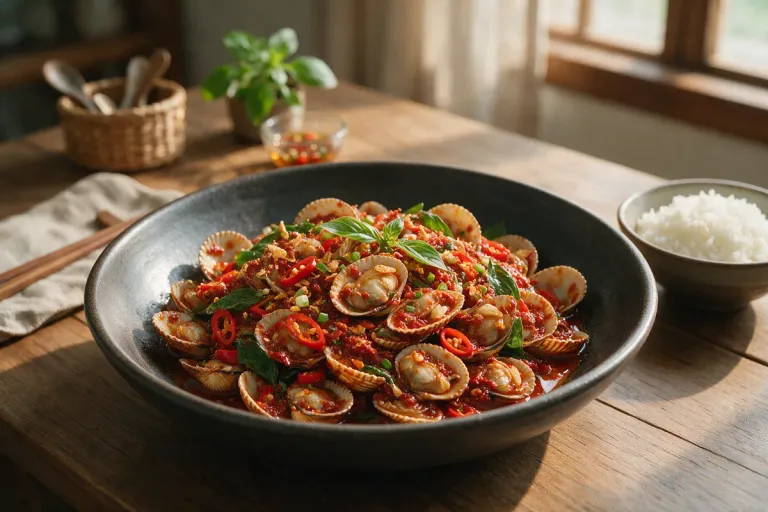
In Thai, hoi is the general word for shellfish and hoi lai are the small clams sold at seafood stalls. A classic way to cook them is hoi lai phat nam phrik phao: the clams are stir-fried in a very hot wok with garlic, fresh chillies and nam phrik phao, the roasted chilli paste, then finished with a handful of Thai basil. The sauce comes out sweet, salty and a little smoky from the paste, and it is eaten with rice.
Side by side
- Cooking method. Spain: the clams open in a pan of sauce. Thailand: they open in a wok over high heat.
- What gives the sauce body. Spain: a little flour or bread, according to our dish page. Thailand: the chilli paste itself.
- Heat. Spain: paprika, which comes sweet or hot. Thailand: chilli paste plus fresh chillies.
- Garlic. Both use it. Our earlier post on garlic in Spanish and Thai cooking covers that overlap.
- What you eat it with. Spain: bread, as a tapa or ración. Thailand: rice, as one of several shared dishes.
With paprika on one side and chilli paste plus fresh chillies on the other, the Thai version is usually the hotter of the two.
Reading a Spanish menu for clams
- Almejas a la marinera: the sauce dish described above.
- Clams cooked in a named wine: the wine is the cooking liquid. Albariño, a Galician white, is one you may see; our Albariño guide explains the grape.
- A la plancha: cooked on a flat griddle, so there is little or no sauce.
Where to order clams
These listings in our directory mention clams:
- Tomiño Taberna Gallega, New York: its listing names almejas a la marinera alongside pulpo a feira and says the kitchen centres on Galician cuisine.
- Vega, Mexico City: part of the Castellano Group, its listing says the menu features clams in albariño, arroz del señorito and Asturian fabada.
- MoVida Next Door, Melbourne: the listing describes an Andalusian-style sherry bar where you can drop in for a bowl of clams, and mentions shellfish a la plancha.
Check each listing for current hours before you go. For more on the seafood the two countries share, see our posts on prawns and squid.