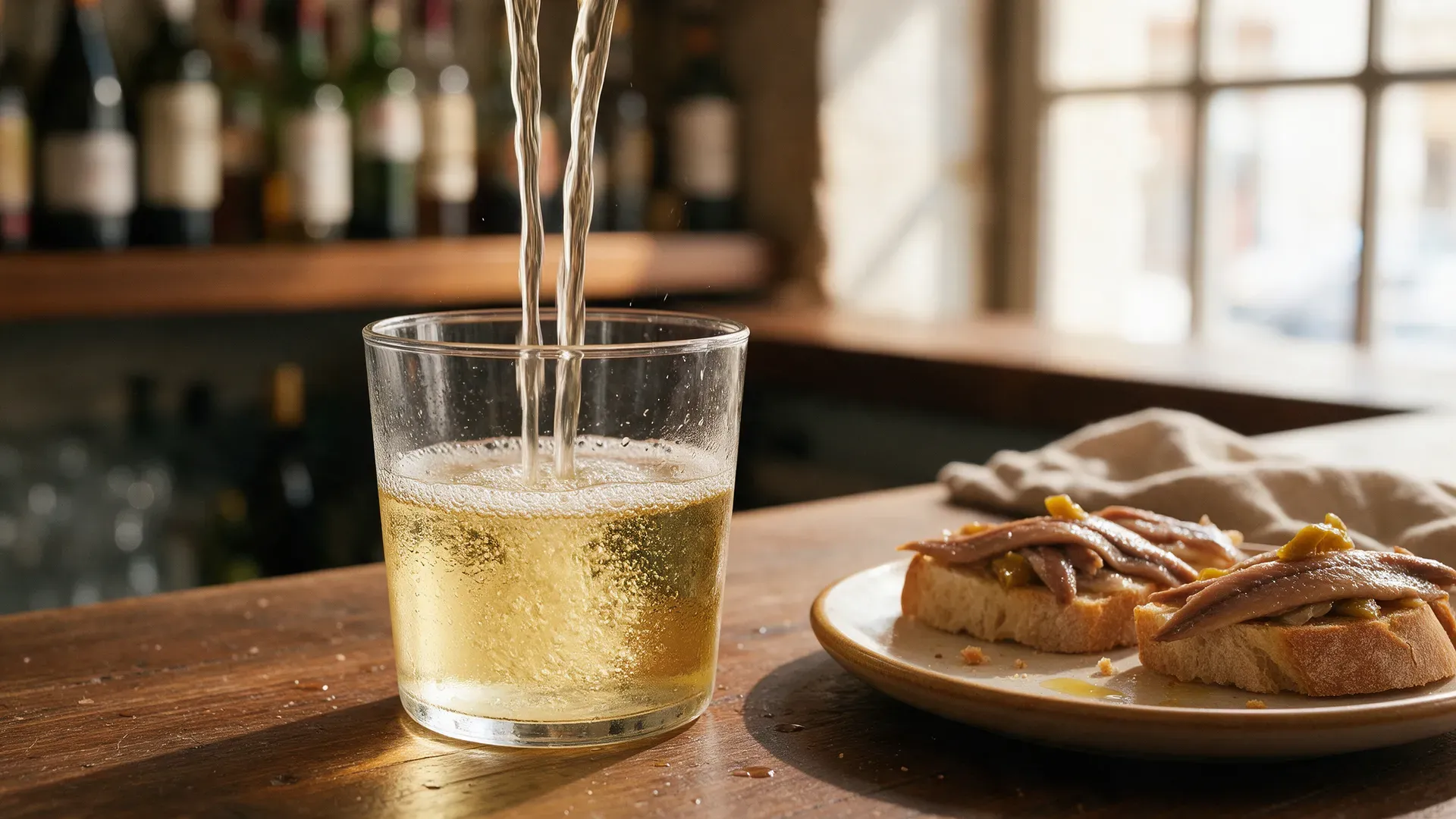
Order a glass of the classic white txakoli in a traditional Basque bar and the bartender may lift the bottle well above head height and pour it in a long stream into a flat-bottomed glass. It looks like showing off. It has a purpose, which we'll get to. First, the wine itself.
Txakoli (chacolí in Spanish; txakolina is the Basque form, which also appears in the names of the three DOs) is a dry wine from the Basque Country in northern Spain. Most of it is white. It is usually light, high in acidity and slightly sparkling from carbon dioxide kept in the wine, and the classic style is drunk young rather than aged.
The three Basque designations of origin
Txakoli is made in all three Basque provinces, and each has its own denominación de origen (DO):
- Getariako Txakolina in Gipuzkoa, around the coastal town of Getaria. It was the first of the three to be recognised, in 1989.
- Bizkaiko Txakolina in Bizkaia (Biscay), recognised in 1994.
- Arabako Txakolina in Álava, the inland province, recognised in 2001 and the smallest of the three.
Most of the vineyards sit in a cool, wet Atlantic climate, which is a big part of why the wines are light and sharp. On a label, the DO name tells you the province the wine comes from.
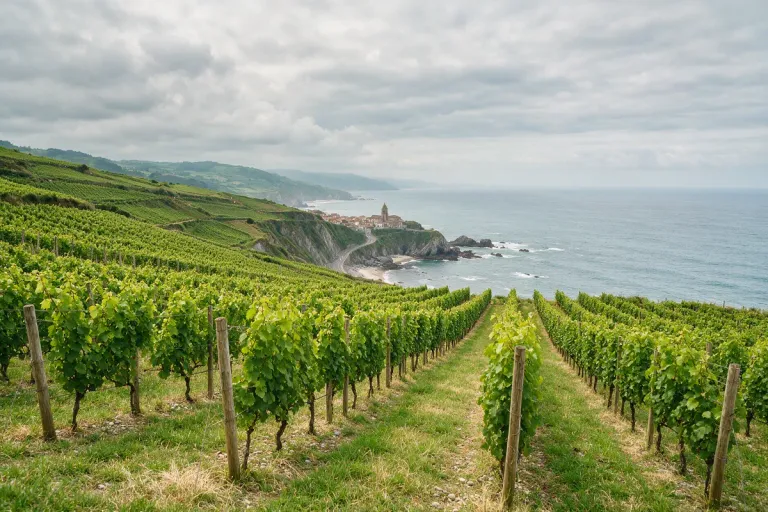
The grapes: Hondarrabi Zuri and Hondarrabi Beltza
The main grape for white txakoli is Hondarrabi Zuri (zuri means white in Basque). The main red grape is Hondarrabi Beltza (beltza means black). Red grapes go into the less common rosé and red txakolis, and some rosés blend the two.
Because the wine is bottled young and unoaked in its classic style, what you taste is mostly fresh fruit and acidity. Some producers now make fuller or aged versions, so the label or the bartender is your guide if you want the classic light style.
Why it's poured from a height
The high pour is called escanciar, the same word used for pouring Asturian cider. Pouring in a thin stream from a height hits the wine against the glass and wakes up its light fizz, and it's served in small amounts so each glass is drunk while it's still lively. If you'd like to see the cider version, our Spanish cider guide covers the Asturian ritual.
The high pour goes with the classic light, spritzy white. Not every restaurant pours this way, and fuller or aged styles don't need it. At home, a normal pour into a chilled glass works. Serve it cold.
What to eat with txakoli
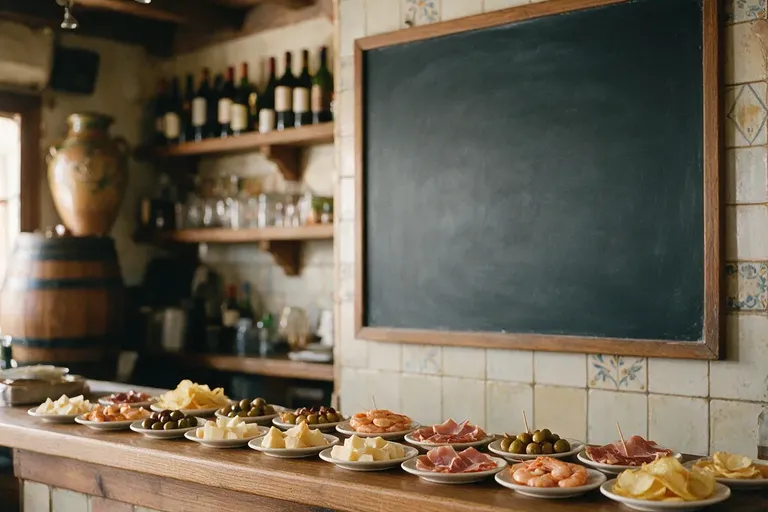
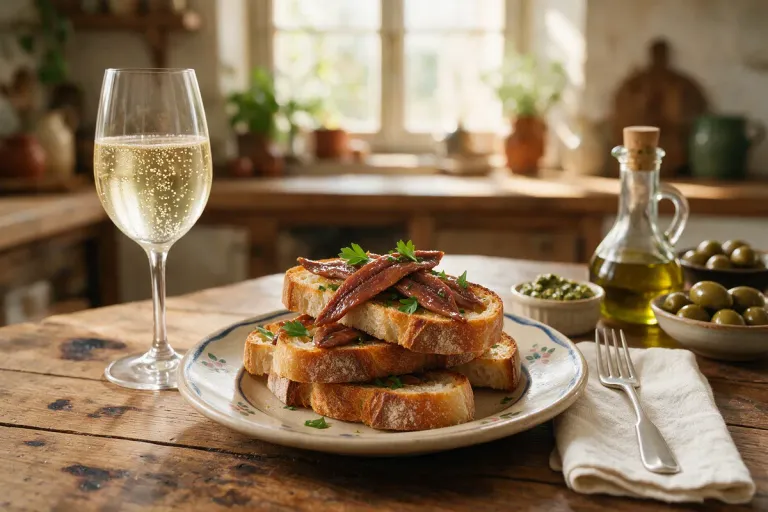
Txakoli is the everyday glass in Basque bars, so it goes with the food served there: pintxos, anchovies, and seafood. Its acidity cuts through salty and fried food. A gilda (olive, anchovy and pickled guindilla pepper on a stick) is the classic match. It also works with grilled fish and with boquerones in vinegar.
Our pintxos vs tapas explainer covers the bar food side of a Basque evening if you want to plan the plates too.
Where to try txakoli outside Spain
These restaurants in our directory mention txakoli in their own listings:
- Txikito, New York: a Basque restaurant open since 2008 whose listing mentions txakoli poured from a height, alongside salt cod croquettes and octopus carpaccio.
- Pintxito, London: a bar with an exclusively Basque drinks list, including Rioja and txakoli, served in 75, 125 and 175ml pours so you can try a few.
- Baserri, Leamington Spa: an all-Spanish wine list that, per its listing, runs from txakolis to volcanic wines from the Canary Islands.
- Restaurante Guria - Santa Fé, Mexico City: its wine list covers several Spanish DOs, with txacolí named among them.