Most people think of wine when they think of Spanish drinks, then sherry, then maybe vermouth. Cider rarely makes the list. In Spain's green north, though, it is the everyday drink, with its own glassware, its own pouring ritual and its own kind of restaurant.
Spanish sidra is quite unlike the sweet, fizzy cider sold in cans in much of the world. The traditional style is dry, sour and still, made from local apples and left unfiltered, so it is often slightly cloudy. It is closer in spirit to a farmhouse wine than to a soft drink.
Asturias and the high pour
Asturias produces most of Spain's cider, and it is where the drink is most part of daily life. The traditional product is sidra natural, still cider with a sharp, tart edge. Asturian cider made from local apple varieties can carry the protected designation Sidra de Asturias.
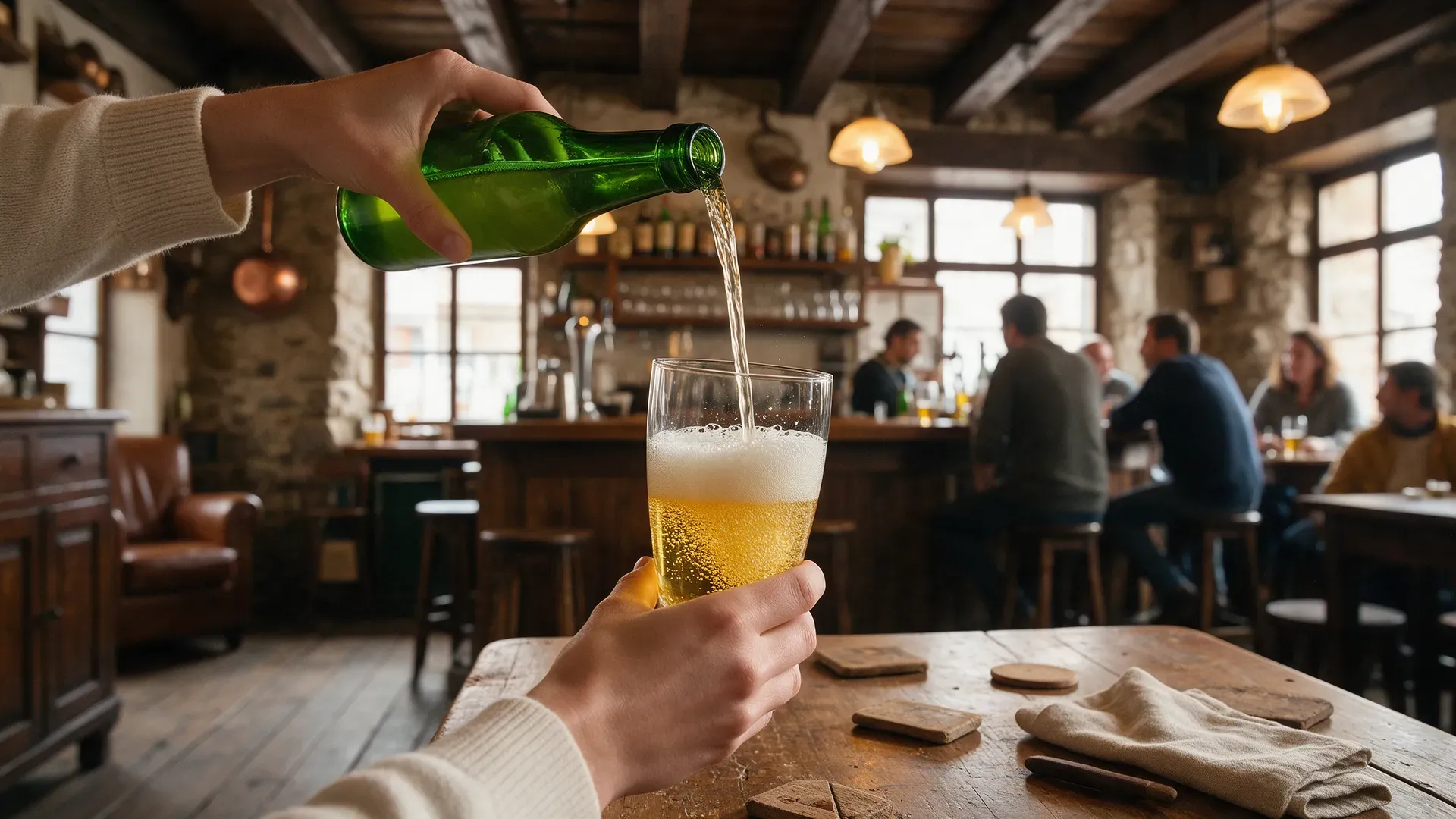
The famous part is the pour. To escanciar is to hold the bottle high above your head and the glass low near your hip, letting a thin stream of cider hit the inside edge of the glass. The drop aerates the still cider and briefly livens it up, releasing aroma and a little sparkle. You pour only a small amount, a culín, a finger or two, and drink it straight away while it is still lively. Leaving a small splash in the glass is normal; it is traditionally tipped out onto the floor or a trough to rinse the rim before the glass is used again.
The glasses are wide and thin-walled, and in a traditional sidrería the waiter does the pouring, moving between tables with the bottle. Some bars now use small battery-powered pourers so customers can serve themselves.
Food that goes with sidra
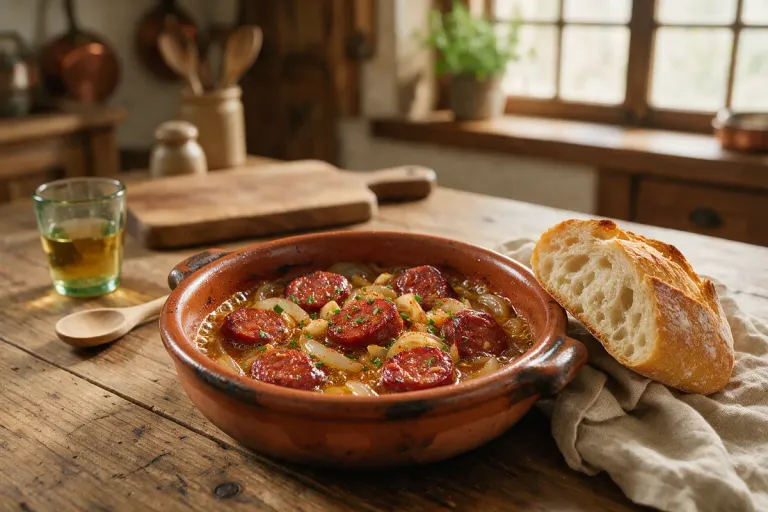
Asturian cider is made for rich, salty food. The best-known pairing is chorizo a la sidra, slices of chorizo simmered in cider until the sauce reduces. Cider also turns up in Asturian cooking for fish and clams, and it sits well with the region's strong blue cheeses such as Cabrales and with fabada, the Asturian bean stew.
The Basque cider house and txotx
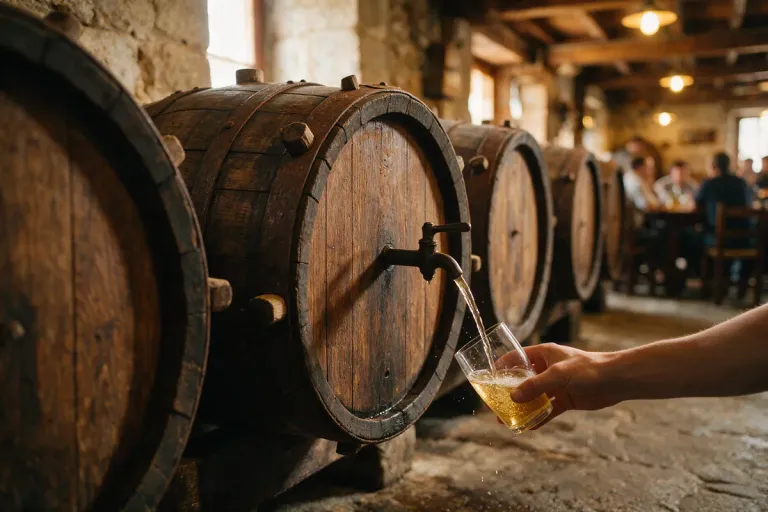
The Basque Country has its own cider, sagardoa, and its own institution: the sagardotegi, or cider house. Traditionally these are working cider makers that open to the public during the season when the new cider is ready to taste, roughly from January to April.
The ritual is the txotx. When someone shouts "txotx!", the cider maker opens the tap on one of the huge barrels, called kupelas, and a thin jet of cider shoots out. Guests line up and catch a small amount in their glass from the stream, and go back to the table until the next barrel is opened. This repeats through the meal.
The meal itself is fixed and traditional:
- A salt cod omelette.
- Salt cod fried with green peppers.
- A thick grilled chuletón, the Basque bone-in beef steak.
- Idiazabal cheese with quince paste and walnuts to finish.
How to order cider in a Spanish restaurant abroad
- Ask whether the cider is natural (still) or sparkling. Sidra espumosa exists, but the traditional style is still.
- Expect it to be dry and tart. If you're used to sweet cider, the first glass can be a surprise.
- If a bar pours it from a height, drink the culín straight away. It is meant to be finished while it still has some life in it.
- Order it with something salty or fatty: chorizo, cheese, grilled meat or fish.
Where to find Spanish cider abroad
These restaurants in our directory mention cider in their own listings:
- El Asador in Moscow serves a menu similar to a Basque cider house, with traditional Spanish meat dishes such as roast lamb, and makes its own cider, called St Anton.
- Sagardi Porto in Porto specialises in traditional Basque cooking, with a pintxos bar, an emphasis on meat, and traditional Basque ciders.
- Imanol by Aitor Ansorena in Lisbon serves Basque food from pintxos to grilled dishes, with wines and traditional Basque ciders.
- El Sella in Mexico City's Polanco lists chorizo in cider next to Galician octopus and chamorro.
- Pintxos Bar in São Paulo's Pinheiros offers Basque cider alongside its pintxos and Spanish wines.
For other Spanish drinks, see our guides to sherry and Spanish vermouth.