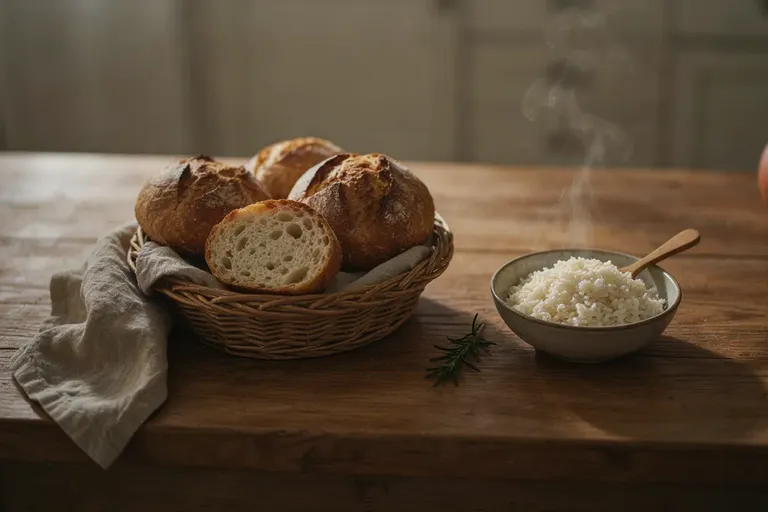
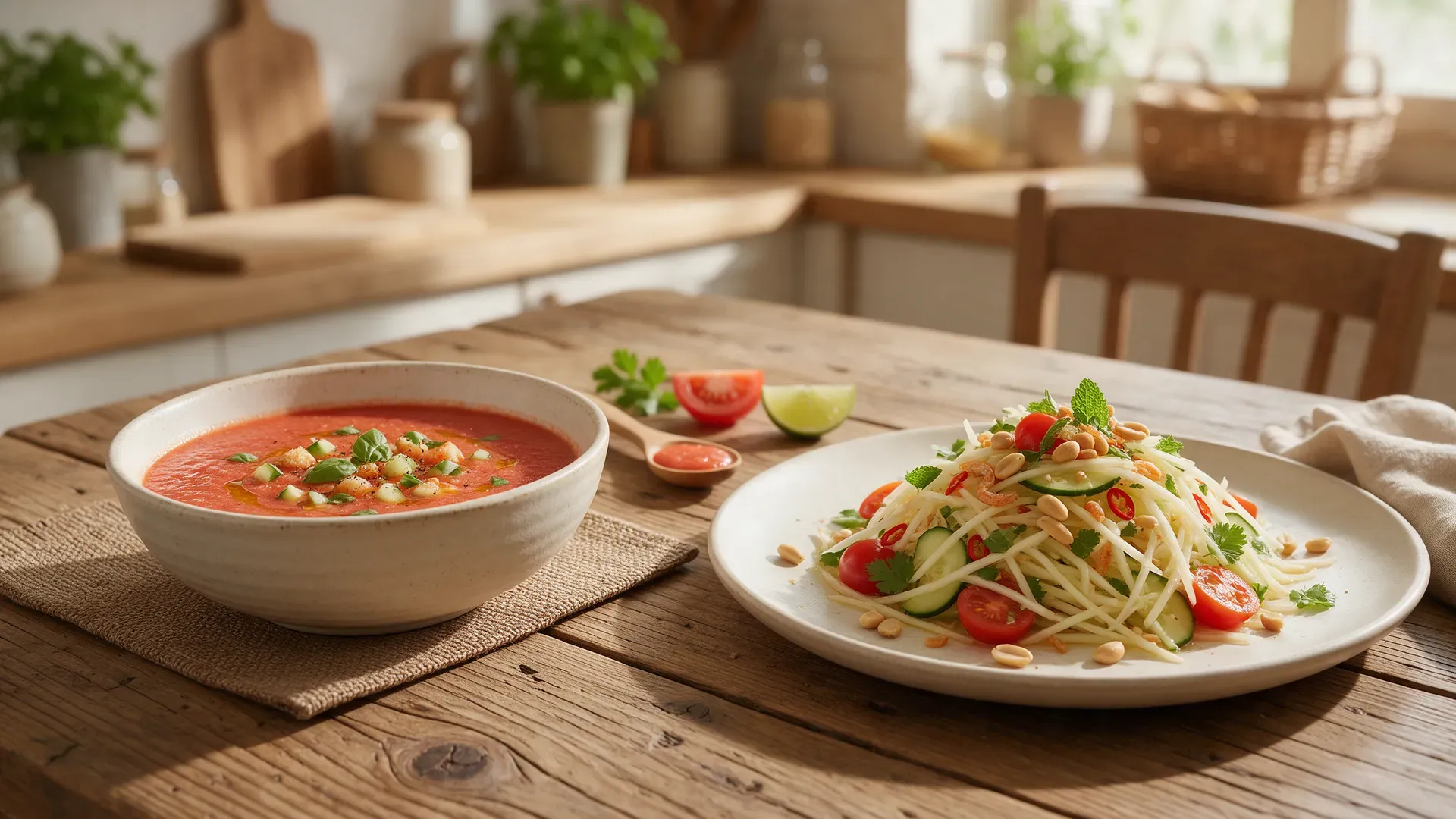
Gazpacho and som tam come from opposite ends of the world, yet they share a lot. Both are mostly raw, both use garlic and something sour, most versions of both include tomato, and both started as dishes pounded in a mortar. People eat them when it is hot. The differences are just as useful to know when you order them.
Gazpacho: from mortar to blender
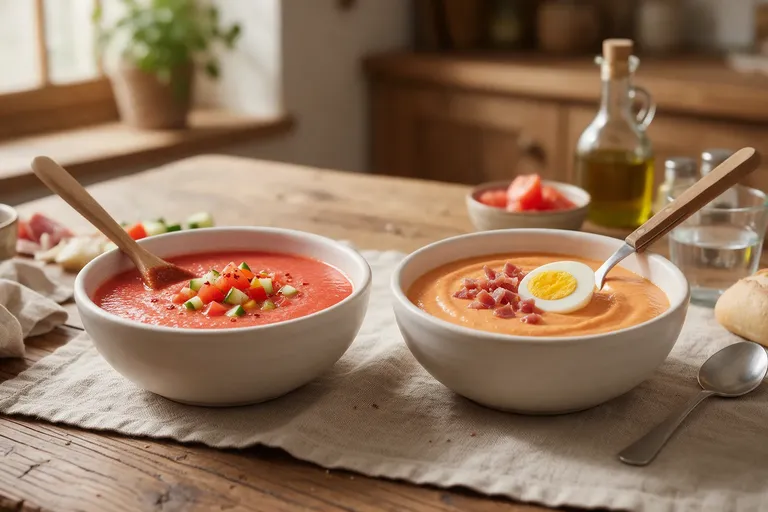
Gazpacho is the cold soup of Andalusia, in southern Spain. The classic Andalusian ingredients are ripe tomato, cucumber, green pepper, garlic, olive oil, vinegar and salt, and many versions also include stale bread. Traditional gazpacho has no chilli; the green pepper is the mild kind.
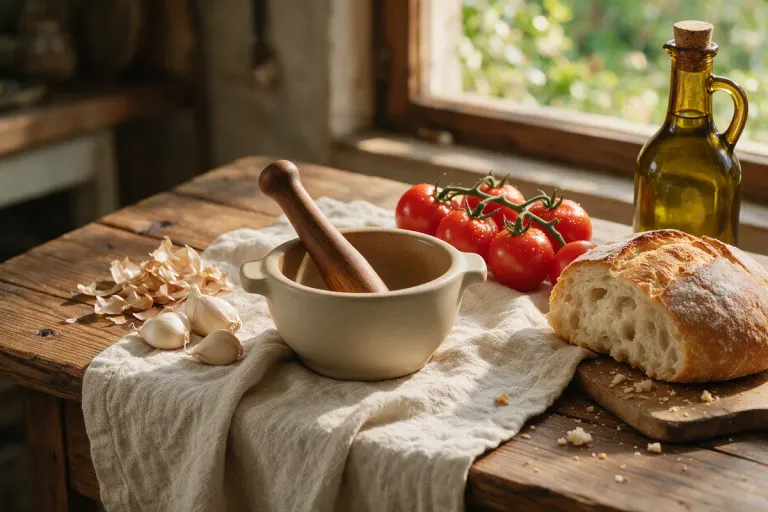
Before electric blenders, cooks pounded the garlic, oil and (where used) bread in a mortar and worked in the other vegetables. Today it is nearly always blended until smooth, then chilled. It may come in a bowl with small diced vegetables or croutons on top, or in a glass to drink.
Its relatives follow the same idea. Salmorejo, from Córdoba, is thicker, made mostly of tomato, bread, oil and garlic, and often topped with egg and ham. Ajoblanco is a white version made with almonds and garlic instead of tomato. Our guide to Spanish cold soups covers all three.
Som tam: still made in the mortar
Som tam is green papaya salad, from the Isan region of northeast Thailand and neighbouring Laos. The name describes the method: "som" means sour and "tam" means to pound.
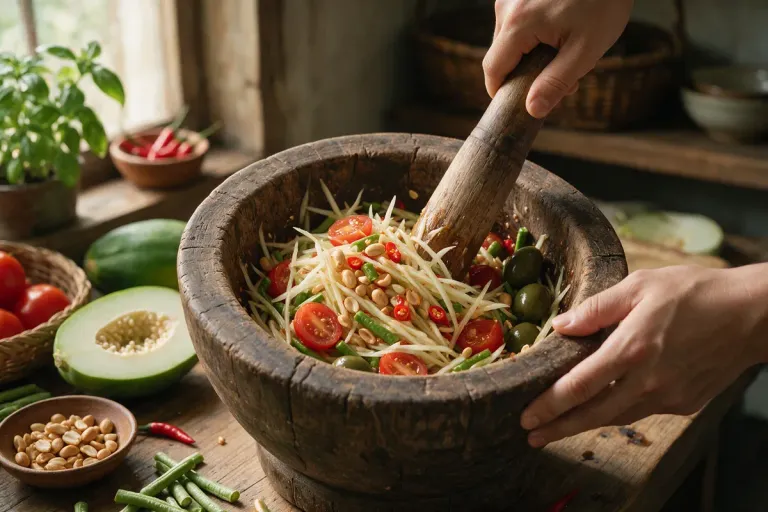
It is made to order in a tall clay or wooden mortar. The cook bruises garlic and fresh chillies, adds shredded green papaya, cherry tomatoes and long beans, and seasons with lime juice, fish sauce and palm sugar. The common Bangkok version, som tam thai, adds dried shrimp and peanuts. Isan and Lao versions often use salted crab or fermented fish sauce (pla ra) instead.
The pestle only bruises the papaya. Unlike gazpacho, it is not supposed to become smooth. A good som tam stays crunchy and wet with dressing.
Where the two meet and where they part
- Shared ingredients: garlic, a sour element and, in most versions, tomato. Gazpacho uses vinegar, som tam uses lime. The base is different: tomato in gazpacho, green papaya in som tam.
- Different texture: gazpacho is puréed and emulsified with olive oil; som tam is shredded, bruised and crunchy.
- Different body: olive oil, and in many versions bread, gives gazpacho body; som tam is not thickened at all and is often eaten with sticky rice.
- Different heat: traditional Andalusian gazpacho is not spicy; som tam can be very hot, and in Thailand you set the number of chillies when you order.
- Different seasoning: gazpacho relies on salt and vinegar; som tam balances fish sauce, lime and palm sugar.
Ordering tips
For gazpacho, ask whether it comes as a bowl or a glass, and whether the garnish is served on the side.
For som tam, say how spicy you want it before the cook starts pounding. "Phet nit noi" asks for a little spicy. Then choose the style: som tam thai if you want it sweeter with peanuts, or a pla ra version if you want the funkier northeastern taste.
Where to try gazpacho in our directory
These restaurants mention gazpacho or salmorejo in their own records:
- Taburete, Bangkok: run by chef-owner Kannika Kongkaew, who spent ten years cooking in Spain. Its record mentions a watermelon gazpacho alongside paella and croquetas.
- Ajoblanco, Mexico City: its record says the name comes from the almond gazpacho of Málaga and Extremadura, and it lists gazpachos among its specialties.
- El Pote, New York: a Castilian restaurant in Murray Hill whose record lists gazpacho with paella among its classic dishes.
- La Tasca de Carlos, Guayaquil: its record lists both salmorejo and gazpacho on a menu of traditional tapas.