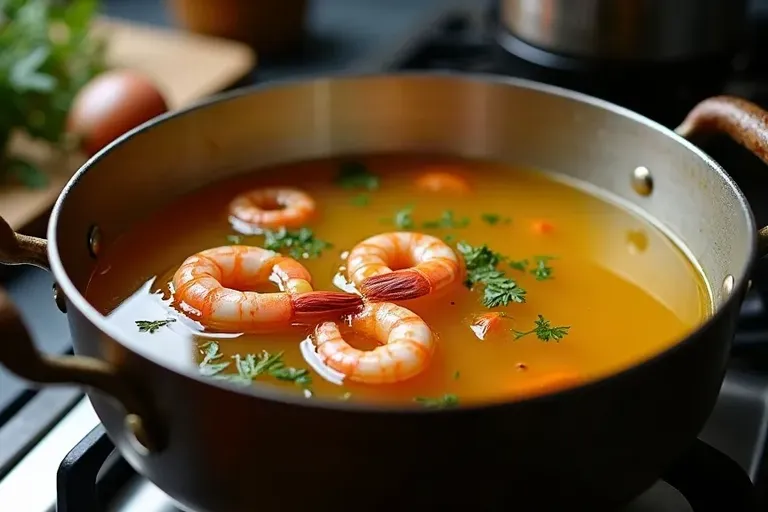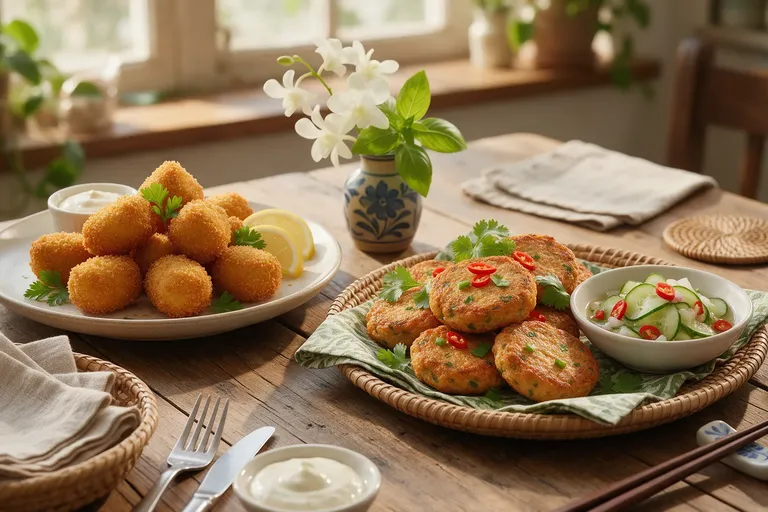
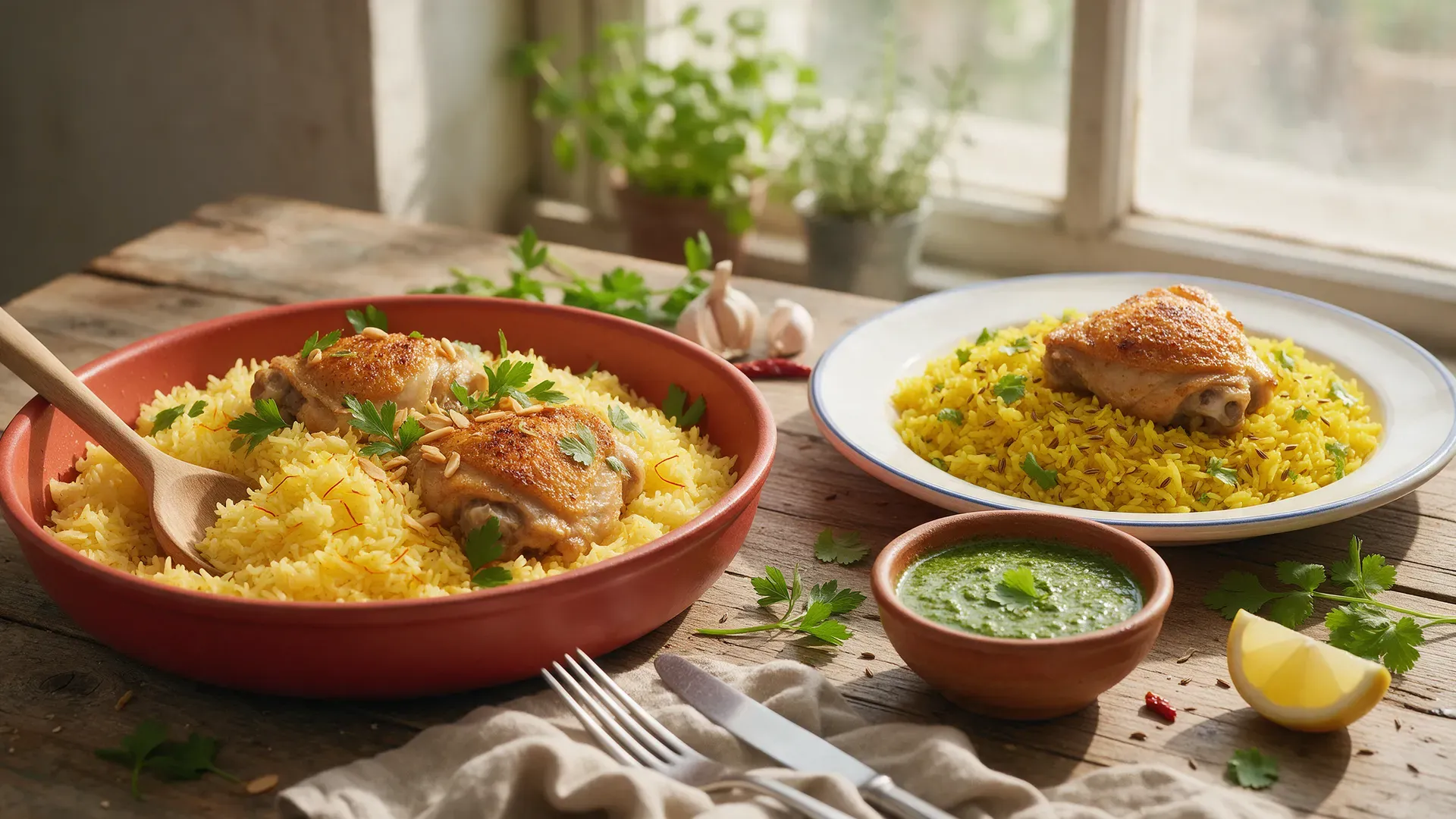
Spain and Thailand both have a famous yellow rice cooked with chicken. In Spain it is paella valenciana. In Thailand it is khao mok gai, a dish from the country's Muslim communities. The colour comes from two different spices, and the cooking method is different too. Here is how they compare.
Two spices, one colour
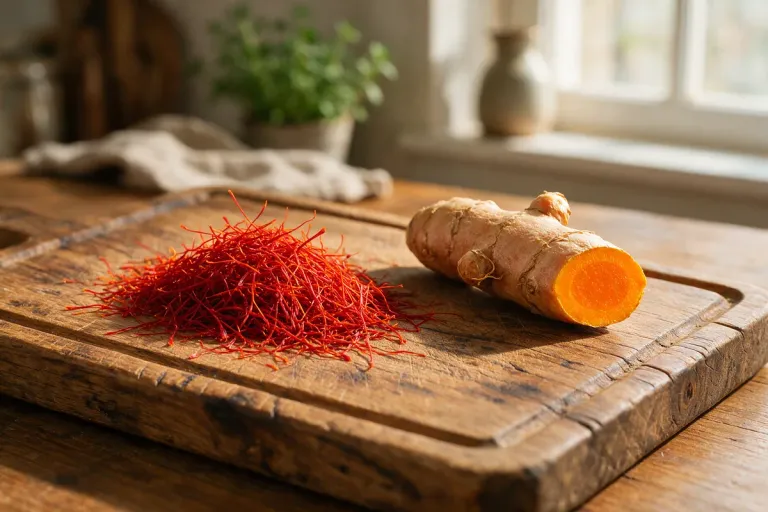
Traditionally, paella gets its gold from saffron, the dried stigmas of the saffron crocus. Each flower gives three threads, picked by hand, which is why saffron is one of the most expensive spices there is. A pinch is enough for a pan. Its flavour is faint and a little honeyed. Many cooks in Spain use colorante, a yellow food colouring sold in sachets, instead of or alongside saffron, because it is cheap. Our saffron guide explains how to buy the real thing.
Khao mok gai gets its colour from turmeric, khamin in Thai. Turmeric is a rhizome, related to ginger, and it is cheap and used generously. It tastes earthy and slightly bitter, and it stains everything it touches. Turmeric also turns up elsewhere in Thai cooking, especially in the south, in dishes such as gaeng lueang, a sour yellow curry, and turmeric fried chicken.
So the two dishes look alike but taste different. Saffron is a background note. Turmeric, along with the other spices in khao mok gai, is a big part of the flavour.
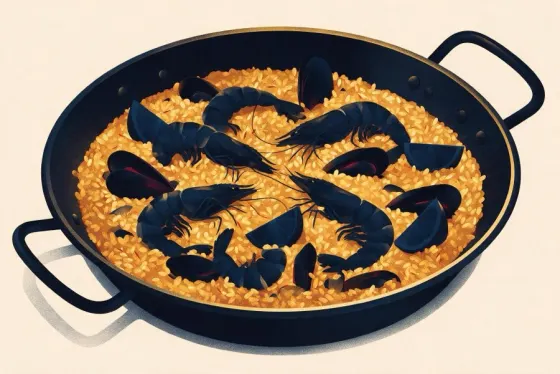
Paella valenciana
The original paella comes from the farmland around Valencia. The classic version uses chicken and rabbit, flat green beans and large white beans called garrofó, with olive oil, tomato, saffron and water. Sometimes rosemary goes in at the end.
The meat and vegetables are browned in a wide, shallow pan, the liquid goes in, and then the rice. After that, nobody stirs it. The rice cooks uncovered in a thin layer, and a crisp crust can form on the bottom. That crust is socarrat.
Khao mok gai
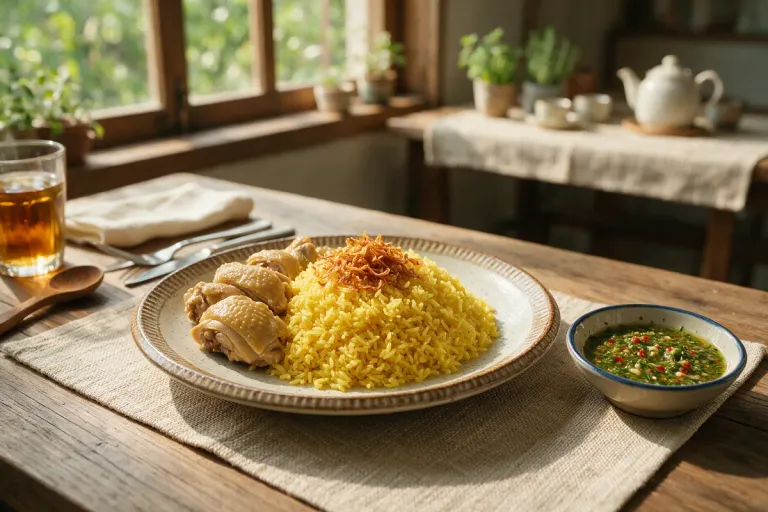
Khao means rice and gai means chicken. Khao mok gai is the Thai Muslim form of a spiced rice dish related to biryani. Chicken pieces are marinated in spices, and the rice is cooked with the chicken and the spice mix, often including turmeric, until it is yellow and fragrant. Versions are also made with beef (khao mok nuea) and goat (khao mok pae).
It is commonly served with a sweet and sour green dipping sauce made with chilli, herbs, vinegar and sugar, and is often topped with crisp fried shallots. Many shops serve a clear soup alongside. You find it at Thai Muslim restaurants and stalls, especially in Bangkok and the south.
How they differ at the table
- The pan: paella is cooked in a wide, flat paella pan. Khao mok gai is usually cooked in a pot.
- The rice: paella uses short-grain rice that absorbs stock. We compared Spanish and Thai rice varieties in bomba and hom mali.
- The sauce: paella valenciana is eaten as it comes. Khao mok gai is commonly served with its green sauce.
- The portion: paella is cooked for the table and shared from the pan. Khao mok gai is usually a single plate.
Where to try paella in Thailand
Khao mok gai is easy to find in Thailand. Our directory covers Spanish restaurants, and these list paella in their own records:
- Arroz Spanish Rice House in Thong Lo is built around paella and other Spanish rice dishes, with most ingredients from Spain.
- Uno Mas on the 54th floor of Centara Grand at CentralWorld cooks paella over orange wood.
- Little Spain in Hua Hin serves a seafood paella for two, and runs Tuesday paella nights.
- Pura Brasa at One Bangkok lists paellas and rice dishes, with most of its cooking done in Josper charcoal ovens.
For more Spanish restaurants in the city, see our Bangkok listings.