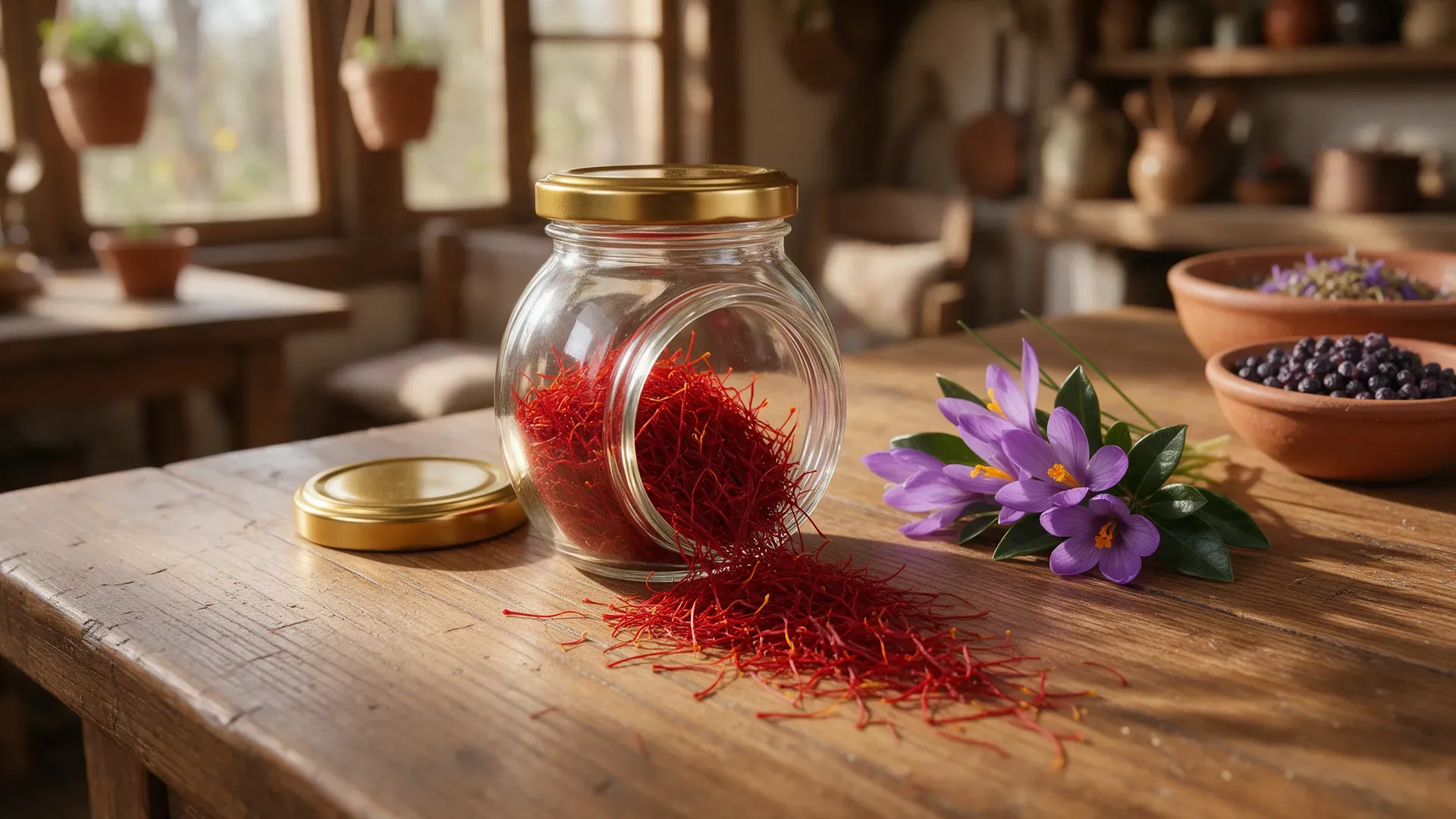
Late October and early November are saffron season in La Mancha, the high, flat plain south of Madrid. For a few weeks the purple crocus flowers open in the fields around towns like Consuegra, and they are picked by hand, usually early in the morning, soon after they open. Consuegra holds a saffron festival, the Fiesta de la Rosa del Azafrán, at the end of October.
Saffron is expensive, often faked and easy to misuse. Here is what you need to know to buy it and cook with it.
What saffron actually is
Saffron is the dried stigma of the saffron crocus, Crocus sativus. Each flower has three red stigmas, the threads. They are pulled from the flower, a job called la monda in Spain, and then toasted gently to dry them. Picking and stripping are done by hand, which is why the price is what it is. It takes well over a hundred thousand flowers to make a single kilo of dried saffron.
The flavour is hard to describe: a little honeyed, a little bitter, with a hay-like smell. The colour is the more obvious part. A pinch of threads turns a pan of rice deep golden.
Grown in Spain, or packed in Spain?
This is the part that catches people out. Most of the world's saffron is grown in Iran, and Spain imports a lot of saffron that is then packed and re-exported. A tin that says "Spanish saffron" or "packed in Spain" may not have been grown there.
Spanish-grown saffron with protected status is sold as Azafrán de La Mancha, a Protected Designation of Origin (DOP). If the label carries that name and the DOP seal, the saffron was grown and processed in the designated area of La Mancha. If it does not, it may still be good saffron, but you cannot assume it is Spanish.
How to buy it
A few rules that hold whatever the origin:
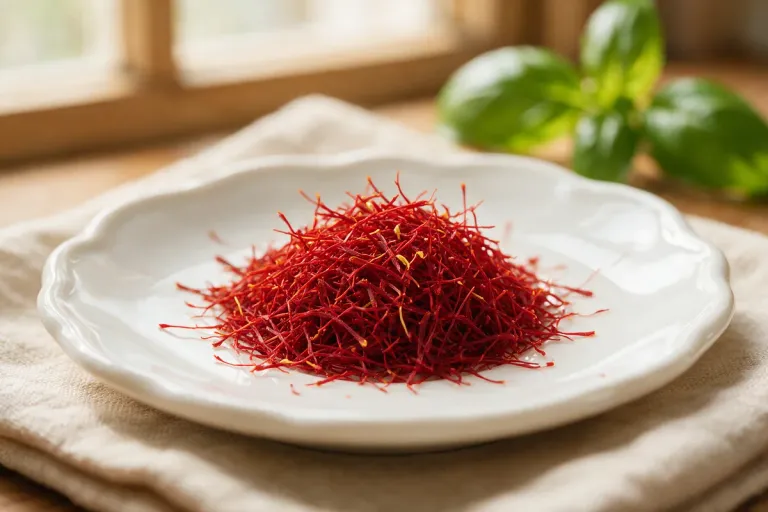
- Buy threads, not powder. Powder is easier to cut with cheaper things, such as safflower, turmeric or paprika, and you cannot see what is in it.
- Look at the colour. Colour alone does not prove quality, but good threads are deep red, and a lot of yellow or orange strands means more of the paler, less flavourful style of the flower is included.
- Treat a very low price as a warning sign. Saffron is labour-intensive to produce, so a large bag for very little money deserves suspicion.
- Store it airtight, dry and dark. Light and moisture fade it.
In Spanish kitchens you will also see colorante alimentario, a yellow food colouring sold in small sachets. Many home cooks use it in paella instead of saffron, because it is cheap. It gives the colour but none of the flavour.
How Spanish cooks use it
Saffron is usually infused rather than sprinkled in dry. Crush a few threads, or toast them very lightly in a dry pan first, then steep them in a little warm stock or water for a while before adding the liquid to the dish. A little goes a long way; too much turns bitter and medicinal.
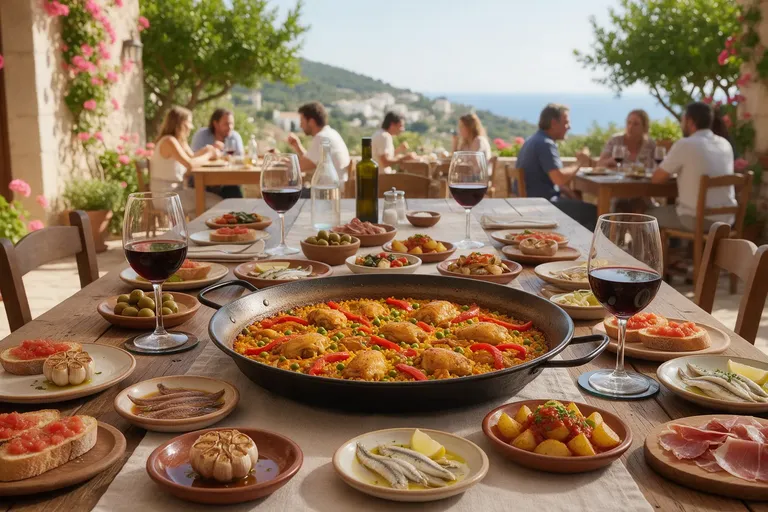
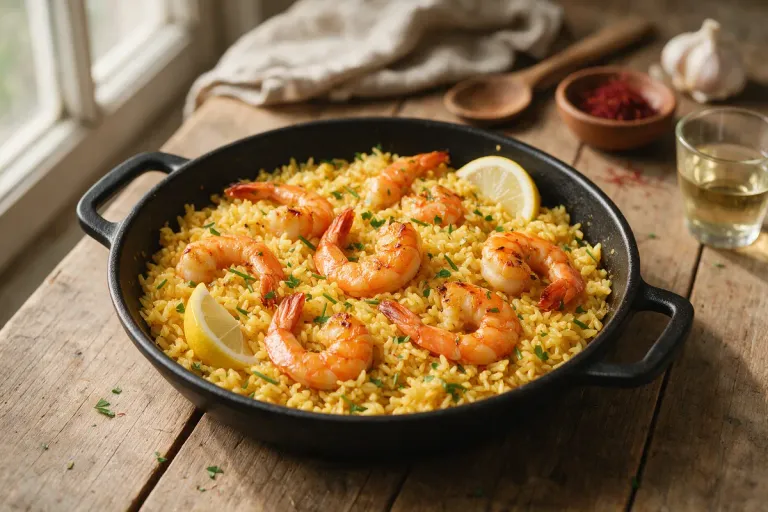
Its best-known job is in rice. Paella and other rice dishes from Valencia and the Mediterranean coast often use it, though not every rice dish does. Our guide to Spanish rice dishes beyond paella goes through the family. It also goes into fish stews and into pepitoria, chicken in an almond and egg-yolk sauce. For the dish most people know it from, see our paella page, and before you order one abroad, read how to spot a bad paella.
Where to try saffron dishes
These venues mention saffron dishes in their own records:
- Puerto Getaria, Dakota 159, Nápoles, Mexico City. Spanish chef Iñigo Aramburu's menu includes a brothy rice with saffron, alongside charcoal-grilled huachinango "Getaria style".
- Restaurante Emilio, Av. Emilio Castelar 107, Polanco, Mexico City. Led by Spanish executive chef César de la Parra; its record lists boiled sea bass with prawns and saffron.
If you are after paella rather than a specific saffron dish, El Valenciano at Avenida Apoquindo 2730, Las Condes, Santiago de Chile, is a paella specialist that cooks with Valencian technique. Its record does not mention saffron, so ask how the rice is made if that matters to you.