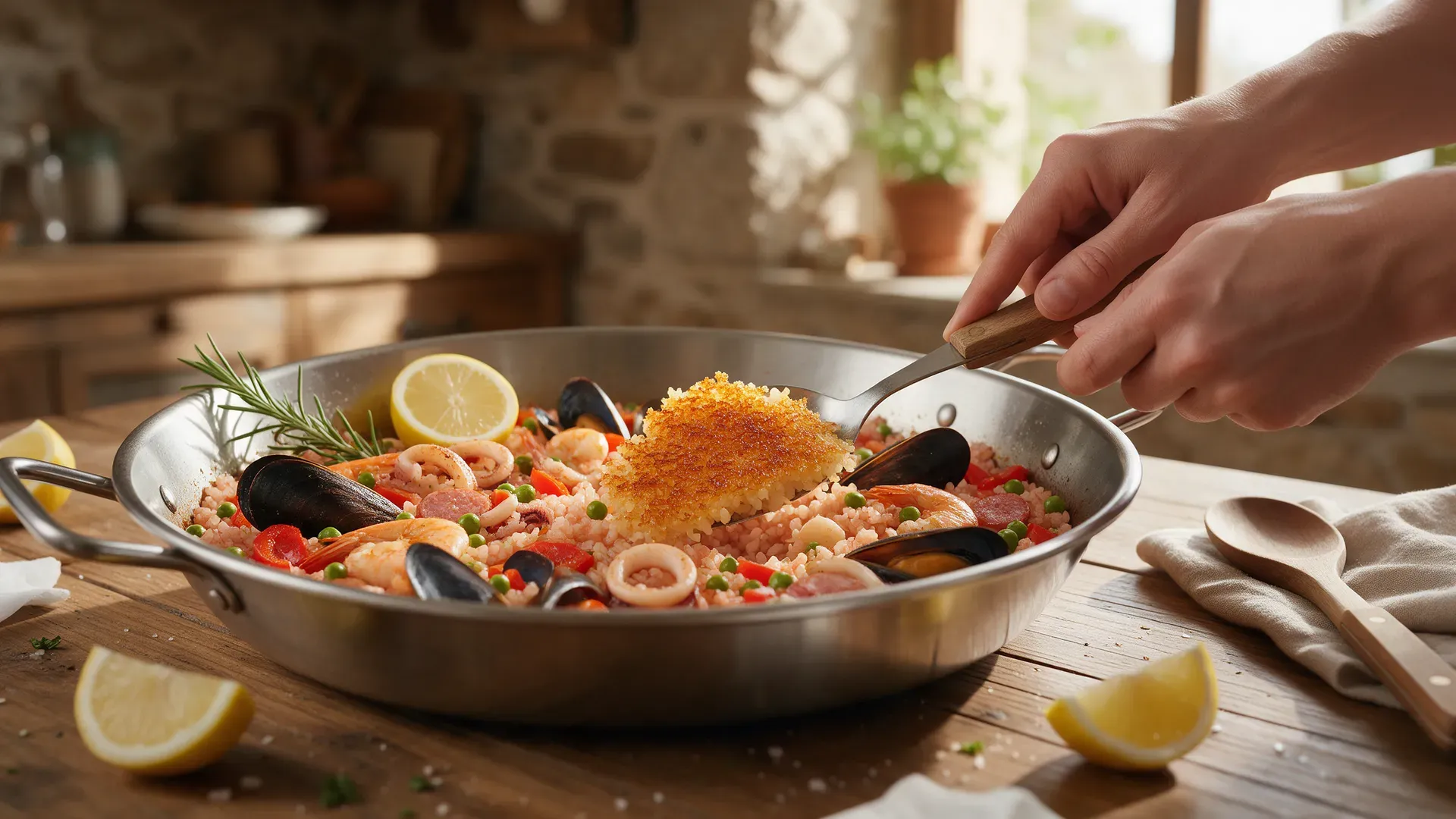
Most rice-eating cultures have an opinion about the layer that sticks to the bottom of the pot. Spain and Thailand both treat it as something good rather than a mistake, but they handle it in different ways. In Spain it is socarrat, the toasted base of a paella that people scrape up at the table. In Thailand it is khao tang, the rice crust that gets dried and fried into crackers.
Socarrat: the base of the paella pan
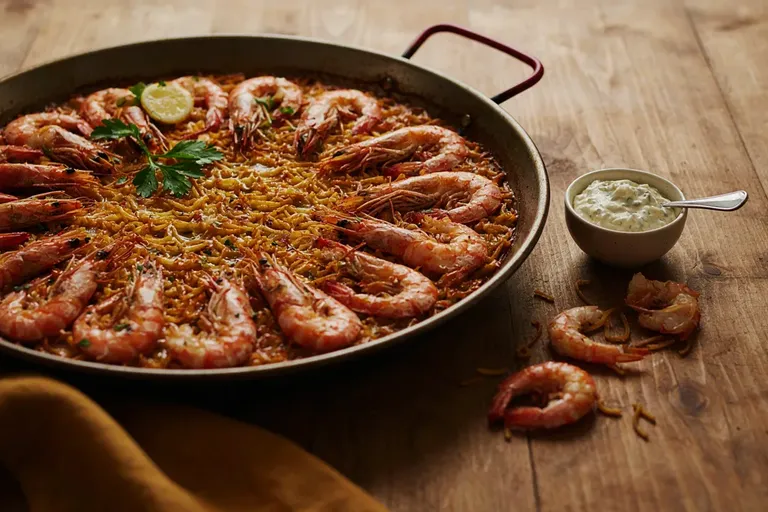
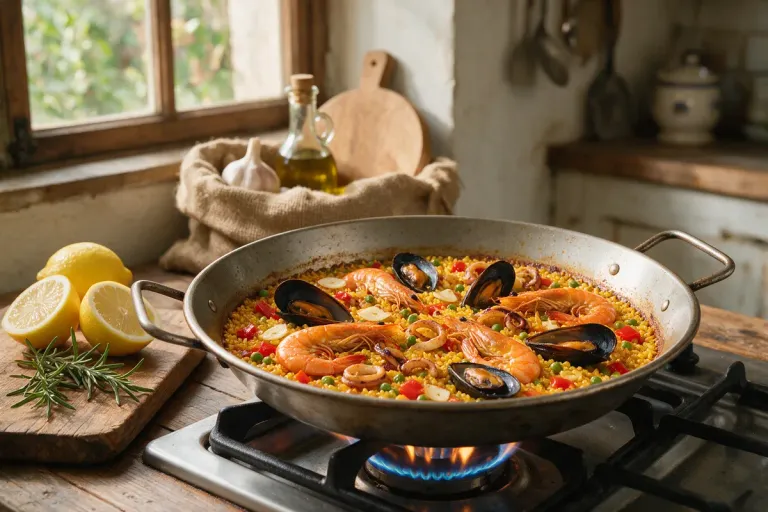
Socarrat is the thin layer of rice that toasts and caramelises against the bottom of a paella pan in the last minutes of cooking. The word comes from the Valencian verb socarrar, to toast or singe lightly. It should be crisp and golden-brown with a toasted flavour, not black and bitter.
It comes from how paella is made. The pan is wide and thin, the rice sits in a shallow layer, and once the stock goes in the rice is not stirred. The crust only forms once the liquid has been absorbed or evaporated and the base of the pan gets enough direct heat to toast the rice touching the metal. Many cooks raise the heat briefly at the end to encourage it, and listen for a light crackle. Our Paella page covers the dish itself.
At the table, socarrat is eaten as part of the paella. When the pan is shared, people scrape the crust from their own section with a spoon.
Khao tang: turning the crust into a snack
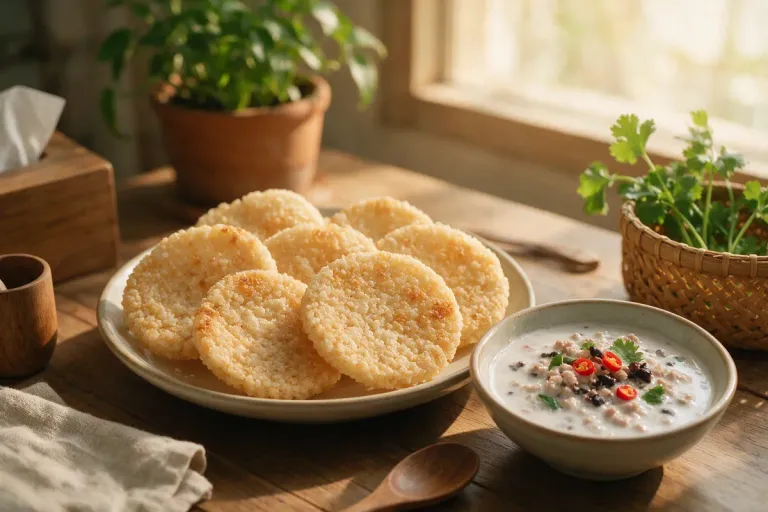
In Thai, khao tang refers to rice crust and the crackers made from it. Traditionally, the layer of rice stuck to the bottom of the cooking pot was saved, dried in the sun, and then deep-fried until it puffed and crisped. Today khao tang is also made by pressing cooked rice into thin sheets and drying them on purpose, and packaged versions are sold widely.
Khao tang is usually eaten as a snack. The best-known pairing is khao tang na tang: rice crackers with na tang, a dip of minced pork and shrimp cooked in coconut milk.
Same crust, different approach
The two traditions start from the same thing, rice that has stuck and toasted. What happens next is different:
- When it is eaten: socarrat is eaten straight away, with the rest of the paella. Khao tang is dried and fried later, so it becomes its own snack.
- Texture: socarrat is a crisp layer still attached to tender rice. Fried khao tang is light and crunchy all the way through.
- Flavour: socarrat carries the stock, oil and sofrito of the paella. Khao tang is plain rice, so the flavour comes from the dip or topping.
- The pan: socarrat depends on a wide, thin paella pan and a shallow layer of rice. Khao tang came from rice cooked in a pot, where the crust formed at the base.
Other cuisines have their own versions, such as Korean nurungji and Persian tahdig. The Spanish and Thai approaches are a useful pair because one keeps the crust inside the dish and the other turns it into something separate. For more on how Spanish and Thai kitchens treat rice in general, see Bomba and hom mali: Spanish vs Thai rice.
How to get socarrat when you order paella
- Order paella that is cooked to order and served in its pan. It takes time, so order early.
- It is fine to ask the kitchen whether they make it with socarrat. Some cooks will leave the pan on the heat a little longer if you ask.
- Do not stir the paella when it arrives. Eat from the top and scrape the base from your own section as you go.
- Darker is not always better. Deep brown and crisp is good; black and bitter means it went too far.
Where to try it
Our directory lists Spanish restaurants, so the Spanish side is the one you can find here. These venues are built around paella or named for the crust itself:
- Socarrat Paella Bar - Chelsea (New York) is the first Socarrat restaurant, serving tapas and signature paellas with Spanish wines, and has a private Paella Bar.
- Socarrat Paella Bar - Midtown East (New York) takes its theme from Valencia's Las Fallas festival, with tapas and signature paellas.
- Socarrat (Narvarte, Mexico City) lists mixed and black paella alongside tapas such as patatas bravas and croquettes. We profiled it in Socarrat Mexico City.
- Casa Paella (near Christchurch, New Zealand) is an arrocería with 12 rice and paella varieties, including paella valenciana made to the Sueca recipe.