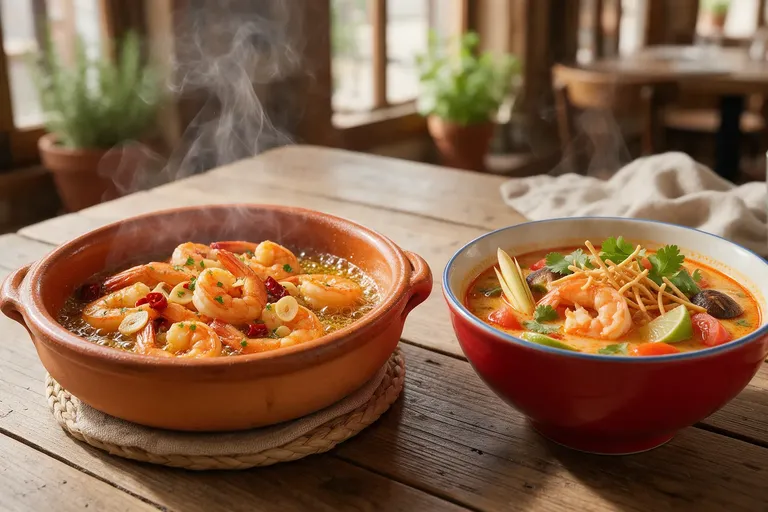
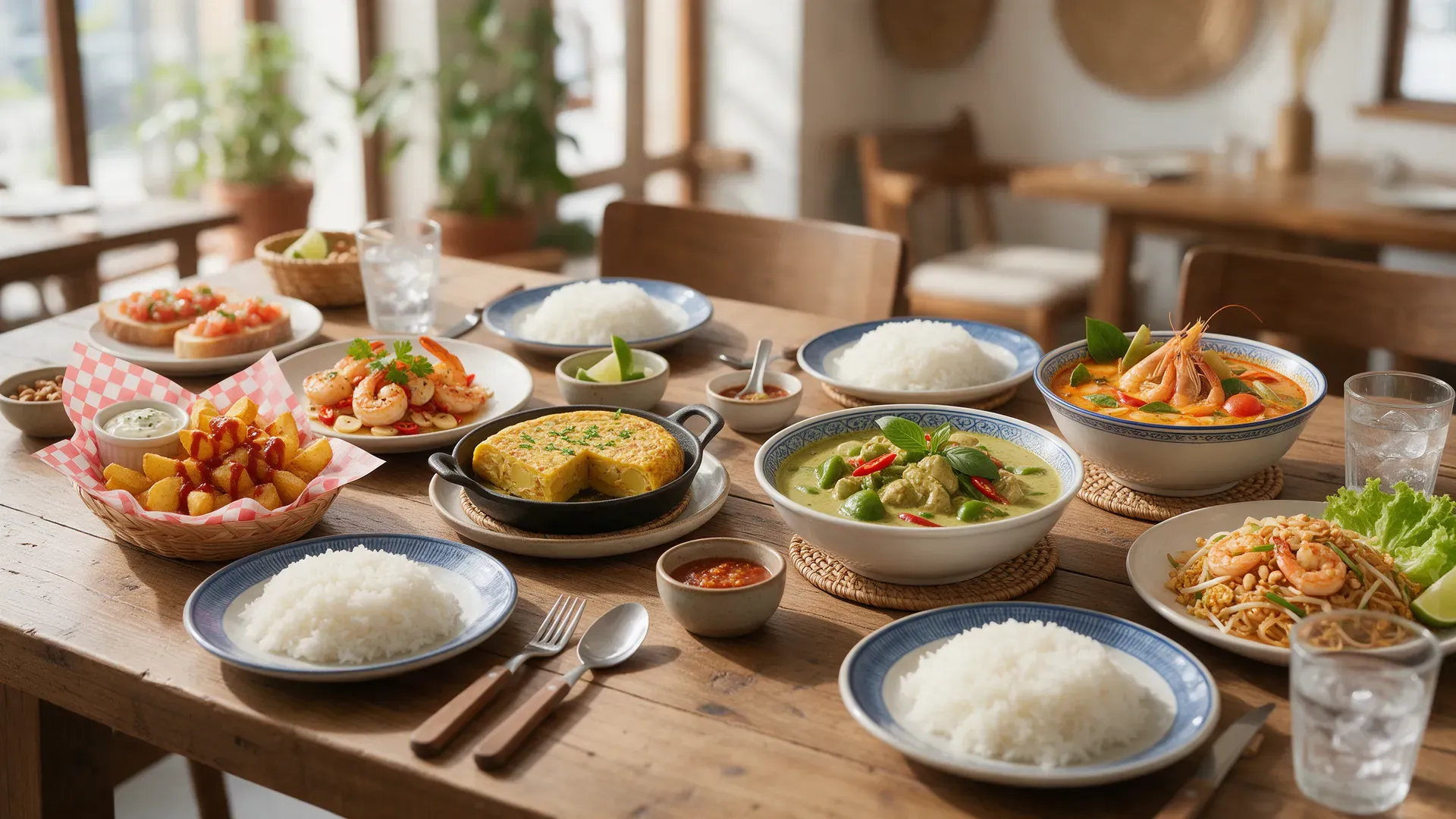
Spanish and Thai food both get described as 'food for sharing', and that is true as far as it goes. Sit down at a table in Madrid and then at one in Bangkok, though, and the meal is put together quite differently. Knowing the difference helps when you order Spanish food in Thailand, or Thai food in Spain.
The Spanish table: shared plates, then courses
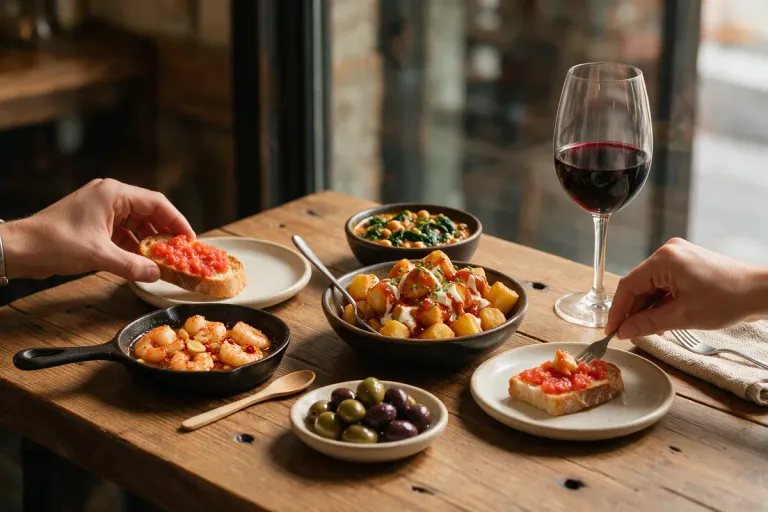
At the bar, Spanish eating is commonly shared. Tapas and larger raciones go in the middle and everyone picks. A group can make a whole evening out of a few rounds of plates.
A sit-down meal often works differently. The traditional structure is a primer plato (first course), a segundo (main course) and postre (dessert), and each diner usually gets their own plate for each course. The set lunch, the menú del día, follows this pattern. Bread is usually on the table.
Spaniards call the time spent talking at the table after a meal the sobremesa, and lingering over it is common.
The Thai table: everything at once, with rice
A shared Thai meal is built around rice. The everyday phrase for eating a meal, 'kin khao', literally means 'eat rice'. Each person has their own plate of rice, and the other dishes, a curry, a stir-fry, a soup, a salad, go in the middle for everyone.
Single-plate rice and noodle dishes are common too, especially when eating alone. At a shared meal, though, dishes usually do not come in courses. They arrive as they are ready and the table eats them together. You take a spoonful or two from a shared dish onto your rice, eat it, then go back for something else, rather than piling your plate at the start.
The cutlery is spoon and fork: spoon in the right hand, fork in the left to push food onto the spoon. In the north and north-east, sticky rice is eaten by hand instead.
Where the two meet: paella
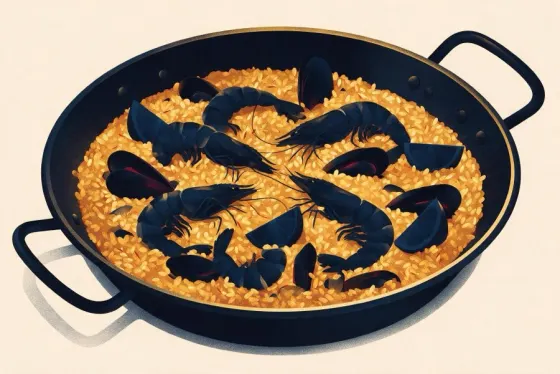
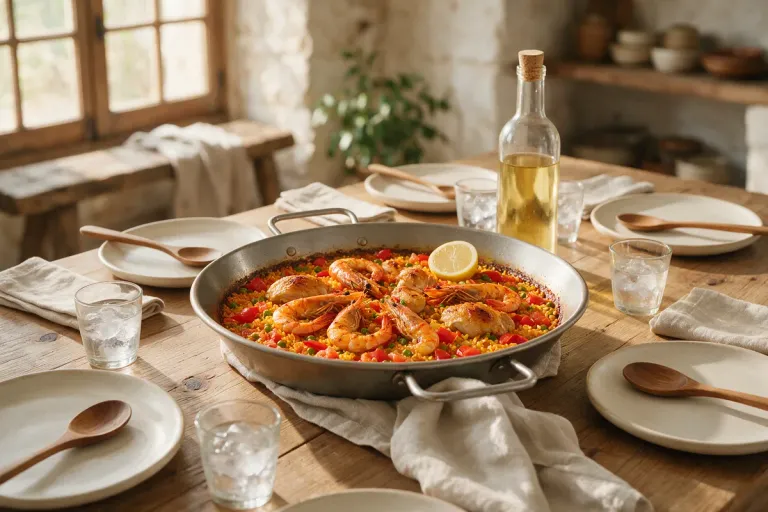
One Spanish dish that is often eaten the Thai way is paella. It is a rice dish cooked in one wide pan, and in Spain it is often set in the middle of the table and shared. Many restaurants only cook it for two or more people.
The big difference is that in paella the rice is the dish, cooked with everything else in the pan. At a Thai table, plain rice is the base and the flavour comes from the shared dishes eaten with it.
Ordering Spanish food the Thai way, and back again
- If you are used to Thai meals, ordering several raciones to share at a Spanish restaurant will feel natural. Expect them to come out in waves rather than all at once.
- At a shared Thai meal, the usual approach is to order for the table, with rice for everyone, rather than one dish per person.
- Bread is usually on a Spanish table the way rice is on a Thai one, and it is how many diners finish a sauce.
Where to try it in Thailand
- VASO (Bangkok) describes its tapas as built to share, from patatas bravas to gambas al ajillo.
- Little Spain (Hua Hin) runs Tuesday paella nights: two tapas, a shared paella and a litre of sangria.
- PaLeTa Iberico Wine Bar (Bangkok) serves tapas as well as main courses, so you can eat either way.
- Arroz Spanish Rice House (Bangkok) builds its menu around paella and other rice dishes, plus tapas.