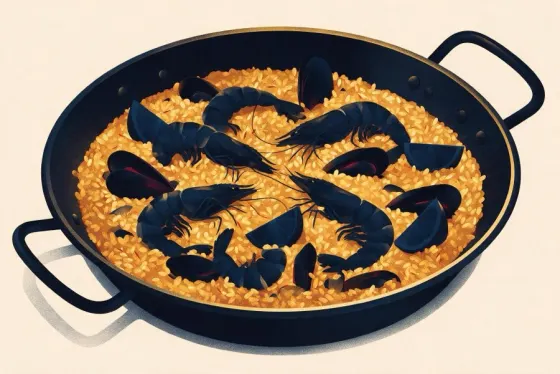
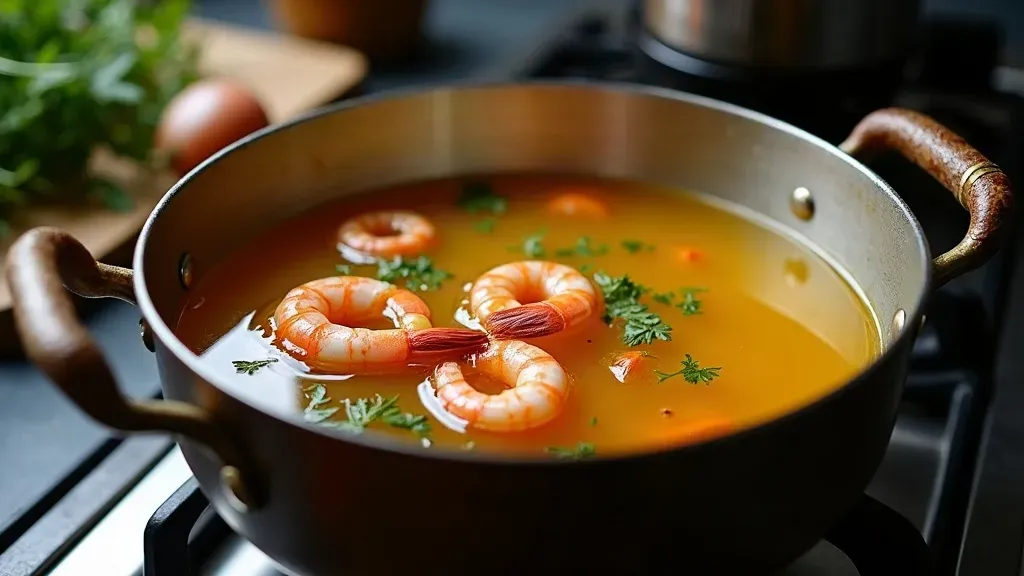
Spanish seafood rice and Thai seafood soup look nothing alike on the plate: a wide, shallow pan of rice on one side, a bowl of hot, sour broth on the other. Both, though, get much of their flavour from the shells, heads and bones that most diners never see.
Spain: the rice drinks the stock
On the Valencian and Catalan coast, cooks make a stock from fish bones and heads, small rockfish and prawn shells before the rice goes anywhere near the pan. You will hear it called fumet (a word borrowed from French), caldo de pescado or simply fondo. The rice is then cooked in that stock, and in a dry paella the liquid is either absorbed by the rice or cooks off.
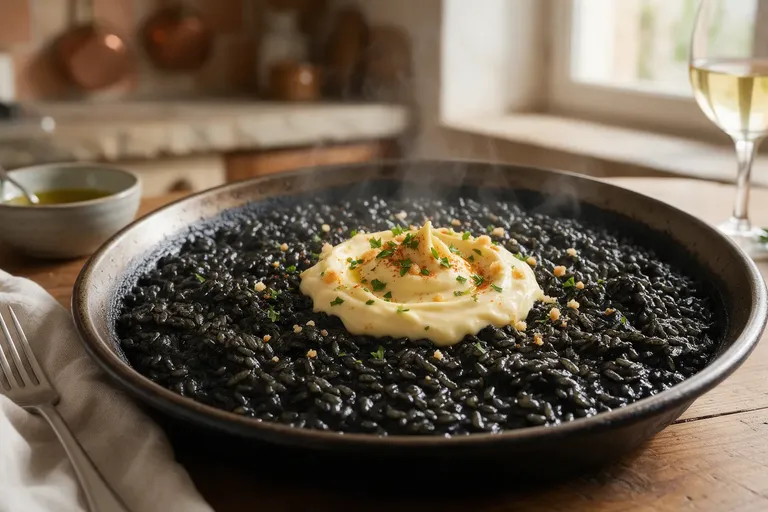
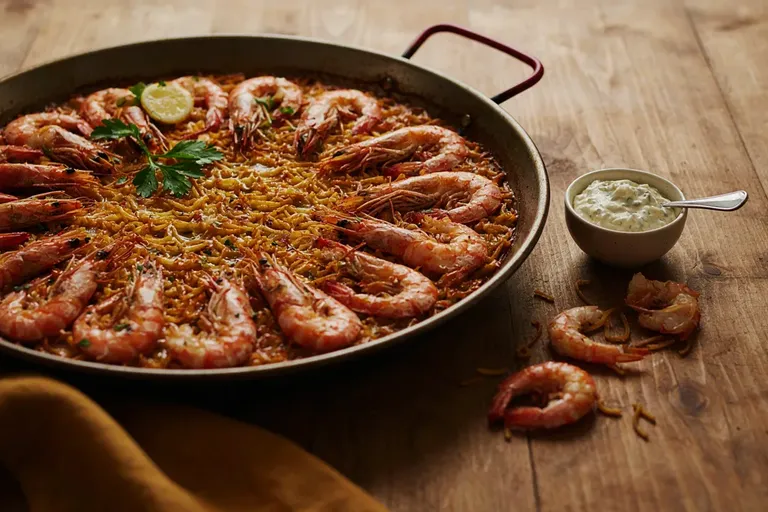
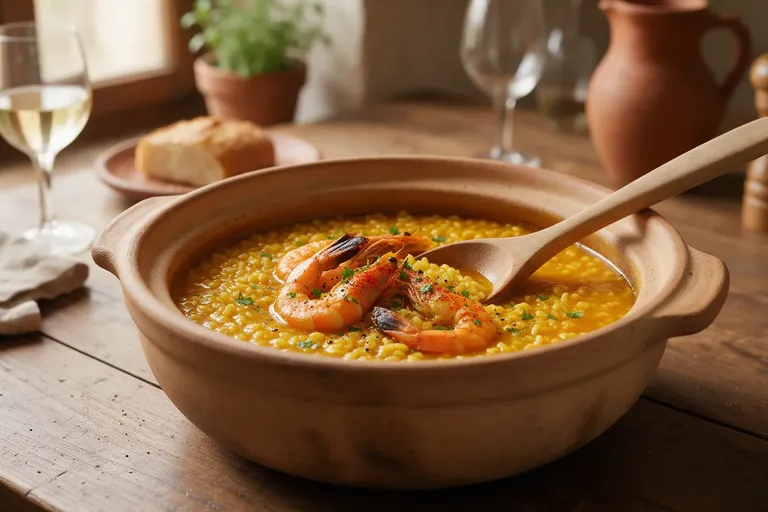
Arroz a banda shows this most clearly. "A banda" means apart: the rice is cooked in fish stock and served on its own, and the fish that made the stock is served separately or left out. It usually comes with alioli. Fideuà cooks short noodles in fish stock in place of rice, and our fideuà guide covers it. For the wetter styles, see arroz caldoso and khao tom.
Thailand: you drink the broth
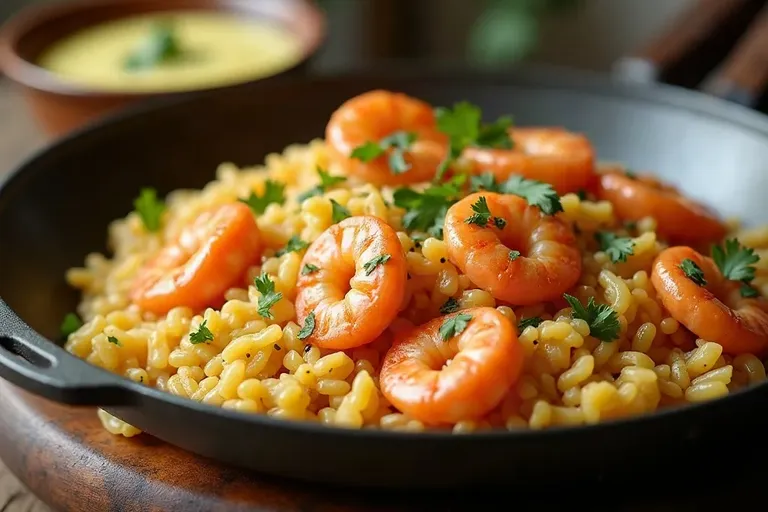
In Thai kitchens, stock is nam sup. Many everyday soups and noodle broths start from pork bones or chicken, simmered for a long time. For tom yum goong, many cooks fry the prawn heads first so their orange fat colours and flavours the broth, then add lemongrass, galangal, kaffir lime leaves and chillies, and finish with lime juice and fish sauce.
Here the broth is still in the bowl when the dish is served. It is the dish itself, and you spoon it up with rice on the side.
Same shells, different jobs
The stock ends up in different places. In a dry paella or arroz a banda it is absorbed or cooks off; in tom yum it stays in the bowl. The timing differs too. Spanish rice builds flavour early, with a sofrito of tomato, garlic and olive oil cooked before the stock goes in, while tom yum adds its herbs to the hot broth and gets its lime off the heat. Arroz a banda often comes with alioli on the side. Tom yum is eaten with plain rice.
How to use this when you order
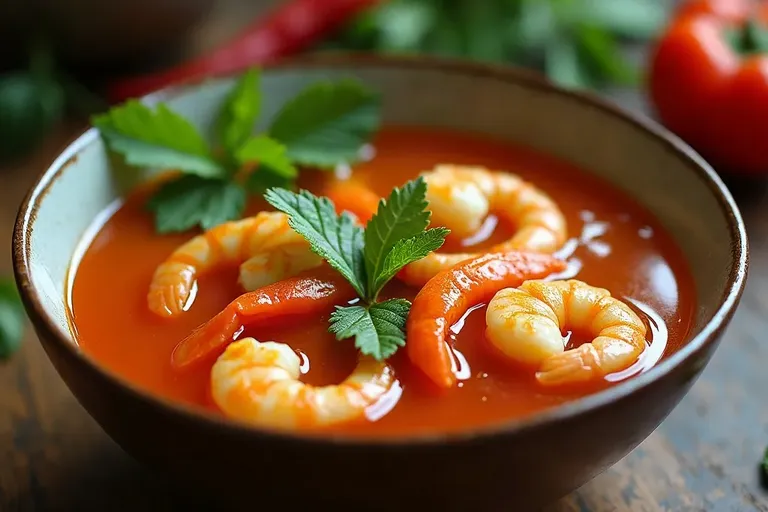
If a Spanish menu offers arroz a banda, arroz negro or fideuà, the stock does much of the work. Ask whether the rice is made to order, since rice cooked to order in stock takes time. If you like tom yum for its broth, try a caldoso or a meloso rice, which keeps more liquid in the pan.
Where to try it
These restaurants' records list paella, rice or noodle dishes of the kind discussed above:
- Casa Paella (Orton Bradley Park on Banks Peninsula, filed under Christchurch, New Zealand) has a rice and paella menu that includes Arroz a Banda, Bullit de Peix and Arroz del Senyoret, plus Fideuà de Gandia.
- El Jardin (Nagoya, Japan) offers paella and caldoso made to bring out the flavour of seafood, from chef-owner Keisuke Mutsuura.
- ¡Ay Manuela! (Xiamen, China) lists paella, arroz negro made with squid ink, and fideuà.
- Arroz Spanish Rice House (Thong Lo, Bangkok) describes a menu that runs from all sorts of paella to other rice dishes, alongside tapas.