Spanish food has a reputation for ham, and it's earned. Jamón hangs over many bars, and chorizo and morcilla turn up in stews. But a lot of the everyday Spanish table is vegetables, eggs, bread, olive oil and cheese, and a vegetarian can eat well in a Spanish restaurant. The trick is knowing which dishes are usually meat-free and which ones hide ham, chorizo or fish.
Dishes that are usually vegetarian
These are normally made without meat or fish. Recipes vary, so it's still worth a quick question.
- Tortilla de patatas: potato and egg omelette, with or without onion.
- Pimientos de Padrón: small green peppers fried in olive oil and salted. Our Padrón pepper guide explains them.
- Pan con tomate: bread rubbed with tomato, olive oil and salt. It is often served with ham on top, so order it on its own.
- Patatas bravas: fried potatoes with a spicy sauce, often with alioli as well.
- Escalivada: a Catalan dish of aubergine, red pepper and onion roasted whole, then peeled and dressed with olive oil. It is sometimes served on toast, and sometimes with anchovies, so check.
- Pisto: a slow-cooked stew of peppers, onion, courgette and tomato, often topped with a fried egg. Our Castilla-La Mancha food guide covers it.
- Berenjenas fritas con miel: fried aubergine with honey or cane syrup, an Andalusian tapa.
- Espinacas con garbanzos: spinach and chickpeas with garlic, cumin and pimentón, a Seville dish.
- Champiñones al ajillo or setas a la plancha: mushrooms with garlic, or griddled wild mushrooms.
Cheese needs a separate check. It is only vegetarian if it is made without animal rennet, and many traditional Spanish cheeses use animal rennet, so ask before you order a cheese board.
Gazpacho is usually vegetarian too: tomato, pepper, cucumber, garlic, bread, olive oil and vinegar. Some places garnish it with ham, so ask.
Where the meat hides
These dishes look harmless on the menu but often contain meat or fish.
- Salmorejo: the thick Córdoba tomato cream is very often topped with chopped jamón and hard-boiled egg. Ask for it sin jamón. Our gazpacho and salmorejo guide has more.
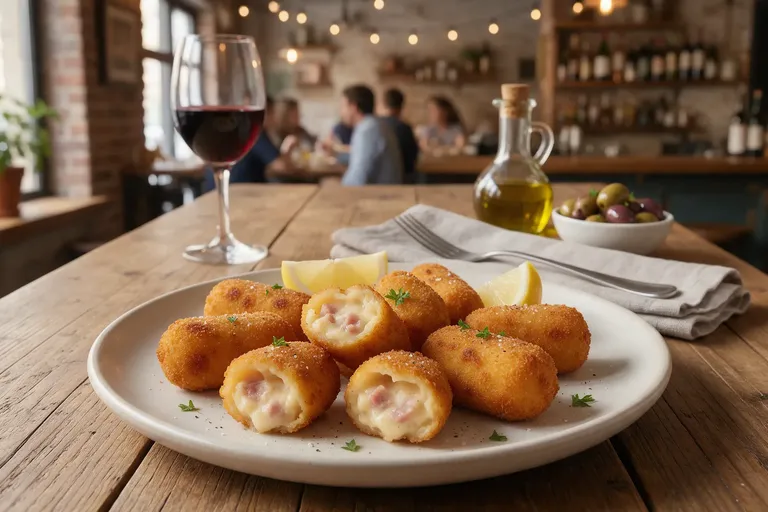
- Croquetas: the most common fillings are ham (jamón), chicken or salt cod. Ask whether there is a mushroom, spinach or cheese version.
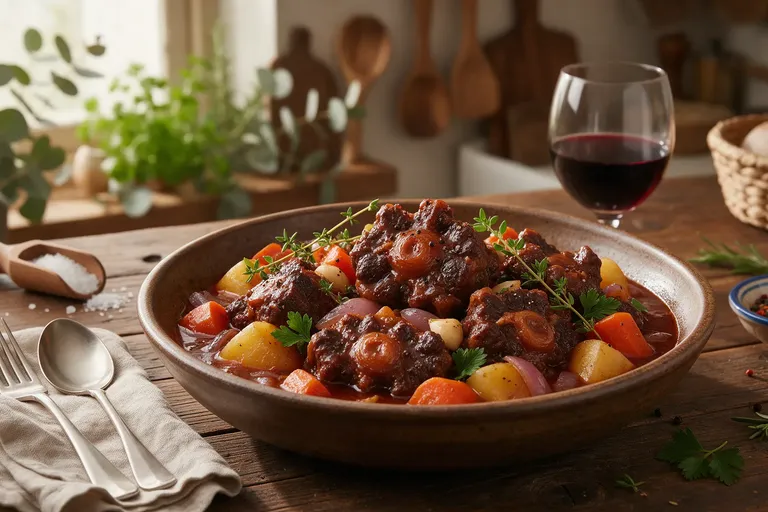
- Bean and lentil stews: lentejas, fabada, cocido and many potajes are made with chorizo, morcilla or pork. Our post on platos de cuchara lists what usually goes in.
- Vegetables con jamón: broad beans (habas), green beans and artichokes are often sautéed with diced ham.
- Ensaladilla rusa: the potato salad is usually made with tuna.
- Pimientos rellenos and piquillos: stuffed peppers are often filled with salt cod, meat or seafood.
- Gildas and many pintxos: the classic gilda has an anchovy on the stick.
- Morcilla: this is blood sausage, even when it is served with peppers or on toast.
Rice and stock
Paella is the dish people expect to be easy, and it can be. Many restaurants offer a vegetable paella (paella de verduras), and arroz con verduras is common. The thing to ask about is the stock. Spanish rice dishes get much of their flavour from the stock they cook in, and a kitchen may use fish or chicken stock even for a vegetable rice. The same goes for soups and some sauces.
Ask: "¿El caldo es de verduras?" (Is the stock vegetable?)
Useful phrases
- Soy vegetariano / vegetariana: I'm vegetarian.
- Soy vegano / vegana: I'm vegan.
- ¿Lleva carne, jamón o pescado?: Does it have meat, ham or fish?
- Sin jamón, por favor: Without ham, please.
Asking about specific ingredients works better than relying on the word vegetarian alone, because ham, anchovy or a meat stock can be treated as seasoning rather than as the main ingredient.
If you are vegan
Vegans need to ask a few more questions. Tortilla is made with eggs, croquetas are made with milk in the béchamel, and pisto is often topped with an egg. Alioli was traditionally just garlic and olive oil pounded together, but many restaurants now make it with egg, closer to a garlic mayonnaise. Escalivada, Padrón peppers, pan con tomate without the ham, gazpacho, espinacas con garbanzos and mushrooms al ajillo are usually vegan, but check each one.
Where to try it
These venues mention vegetarian options or vegetable dishes in their own records on our site.
- La Encina, Bogotá: lists vegetarian paella alongside Valencian and seafood paellas.
- Secreto Tapas y Vino, Düsseldorf: its record says the menu has dishes for vegetarians and vegans.
- Sevilla Mía, Milan: an Andalusian kitchen whose record names salmorejo and espinacas con garbanzos.
- Morito Exmouth Market, London: a Spanish and Moorish tapas bar whose listing names crispy aubergine.
- La Tasca de Carlos, Guayaquil: its menu, per its record, includes potato omelette, gazpacho, salmorejo and Córdoba-style aubergines.