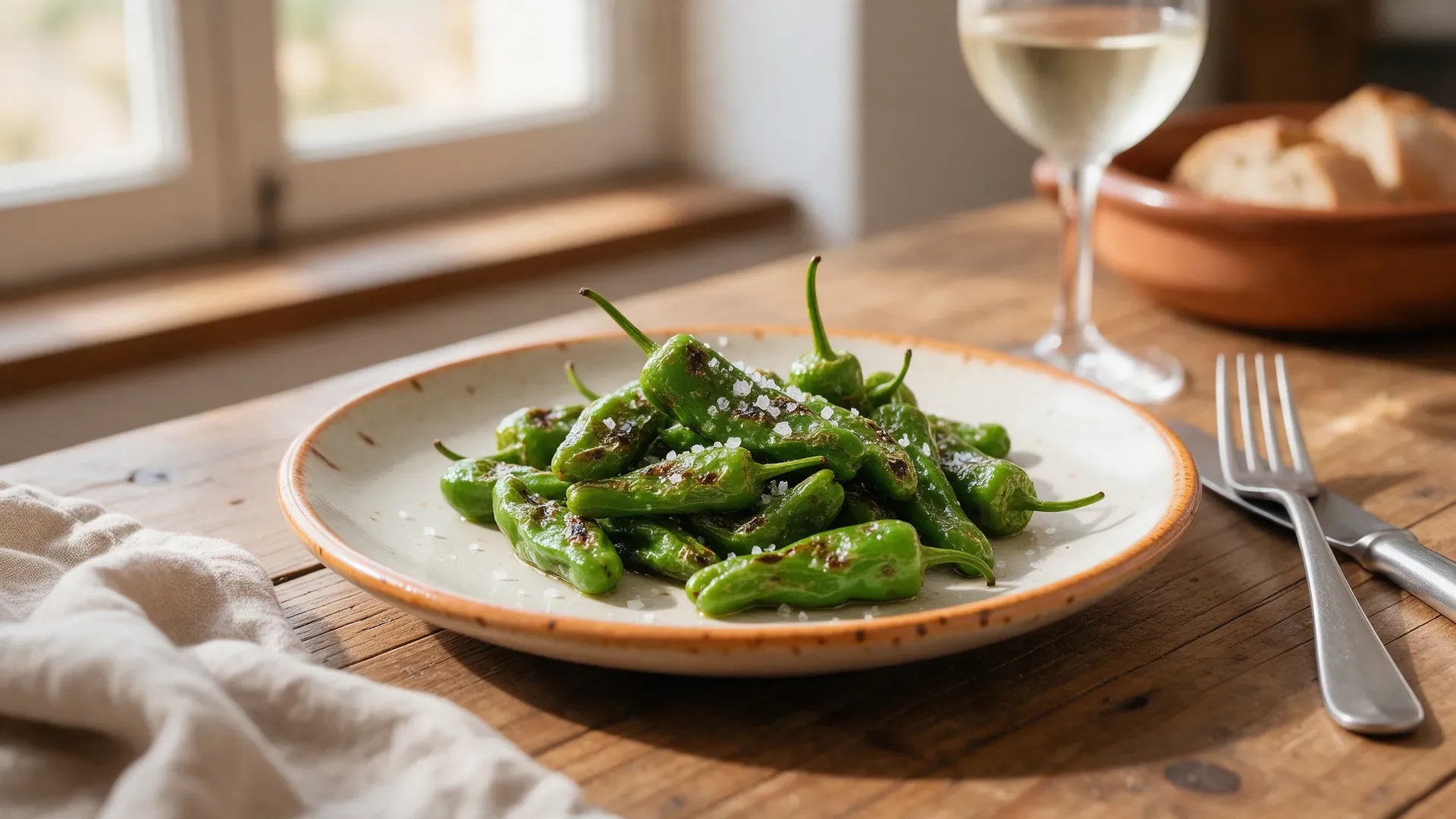
Small, blistered green peppers are a common tapa in Spanish bars. They are pimientos de Padrón, named after the town of Padrón in Galicia, in Spain's north-west.
Our dish page covers where they come from. This post is about the practical side: what a plate should look like, how to eat them, and what to expect when one turns out to be hot.
What arrives on the plate
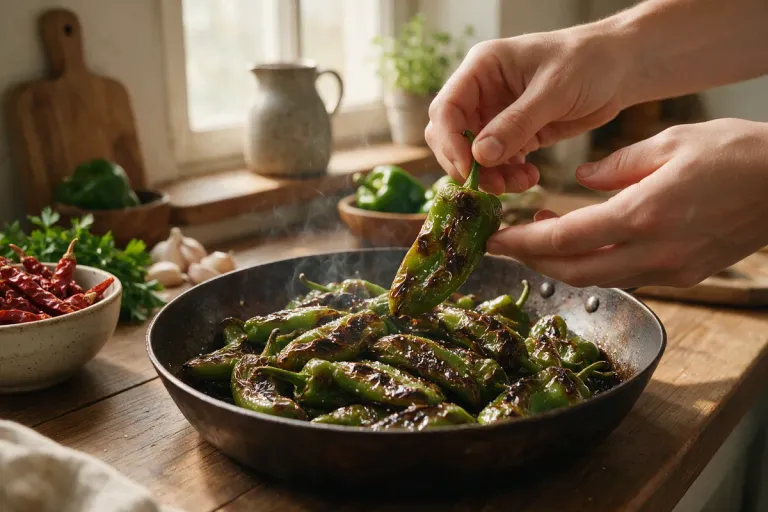
The peppers are fried whole, stem and all, in olive oil until the skin blisters and starts to collapse. Then they get a scatter of coarse salt. There is no batter, no sauce and no stuffing.
Because the dish is so simple, the details show. A good plate has peppers that are blistered in patches but still hold their shape, glossy with oil and not swimming in it, and salted enough that you can see the crystals.
They are normally served as a tapa or a small ración to share, and they come out quickly, which makes them a common first order while you read the rest of the menu.
Why some of them are hot
Most Padrón peppers are mild and slightly sweet. Every so often one is properly hot. Galicians have a saying for it: 'os pementos de Padrón, uns pican e outros non', meaning some are hot and some are not.
You cannot tell by looking which one it will be. Heat varies with how the peppers were grown and how mature they were when picked. The traditional Padrón pepper is picked young and small.
Padrón, Herbón and lookalikes
The name comes from Padrón in Galicia, though the peppers are grown in other places too. The protected-origin version is sold as Pemento de Herbón, after the parish of Herbón near the town. On a menu outside Spain, 'Padrón peppers' tells you the variety and the style of cooking, not necessarily where they were grown.
You may also see Japanese shishito peppers cooked the same way. They are a different variety, but they look similar and play the same mild-with-the-odd-surprise game, so do not be confused if a non-Spanish menu offers something that looks identical.
How to eat them
- Use your fingers. Pick each pepper up by the stem.
- Bite off everything but the stem, and leave the stems on the side of the plate.
- Eat them hot. They lose their appeal once they cool and soften.
- Pair them with a cold beer or a glass of white wine; both suit the salt.
Where to try them
These venues in our directory mention Padrón peppers in their own records:
- Tomiño Taberna Gallega (New York) lists pimientos de Padrón among its Galician dishes, next to pulpo a feira and tortilla de Betanzos.
- Como Tapería (Vancouver): its record mentions steak with padrón peppers from the open kitchen.
- Little Spain (Hua Hin, Thailand) counts Padrón peppers among its tapas classics, alongside croquetas and garlic prawns.