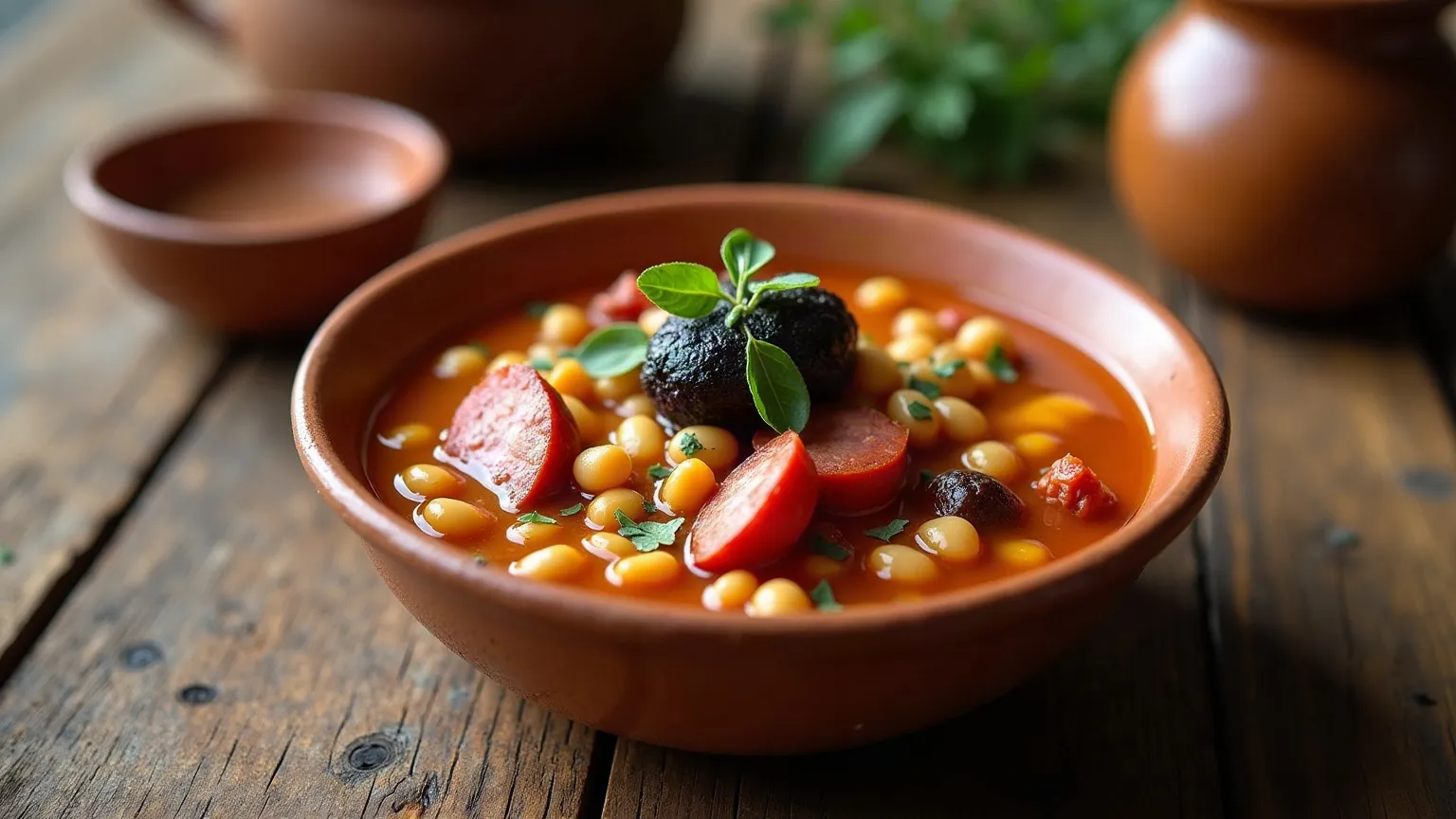
Spaniards have a name for the food that comes back when the weather turns cold: platos de cuchara, spoon dishes. The phrase covers soups and stews eaten with a spoon rather than a fork, and the best-known are legume stews: beans, chickpeas or lentils cooked slowly with pork, sausage or fish. They are home cooking first, and they also turn up as the first course of a menú del día or as a small tapa in a clay dish.
Most Spanish regions have their own version, which is why a short list of names is worth knowing before you read a menu.
What makes a plato de cuchara
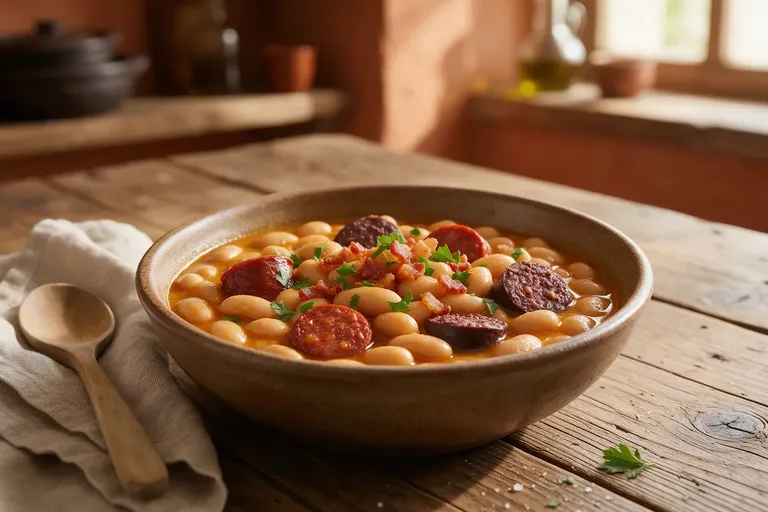
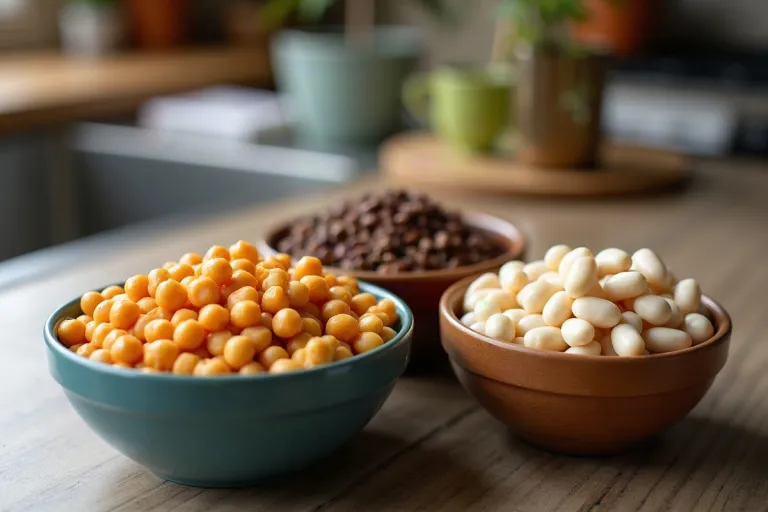
Many spoon dishes are built on a legume, and Spain cooks three in particular: garbanzos (chickpeas), lentejas (lentils) and alubias, also called judías, or fabes in Asturias (dried beans). They are cooked for a long time with whatever the region adds: chorizo, morcilla (blood sausage), tocino (cured pork fat), ham bones, greens or salt cod. Some recipes start from a sofrito of onion and garlic; in others, such as fabada and cocido, the legumes and meats simply simmer together without one. Marmitako is built on potatoes rather than legumes.
They are filling and cheap to make in quantity, and many taste better reheated the next day. That is why they belong to family lunches and the cold months.
The main spoon dishes, region by region
- Cocido madrileño: chickpeas cooked with beef, chicken, chorizo, morcilla, tocino and vegetables. It is traditionally served in stages, called vuelcos: first the broth with fine noodles, then the chickpeas and vegetables, then the meats. See our cocido madrileño page.
- Cocido gallego: Galicia's version, with grelos (turnip greens), potatoes, lacón (cured pork shoulder) and chorizo alongside the chickpeas.
- Fabada asturiana: large white fabes cooked with compango, the set of chorizo, morcilla and cured pork that goes into the pot. Our fabada page and Asturian food guide cover it in more detail.
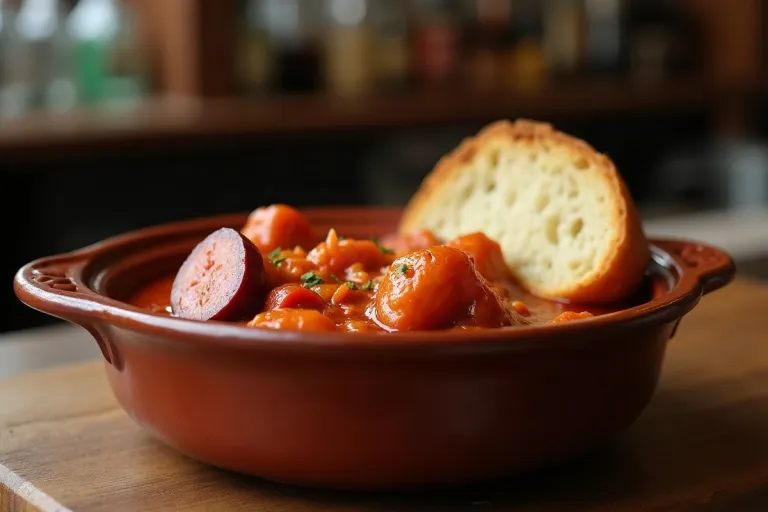
- Callos a la madrileña: beef tripe stewed with chorizo, morcilla and pimentón until the sauce is thick and sticky. Bars in Madrid often serve it as a tapa. See our callos page.
- Lentejas: lentils stewed with vegetables and, usually, chorizo. Probably the most common spoon dish in Spanish homes. See our lentejas page.
- Potaje de vigilia: chickpeas with spinach and salt cod, traditionally made for Lent, when meat was avoided.
- Marmitako: a Basque stew of tuna, potatoes and peppers, originally cooked by fishermen at sea. No legumes, but still eaten with a spoon.
How to order one
A full plate of cocido or fabada is a meal in itself, so treat it as a main course rather than one of several shared plates. These dishes are usually eaten at midday, which is why they appear on lunch menus more than dinner ones. If you only want a taste, look for callos or lentejas served as a tapa or a media ración (half portion).
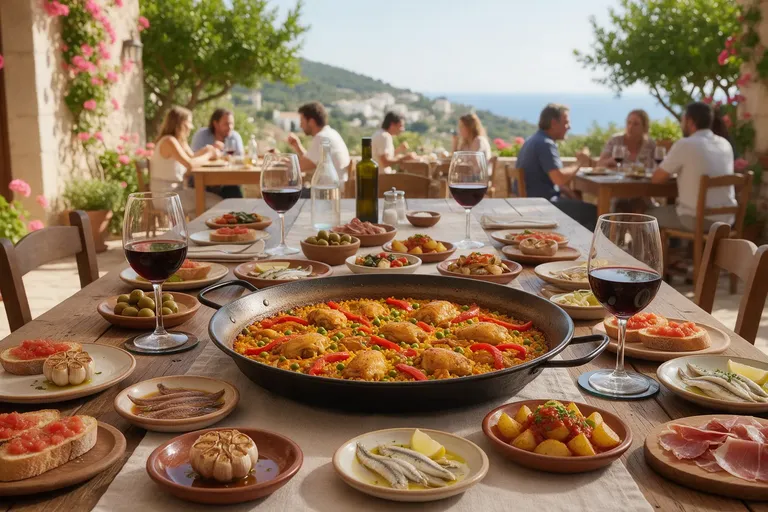
Outside Spain, spoon dishes are less common on menus than paella or tapas, and some kitchens only make them on certain days or in cooler months. Call ahead if you are going for one dish in particular.
Where to find spoon dishes abroad
Each line below comes from the restaurant's own record in our directory. Menus change, so check the dish is on before you go.
- Vega, Mexico City: part of the Castellano Group; its record lists Asturian fabada alongside clams in albariño and arroz del señorito.
- La Mallorquina Polanco and La Mallorquina Bosques, Mexico City: head chef Carlos Arrieta's menu of Spanish home cooking includes fabada, according to both records.
- Casa Alejandro, Panama City: its record lists cocido gallego, pulpo a la gallega and rabo de toro; owner and chef Alejandro Pérez Barreiro.
- La Encina, Bogotá: a Zona G restaurant whose record lists callos a la madrileña and rabo de toro alongside paella and cochinillo segoviano.
- Bellota, Beijing: its record lists callos among its dishes, with gazpacho, paella and garlic shrimp.