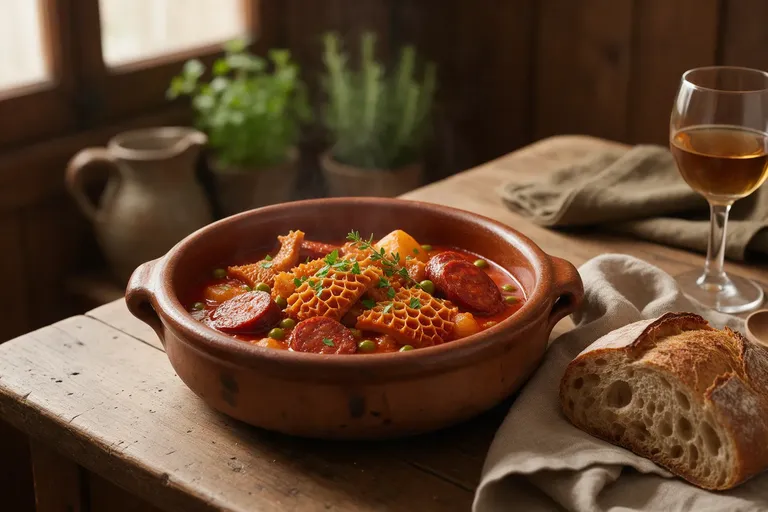
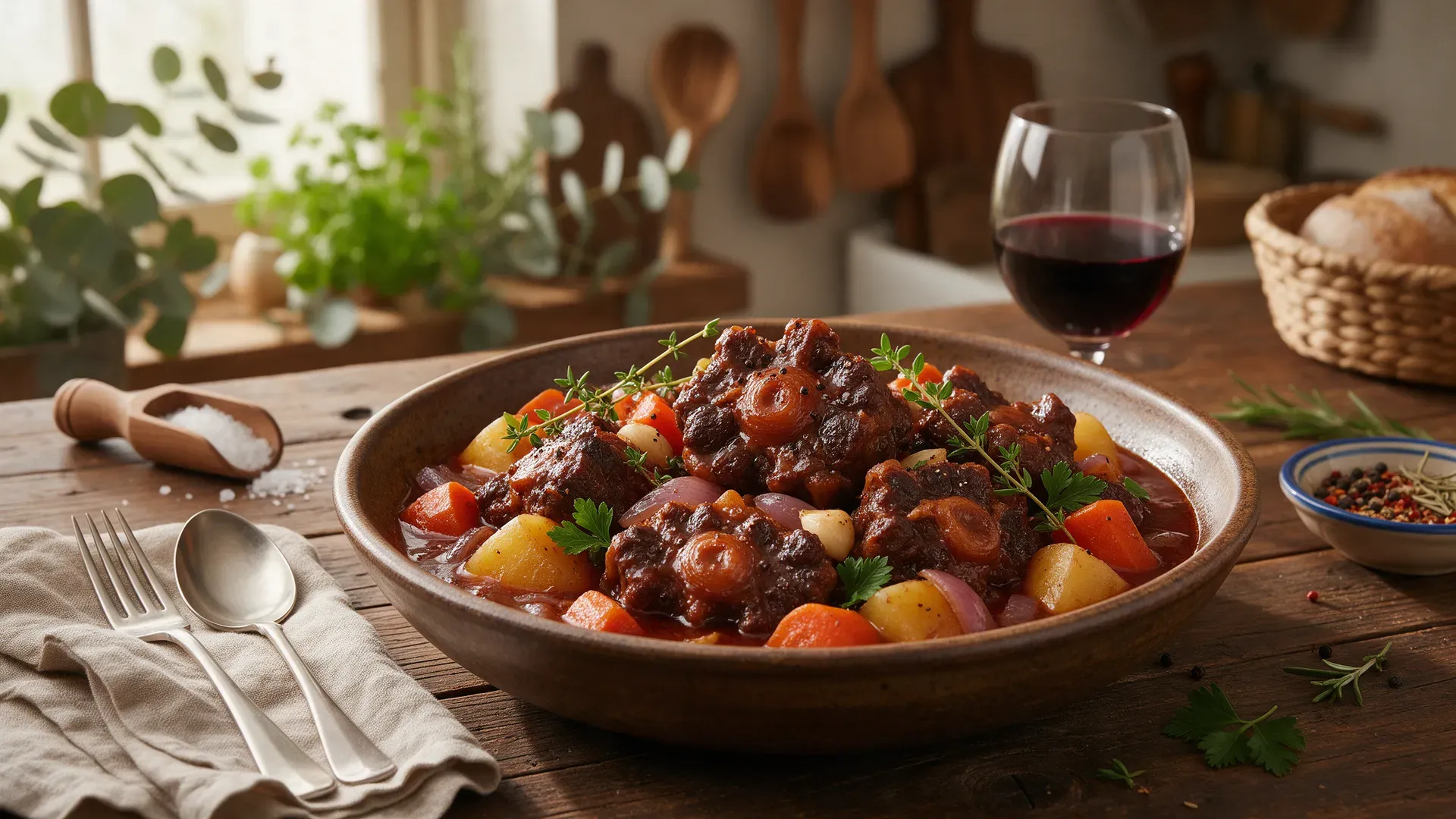
Rabo de toro is oxtail stewed slowly, typically in red wine with onion, carrot and tomato until the meat falls from the bone. It is one of the richest dishes on a Spanish menu. This guide covers the practical side: what the names mean, how it arrives and what to look for.
Where it comes from
The dish is strongly associated with Córdoba in Andalusia. Historically it was linked to the bullring and made with the tails of bulls from the corrida, which is where the name, bull's tail, comes from.
Today, many kitchens use ordinary beef oxtail. Menus that use it may call it rabo de vaca (cow's tail) or rabo de buey (ox tail). The braising method is similar: a tough, bony cut turned soft by hours of slow heat.
How it is served
Rabo de toro is a main dish, not a light tapa. At a tapas bar you may see it as a ración, a larger plate meant to share, and some bars serve a small tapa portion. Common ways to serve it:
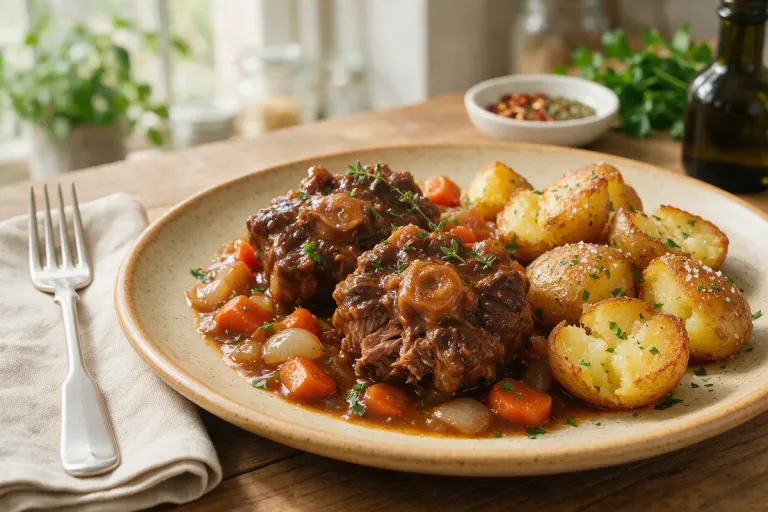
- With fried potatoes, either alongside or underneath, so the chips soak up the sauce.
- With bread, for the same reason.
- Off the bone, in some modern kitchens, shaped into a croqueta, a filling, or a neat portion.
Some versions finish the sauce with sweet Pedro Ximénez sherry, which makes it darker and sweeter. If the menu says al Pedro Ximénez, expect that.
What to look for
A few signs suggest the kitchen gave it the time it needs:
- The meat comes away from the bone with a fork, without pulling.
- The sauce is glossy and slightly sticky. That texture comes from the collagen in the tail dissolving during long cooking.
- It tastes of wine and meat, not of raw alcohol or flour.
Because it takes hours, many restaurants cook rabo de toro in batches. That is normal and not a sign of a shortcut; braises often improve after resting.
Tips for ordering
- Share it if you are also ordering other plates. A full portion is heavy.
- Pair it with a red. A Spanish red with some body works, and our guide to Rioja is a good starting point.
- If you like it, try the other long Spanish braises too, such as carrillada, slow-cooked pork or beef cheek.
Where to try rabo de toro abroad
These venues in our directory name rabo de toro or oxtail in their own listings:
- La Encina, Bogotá: traditional Spanish cooking in Zona G, with rabo de toro alongside cochinillo, grilled octopus and callos.
- Casa Alejandro, Panama City: rabo de toro is on a menu that also includes cocido gallego and pulpo a la gallega; the owner and chef is Alejandro Pérez Barreiro.
- Alma Gitana, Villa de Leyva: a small family business whose listing names oxtail as its great speciality.
- Huevos de Oro, São Paulo: oxtail (rabo de toro) is among the iconic dishes its listing names.