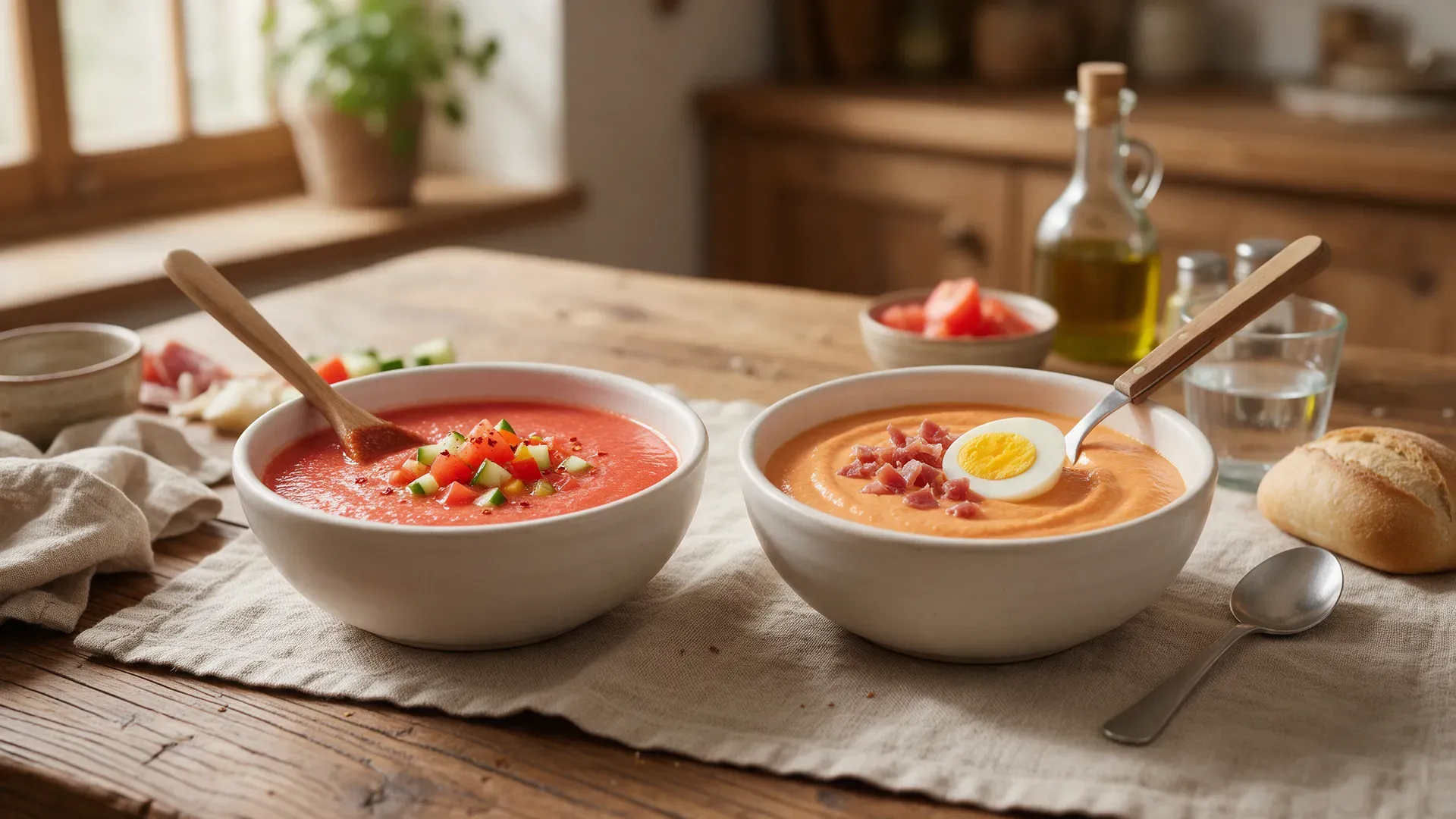
Both are cold. Both are built on raw tomatoes, bread and olive oil. Both come from Andalusia, in the south of Spain, where a cold soup makes far more sense than a hot one for most of the year. But gazpacho and salmorejo are not the same dish, and ordering one expecting the other is a common way to end up disappointed with something that was actually made correctly.
Older than the tomato
Gazpacho's roots are generally traced back further than the tomato-red version most people know. Early versions, the kind eaten by field workers in Andalusia and Extremadura, are usually described as little more than stale bread, olive oil, garlic, water and vinegar, pounded into a cold emulsion: a way of using up hard bread and getting calories and hydration in the heat of the fields. Tomatoes and peppers, both New World crops, could only enter the recipe after Spain's contact with the Americas, which is why food historians treat the tomato-based version as a later addition to an older dish. Ajoblanco, discussed below, keeps closer to that no-tomato style than modern red gazpacho does.
Gazpacho: thin, raw, drinkable
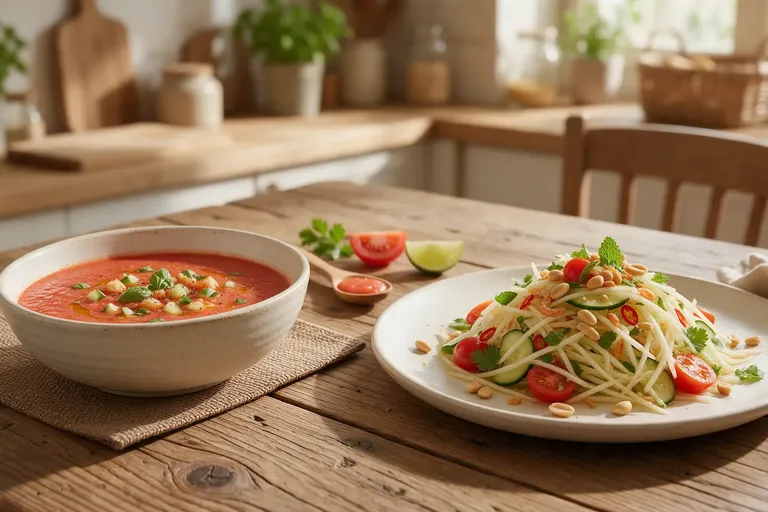
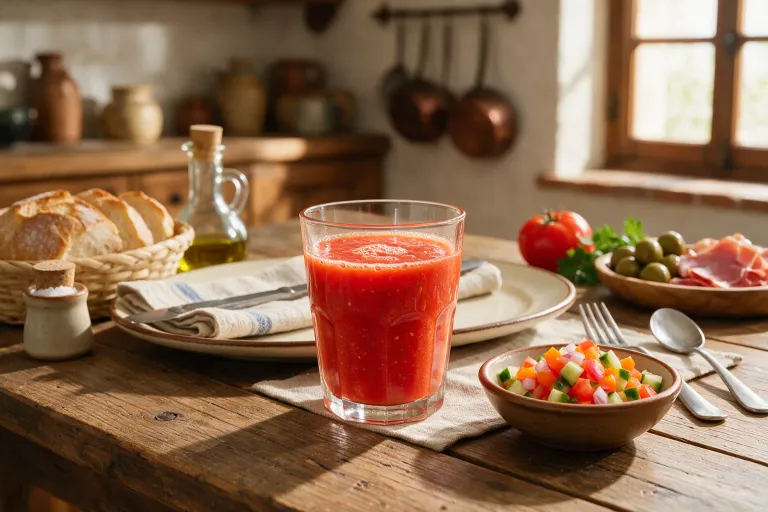
The classic version is a blended, strained soup of ripe tomato, cucumber, green pepper, onion, garlic, olive oil, vinegar and stale bread, all raw, chilled, and thin enough to drink from a glass. Straining is what gives it that smooth, pulp-free texture; recipes vary, but a gazpacho with a lot of visible pulp or seeds has usually skipped or shortened that step. It's traditionally served as a starter, sometimes with small bowls of diced cucumber, pepper and hard-boiled egg on the side so each diner can add texture back in.
What it should never be is watery from added ice. A well-made gazpacho is chilled for hours in the fridge beforehand; dropping ice cubes directly into the bowl to cool it fast dilutes the flavour, which is why a cheap or rushed version tastes thin in the wrong way: not light, just weak.
Salmorejo: thick, spoonable, from Córdoba
Salmorejo comes specifically from Córdoba, and the differences from gazpacho are more than a matter of taste. The classic recipe skips cucumber and onion entirely. The ratio of bread to tomato is much higher, which is what gives salmorejo its thick, almost mousse-like texture, closer to a dip than a drink. The traditional garnish is diced jamón and crumbled hard-boiled egg on top, which is also why salmorejo is less often served as a vegan dish by default than gazpacho is.
If a menu lists salmorejo and gazpacho side by side and they taste almost identical, one of them has probably been made as a shortcut version of the other. The giveaway is texture: dip a spoon in and tilt it. Gazpacho runs off. Salmorejo stays on.
Ajoblanco: the white gazpacho that isn't gazpacho at all
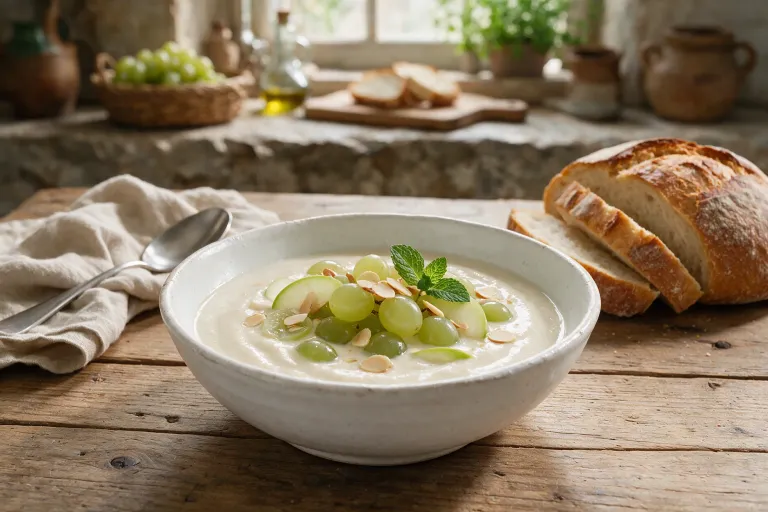
A third cold soup worth knowing is ajoblanco, most associated with Málaga though also made elsewhere in Andalusia, and it breaks the pattern entirely: there's no tomato in it. Ajoblanco is built on blanched almonds, garlic, bread, olive oil and sherry vinegar, which gives it a pale, milky colour rather than red. It's traditionally finished with a few green grapes or a thin slice of melon floated on top, a cold-sweet contrast against the garlic. The name, literally "white garlic," is a fair description of both its colour and its most forward flavour.
Where to try them
- Ajoblanco in Mexico City takes its name directly from the dish: its own listing says the name comes from the idea of "gazpacho made with almonds" from the Málaga and Extremadura tradition, and gazpachos are listed among its specialties.
- El Pote in New York has served Murray Hill for over 22 years with Castilian classics that include gazpacho alongside paella.
- Taburete in Bangkok's Silom plays with the format, with a watermelon gazpacho alongside more traditional tapas.
- Restaurante Castizo in Mexico City's Condesa neighbourhood lists salmorejo among its tapas, alongside Ibérico ham and Manchego.
None of these needs a special occasion. Both soups were built as working food for hot afternoons, which is exactly when they're still best ordered.
Two mistakes to avoid when ordering
Beyond the ice-dilution problem already mentioned, the other common mistake is treating either soup as the whole meal rather than the starter it's meant to be. Both are built to open the appetite before something more substantial, like grilled fish or a plate of jamón, not to replace it. And because both are served cold by design, sending either back for being "not hot enough" misunderstands the dish rather than the kitchen.