Several restaurants in our directory describe themselves as Catalan rather than simply Spanish. Their menus may use Catalan spellings and include dishes you won't see on a general tapas list. This guide goes through the main ones. For the spelling side, our post on Catalan, Basque and Galician words on Spanish menus is a useful companion.
Mar i muntanya: sea and mountain
Catalonia sits between the Mediterranean and the Pyrenees, and its cooking has a name for combining the two: mar i muntanya, sea and mountain. These are dishes that put seafood and meat in the same pot, such as chicken cooked with prawns.
Two restaurants in our directory build on the idea. Masia in Tokyo says its menu is centred on the concept and that combining fresh seafood and meat in one dish is what Catalan people have done for generations. Gaudim in Breda describes its food as everything between mountain and sea.
Bread, tomato and roasted vegetables
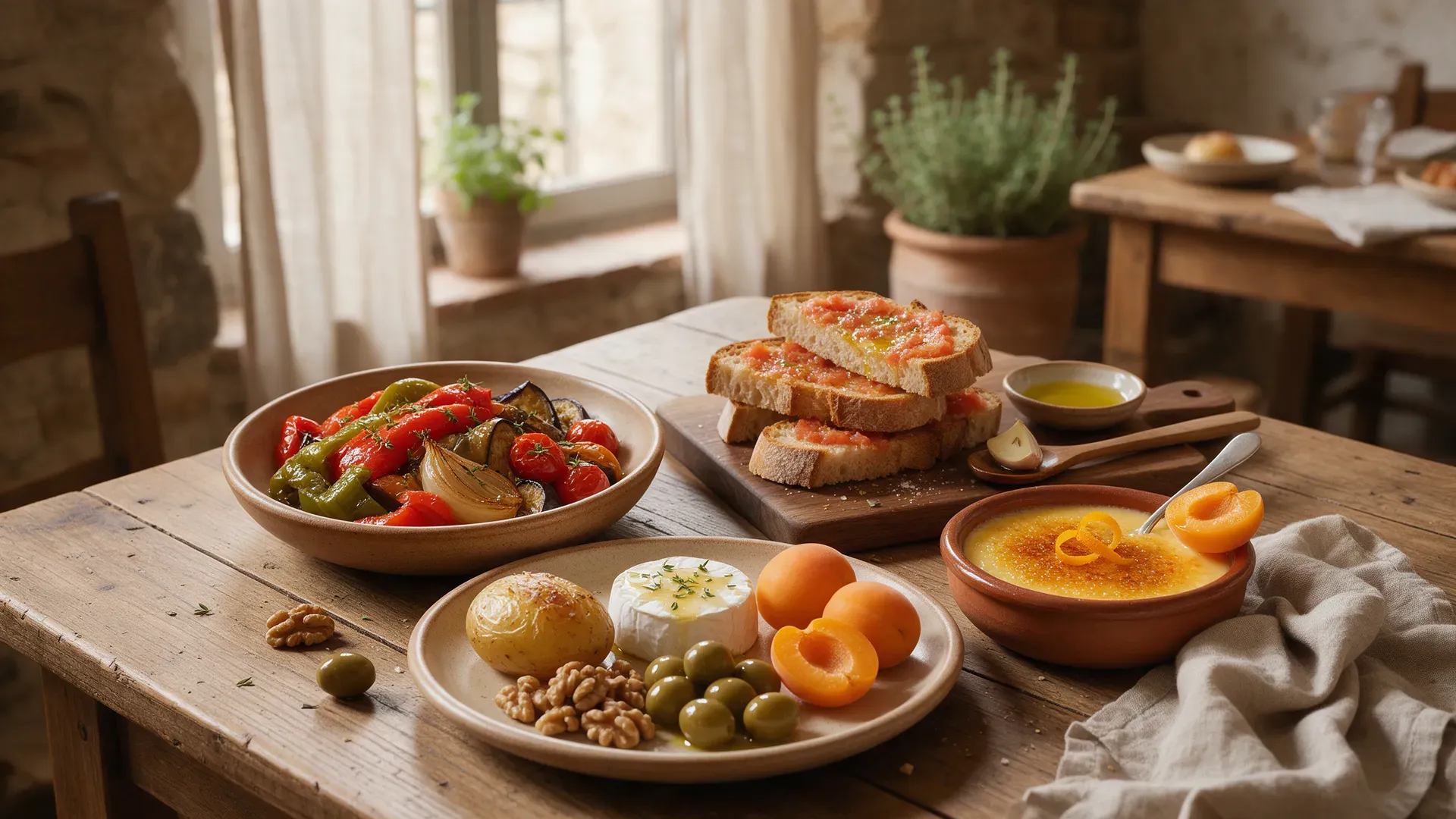
Pa amb tomàquet, bread rubbed with tomato, oil and salt, is the Catalan staple. We covered it in detail in our pan con tomate guide.
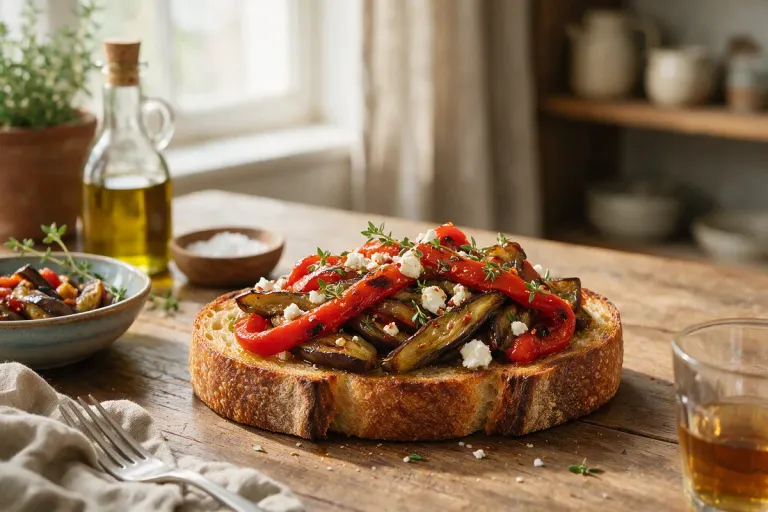
Escalivada is the other starter to know. According to our escalivada dish page, it is red peppers, aubergine and onion roasted over embers, then peeled, torn into strips and dressed with olive oil and salt. The name comes from the Catalan verb escalivar, to cook in ashes. It is served cold or at room temperature, often on toast or with anchovies.
Sausage, beans and the big stew
Botifarra (butifarra in Spanish) is the Catalan pork sausage. The classic plate is botifarra amb mongetes, grilled sausage with white beans, and it is often served with allioli, the garlic and oil sauce. Brasa in Washington lists butifarra with mongetes and alioli as one of its open-fire classics.
Escudella i carn d'olla is the Catalan boiled dinner. Our dish page says the name comes from the bowl it is served in, and that, like Madrid's cocido, it is served as broth first and then the meats and vegetables. The Christmas version adds a large meatball called a pilota and giant pasta shells called galets.
Pasta and noodles
Canelons, Catalan cannelloni, are a Christmas-season tradition: they are traditionally eaten on 26 December, Saint Stephen's Day, and filled with meat left over from the Christmas stew and roasts. Restaurant Gaig in Singapore, chef Carles Gaig's restaurant, says on its listing that its traditional cannelloni dates from 1869.
Fideuà, short noodles cooked in fish stock in a paella pan and served with allioli, originated on the Valencian coast; our fideuà page traces it to Gandia. You can also find it on Spanish menus abroad, for example at SOPA in Bangkok, which lists it as a highlight.
Crema catalana
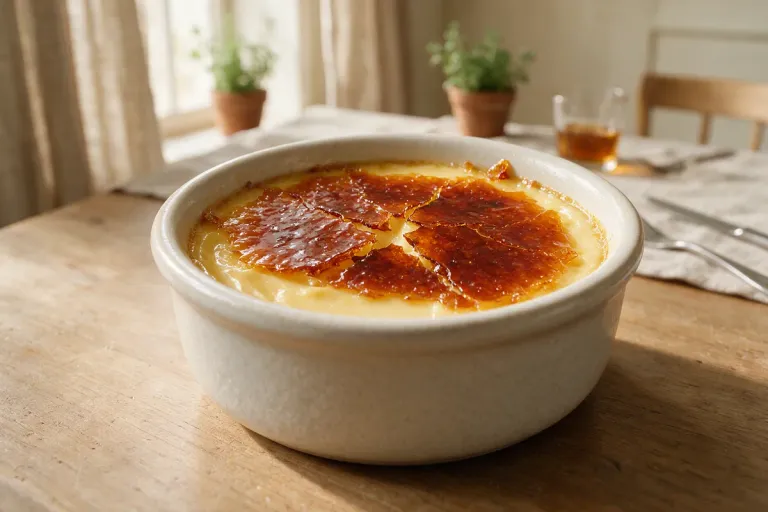
The dessert to finish on. Our crema catalana page describes an egg-yolk custard flavoured with lemon zest and cinnamon under a brittle caramelised-sugar crust. It is traditionally eaten on Saint Joseph's Day, 19 March, which is why it is also called crema de Sant Josep.
Catalan restaurants abroad
- Restaurant Gaig, Singapore: its listing calls it chef Carles Gaig's Catalan institution, run locally by chef Martí Carlos Martínez.
- BCN Taste & Tradition, Houston: in a 1920s house in the Museum District, serving traditional Catalan cuisine with an art collection that includes Picasso, Dalí and Miró, per its listing.
- Masia, Tokyo: chef Mateu Villaret sums up his approach as Catalan roots, Spanish soul and Japanese produce.
- Lunya, Liverpool: open since 2010, it describes itself as obsessed with Catalan and Spanish food culture and became employee-owned in October 2024.
- El Born, Taguig: its listing describes Catalan-Mediterranean cooking that aims to capture Barcelona in Manila.
Check each listing for current hours before you go.