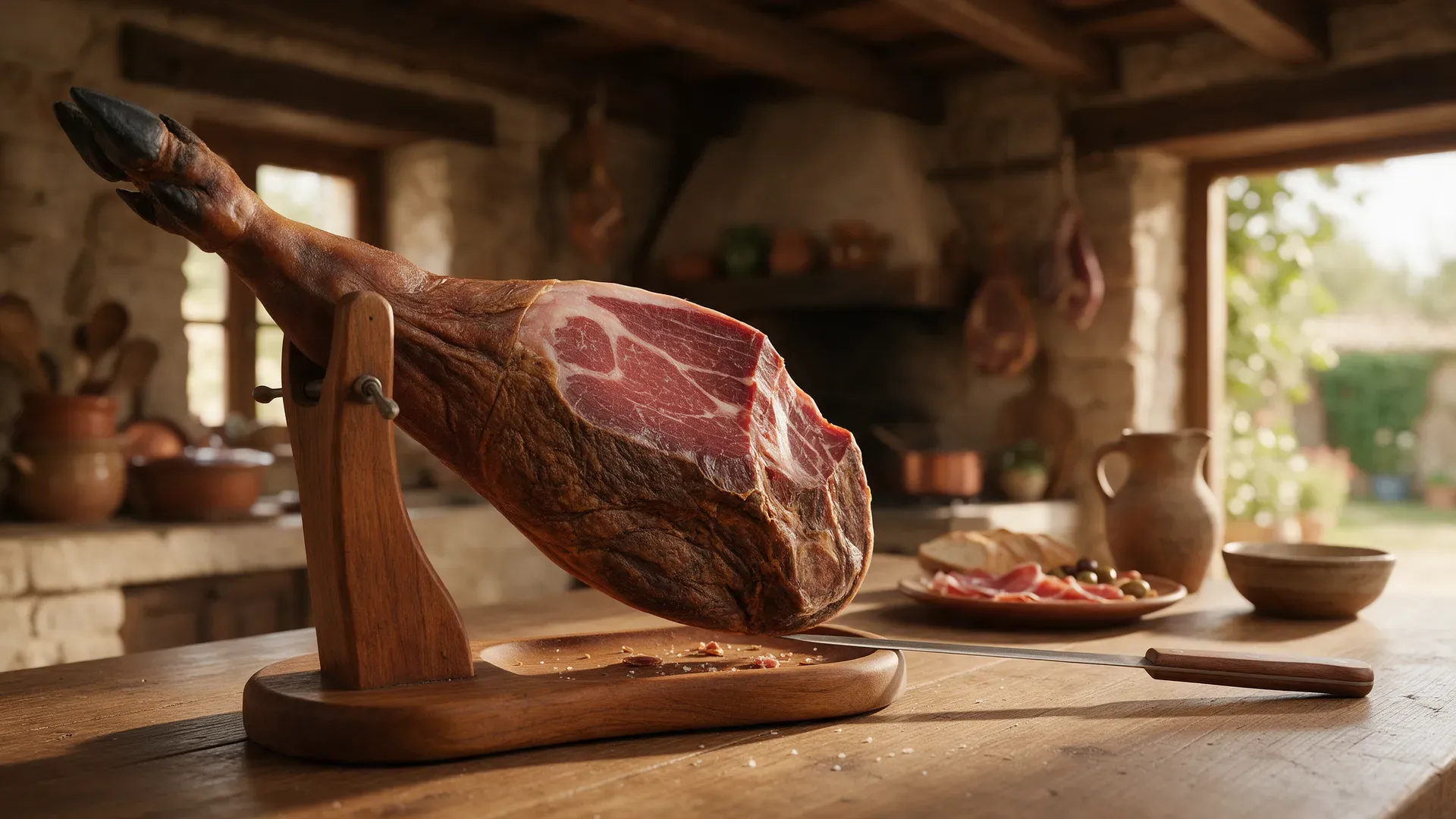
In Spain, a whole cured ham is often carved at the table or the bar. Carving it well is a skill with its own name: the person who does it is a cortador de jamón. Carvers work in restaurants and shops, and are also hired for weddings and events. Spain also holds carving competitions.
This post covers the general craft. It is not about any one restaurant, though we list a few in our directory at the end whose records talk about carving or serving jamón.
The tools
A carver needs three things.
- The stand (jamonero): a wooden base with a clamp that holds the leg firmly in place.
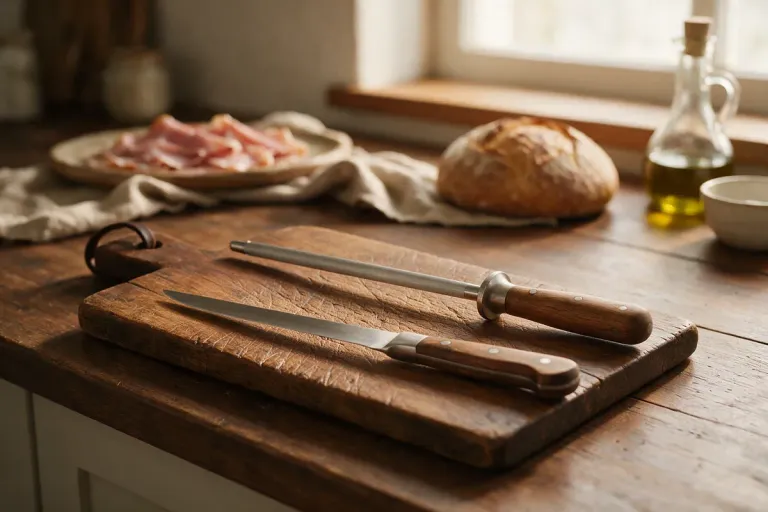
- The ham knife (cuchillo jamonero): long, narrow and flexible, so it can follow the surface of the meat and cut very thin slices.
- A shorter, stiffer knife: for removing the skin and the outer layer of fat, and for working around the bone.
A good carver keeps the knife sharp and the cutting surface flat. A flat surface gives even slices from one end of the cut to the other.
The parts of the leg
The carver works through the ham in sections. The maza is the widest, juiciest part. The babilla, also called the contramaza, is the narrower opposite side. The punta is the tip near the hip, and the jarrete is the shank near the hoof, which is tougher and often cut into small pieces.
Which side comes first depends on how fast the ham will be eaten. When a ham will be finished quickly, the usual advice is to start with the hoof facing up and cut the maza first. When it will last a while, carvers often start on the babilla, with the hoof facing down, so the juicier maza stays protected for longer.
What good slices look like
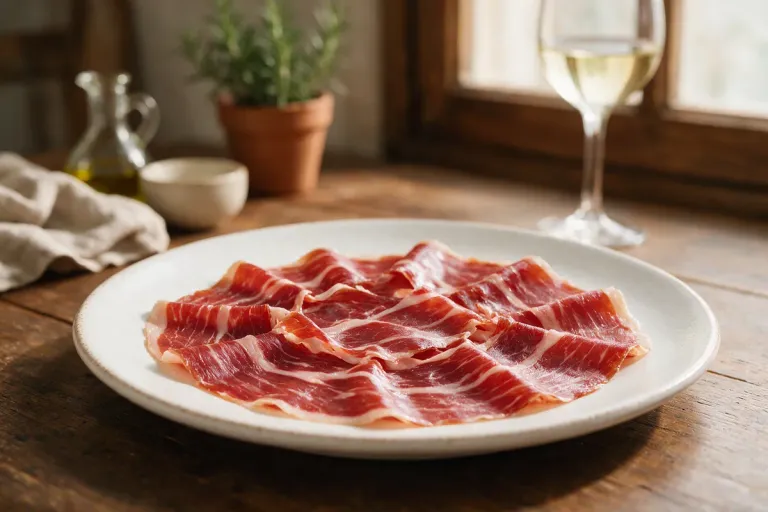
- Thin: thin enough that the slice is almost see-through in places.
- Small: roughly bite-sized, so each piece can be eaten in one go.
- With some fat: a little of the fat is left on each slice. On a good ham it carries a lot of the flavour.
- At room temperature: cold ham tastes of less. The fat should look soft and slightly shiny.
Slices are laid on the plate in a single layer and eaten soon after carving. Between sessions, carvers often cover the cut surface with pieces of its own fat to keep it from drying out. Nothing goes to waste at the end either: the bone and trimmings are commonly used for stock.
Hand-carved or machine-sliced?
Plenty of good ham is sliced by machine and sold in packs, and that is fine for everyday eating. Many people still prefer hand carving for the best hams, because the carver can control thickness and keep the right amount of fat in each slice.
For more on choosing ham, see our guides to jamón serrano vs ibérico and how to tell if your jamón ibérico is real.
Where to try jamón in our directory
These restaurants mention carving or jamón in their own records:
- Lunya, Liverpool: a staff-owned Catalan and Spanish restaurant open since 2010, which mentions jamón carved fresh from the bone.
- Jamonería by ARC, Richmond, near Vancouver: a restaurant and gourmet market whose record lists carved Jamón Ibérico with tapas, cheeses and wine.
- Jamon Jamon, Washington, DC: describes itself as DC's first jamonería, serving Spanish jamón with cheeses and fresh bread.
- Empório Pata Negra, São Paulo: describes itself as the first and only Spanish ham and tapas bar in Brazil, created by three partners.