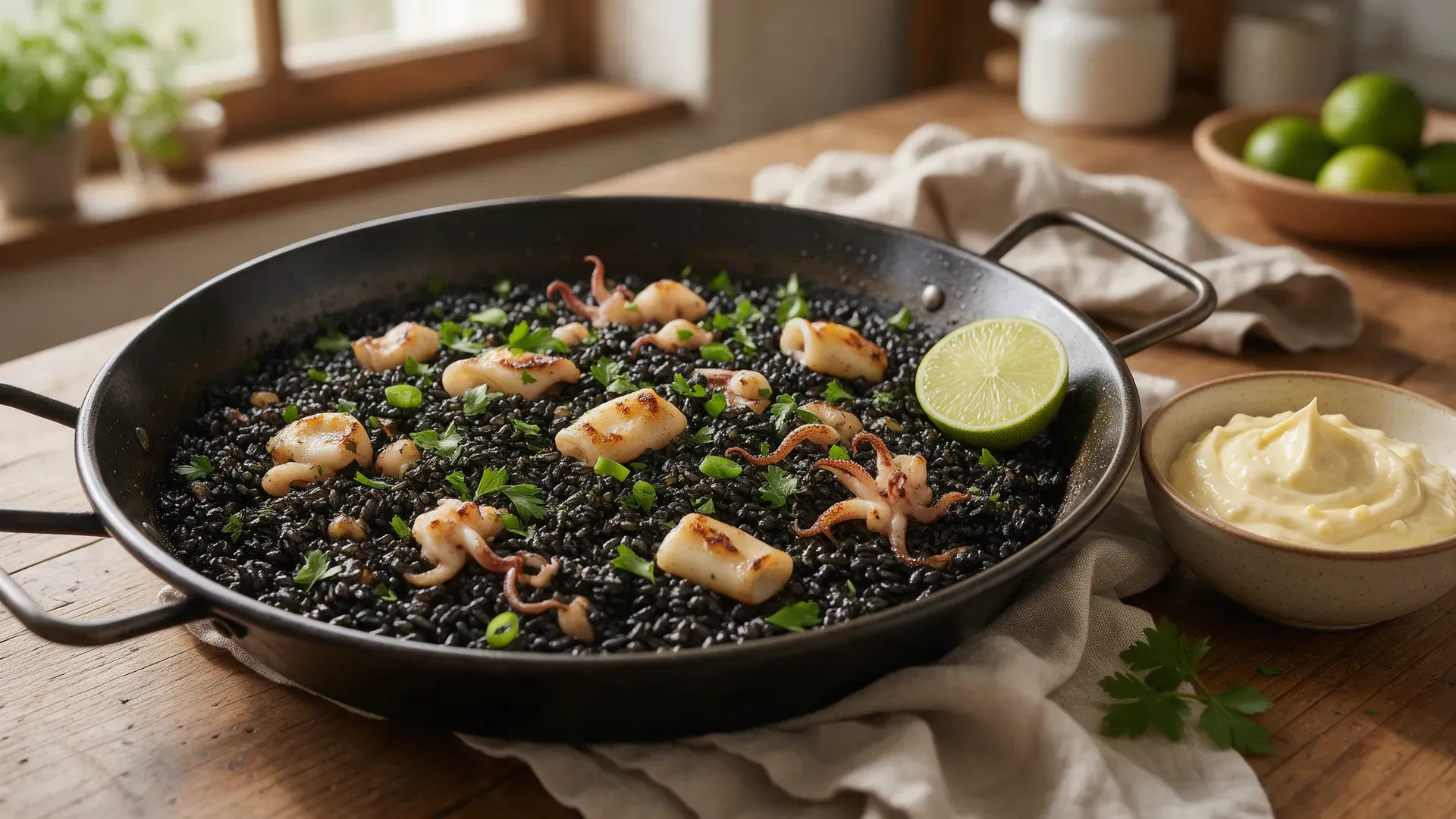
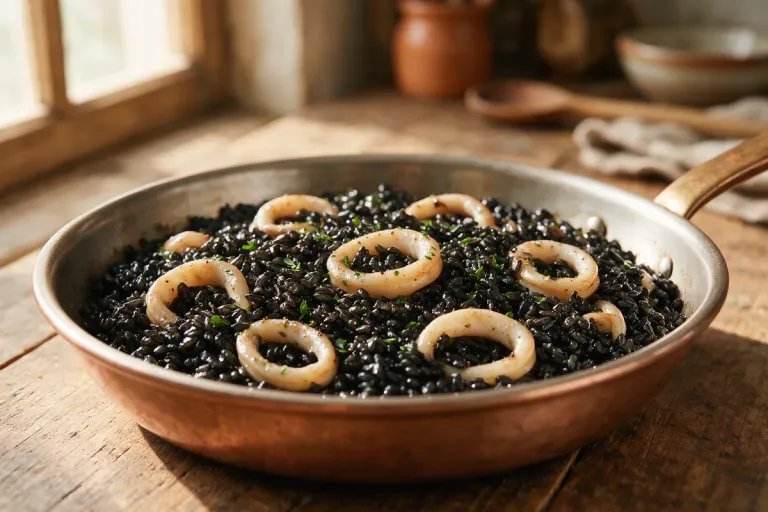
Arroz negro looks alarming the first time it arrives: a pan of rice the colour of tar. The colour comes from squid or cuttlefish ink, and the dish is one of the classic rices of the Spanish Mediterranean coast. In Catalan and Valencian it is arròs negre. This guide covers what goes into it, how it is served, and what to check before you order it abroad.
What arroz negro is
The base is short-grain rice cooked in a wide, shallow pan, the same way as paella. Pieces of squid or cuttlefish are cooked in olive oil with garlic and tomato, then the ink goes in with fish stock and the rice. The ink is a flavouring as well as a dye. It adds a savoury, briny taste of the sea.
Arroz negro is usually cooked as a dry rice, like paella and arroz a banda. The liquid cooks away and the grains should stay separate. We explained the dry, creamy and soupy rice families in beyond paella.
Ink used in restaurant kitchens often comes in small sachets or jars rather than straight from the animal. That is common practice.
Allioli on the side
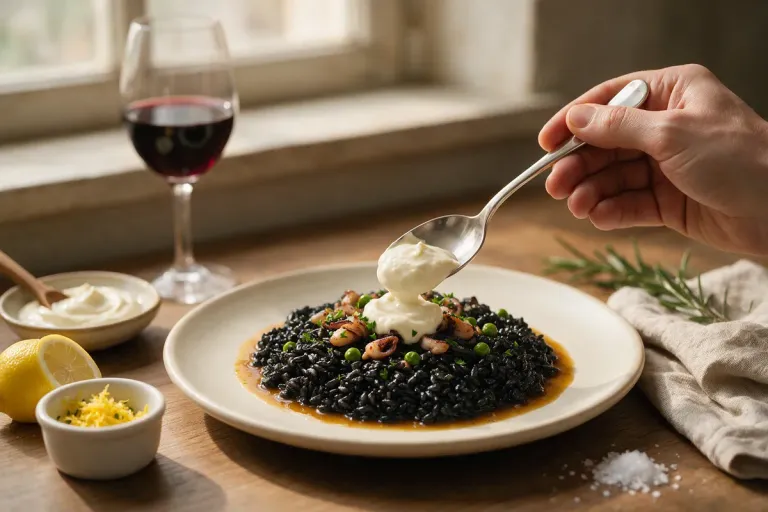
The usual partner is allioli, a garlic sauce served in a small bowl next to the pan. You add it a spoonful at a time. Traditional allioli is only garlic and olive oil pounded together. Many restaurant versions add egg and taste closer to a garlic mayonnaise. If you avoid egg, ask which one the kitchen makes.
What the menu might call it
- Arroz negro or arròs negre: black rice. The standard name.
- Paella negra: a name some menus outside Spain use for the same dish. In Spain you will mostly see arroz negro.
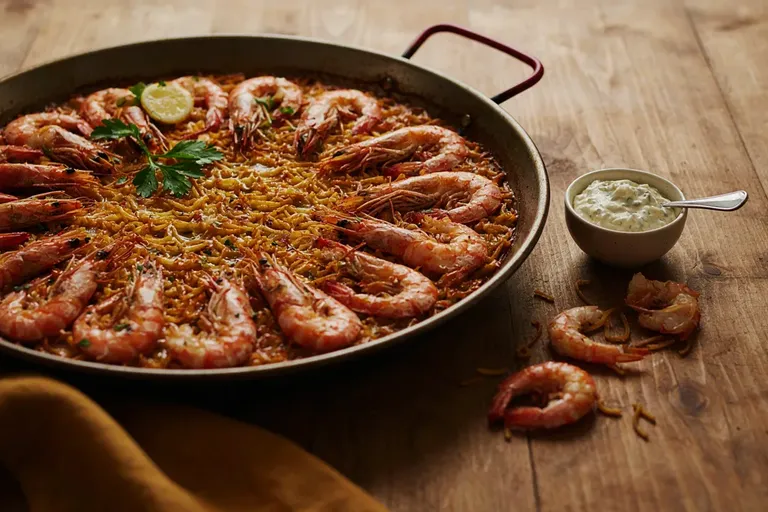
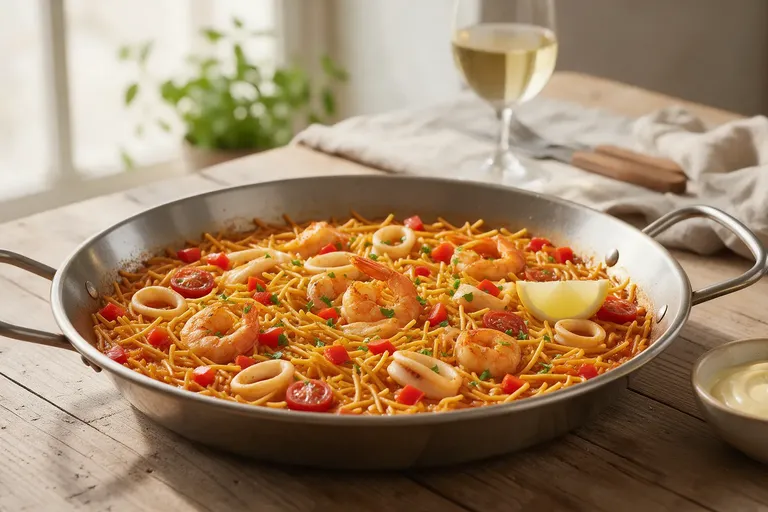
- Fideuà negra: the same idea with short noodles instead of rice. See our fideuà guide.
- Chipirones en su tinta: baby squid cooked in a sauce made with their own ink. It is a separate dish, usually served with plain white rice, and common in the Basque Country. We have a page on chipirones en su tinta.
How to order it
At most restaurants, rice in the pan is cooked to order, so expect to wait. If you want it as your main course, order it with your first tapas rather than after them.
Read the small print next to the price. Pan rices are often priced per person with a minimum of two, and the menu will say so. If you are on your own, ask whether they will cook a single portion.
In Valencia, rice is traditionally a lunchtime dish. Restaurants abroad serve it at dinner too, and nobody will mind.
It contains molluscs, and often fish stock. If you have a shellfish or mollusc allergy, this is one to skip.
The ink stains your lips and teeth for a while. It washes off. It is worth knowing before a first date or a business lunch.
What to look for on the plate
- A thin layer of rice, not a deep mound. A thin layer lets the liquid cook away evenly.
- Separate grains with a little bite, not a sticky mass.
- An even black colour. Colour alone tells you little about flavour, though.
- Squid or cuttlefish that is tender, not rubbery.
- Possibly a crisp layer stuck to the bottom of the pan. That is socarrat, and many diners prize it in a dry rice.
Where to try it
These restaurants in our directory list black rice or an ink dish in their own records:
- ¡Ay Manuela! in Xiamen lists arroz negro, black rice made with squid ink, alongside paella and fideuà.
- Tierra Roja in Chía, Cundinamarca, names black rice among its standout dishes, with serrano ham and sangria.
- MoVida Bangkok in Ekkamai lists fideos negro, the noodle version, among its tapas.
Menus change, so if you are going for the black rice, check it is on before you book. More Spanish rice dishes are on our dishes page.