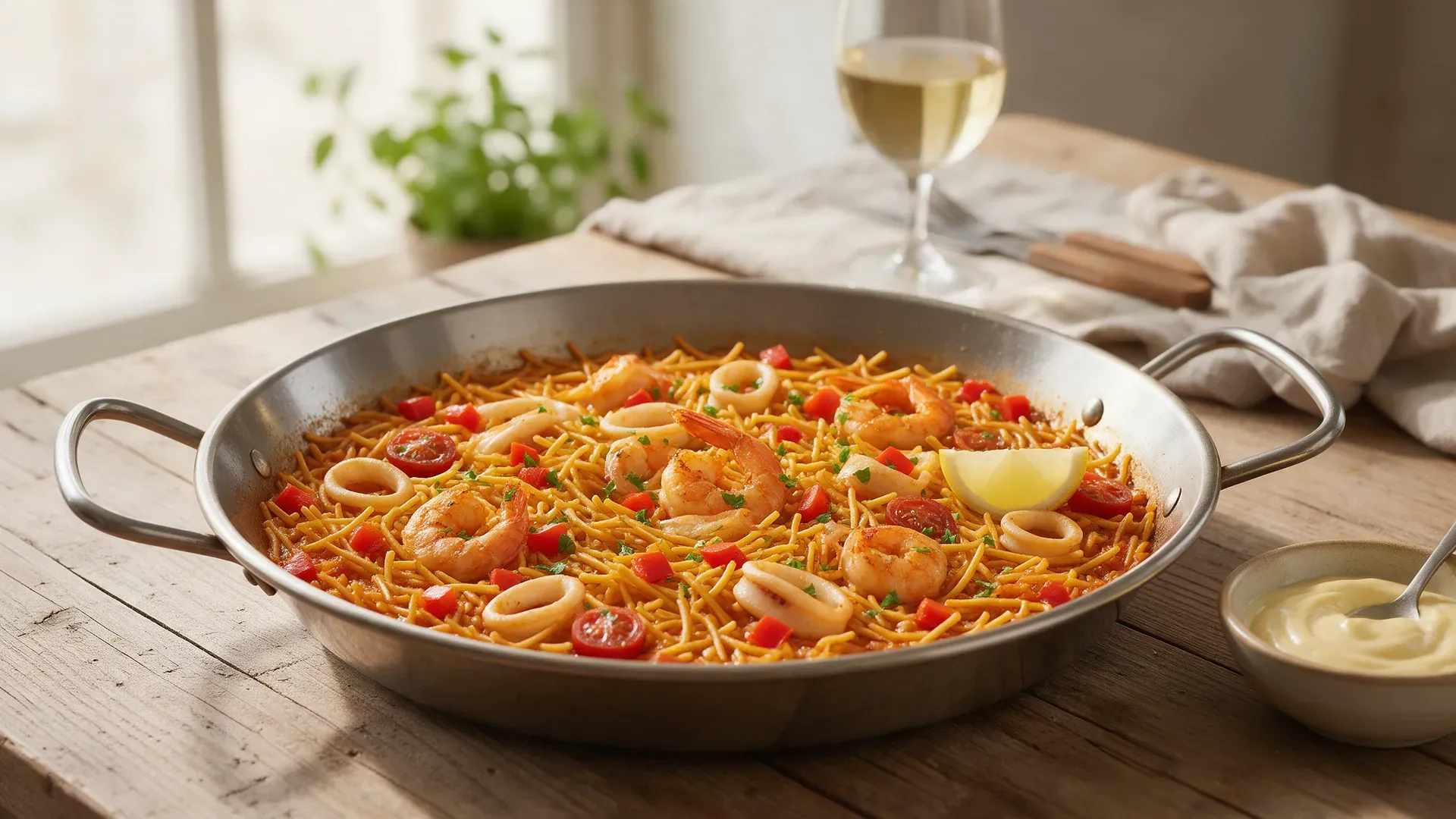
If you have ever looked at a Spanish menu and seen a pan of seafood paella listed next to something called fideuà, you have met the noodle cousin of paella. Same wide, shallow pan. Same seafood stock. The difference is that the rice is replaced by fideos, short thin noodles that soak up the stock the way rice would.
It is a dish of the Valencian coast, and it is closely tied to the town of Gandia, south of Valencia city. Our dish page covers the basics at Fideuà. This post is about the practical side: what you are ordering, how it should arrive, and where in our directory you can find it.
What fideuà actually is
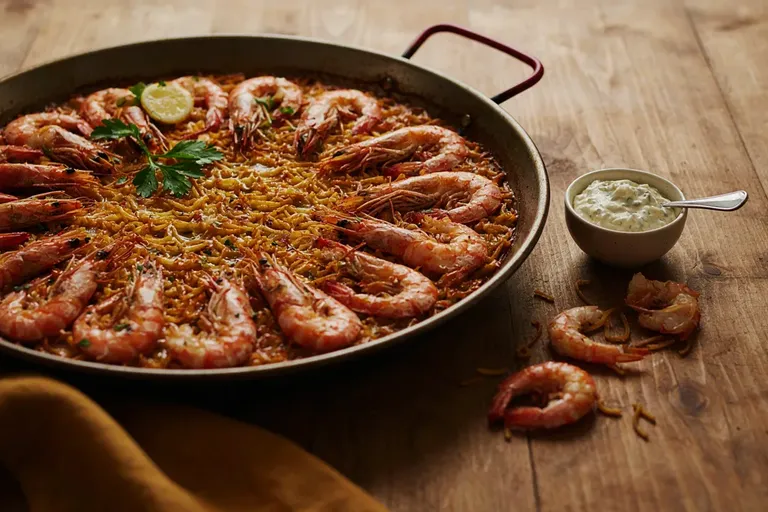
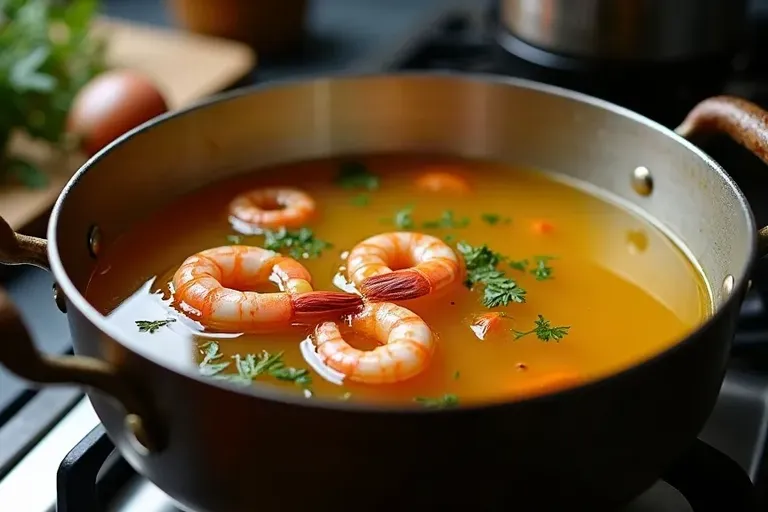
The base is close to a seafood paella. A sofrito of oil, garlic, tomato and often ñora or other dried pepper goes into the pan, seafood is cooked in it, then the noodles go in and fish stock is added. The noodles cook in the stock until it is absorbed. Common seafood includes prawns, squid, cuttlefish and monkfish, though every kitchen has its own version.
The noodles are the point. They are short pieces of thin pasta, and some cooks use a slightly thicker noodle with a hollow centre. Some kitchens finish the pan under a grill or in a hot oven, which makes the top layer of noodles dry out and curl upwards. If you see little noodle tips standing up on the surface, that is deliberate.
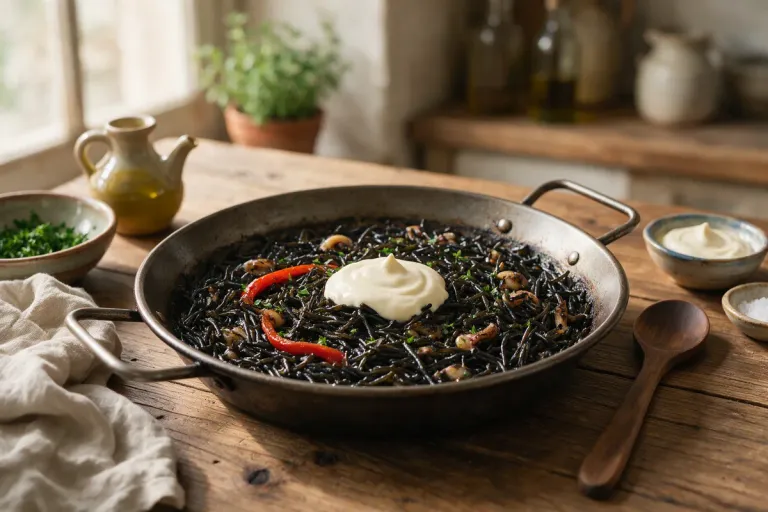
Fideuà is usually served with allioli, the garlic and oil emulsion, on the side. You stir a spoonful into your portion as you eat. If it arrives without one, it is fine to ask.
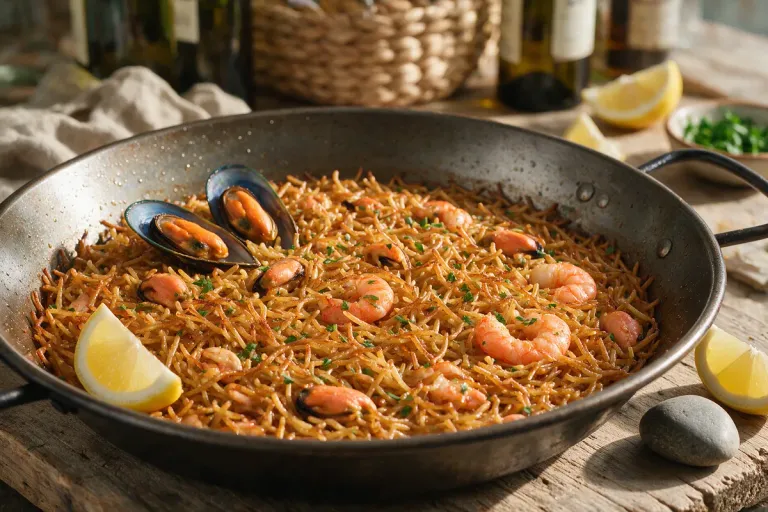
Fideuà vs paella vs fideos a la cazuela
Three dishes get confused with each other, so it helps to keep them apart:
- Paella is rice cooked in a wide pan with stock. The seafood version and the Valencian chicken-and-rabbit version are different dishes. See Paella.
- Fideuà uses the paella method and pan with noodles instead of rice. It should be fairly dry when served, with the stock absorbed.
- Fideos a la cazuela and similar noodle stews are wetter dishes cooked in a deeper pot. If a menu describes noodles in a broth or a clay pot, that is a different thing.
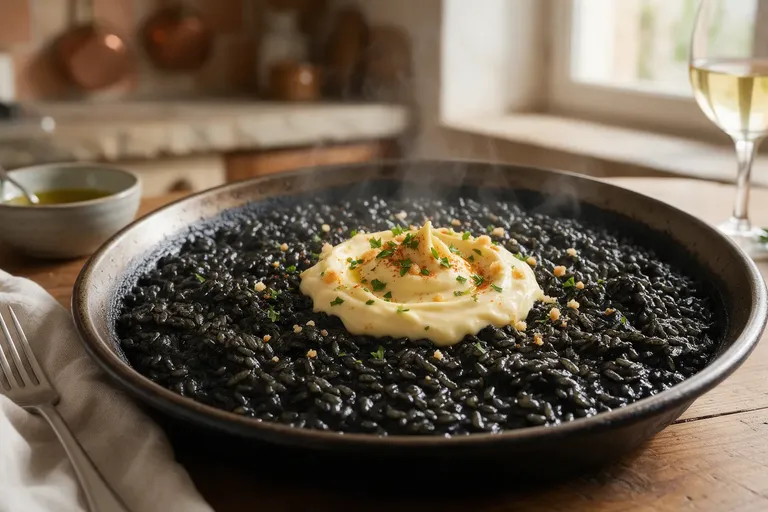
There is also a black version, fideuà negra, coloured and flavoured with squid ink the same way arroz negro is. It is usually served with allioli too.
How to order it
Fideuà behaves like paella on a restaurant menu, so the same habits apply:
- It is usually cooked to order, so expect a wait. Order it early and eat tapas in the meantime.
- Many restaurants sell rice and noodle pans for a minimum of two people. Check the menu before you plan on a solo portion.
- It usually comes to the table in the pan. Eating straight from your side of the pan is normal in Spain, but nobody minds if you serve it onto plates.
- Ask whether allioli comes with it. It is the classic partner.
- If you want both rice and noodles at a group meal, order one of each. Fideuà and a paella side by side is a good way to taste the difference.
What a good pan looks like
A good fideuà is moist but not soupy. The noodles should be cooked through and should have taken on the flavour of the stock, not taste like plain pasta with seafood on top. The seafood should not be rubbery. If the kitchen finishes it under heat, you will see some crisp, curled noodles on top. If the base sticks a little and has toasted, that is a bonus, the same way the crust on a paella is.
Things that suggest a weaker version: a wet, sauce-like pan, long pasta instead of short noodles, or cream. None of these are part of the usual Valencian dish.
Where to try it
These venues in our directory list fideuà in their own description:
- Casa Paella (Banks Peninsula, near Christchurch, New Zealand) is an arrocería whose menu of 12 rice and paella varieties includes Fideuà de Gandia, alongside arroz a banda and paella valenciana.
- ¡Ay Manuela! (Xiamen, China) lists fideuà and squid-ink arroz negro among its Spanish dishes, next to tortilla, croquettes and gambas al ajillo.
- SOPA Restaurant (Bangkok, Thailand) names fideuá as one of its highlights, with Iberian ham and Spanish octopus, on a tasting-menu format.
- Besa (Bondi Beach, Sydney) is a Madrid-inspired tapas bar that opened in March 2026; its menu includes fideuà negra.
For the wider family of Spanish rice dishes, see Beyond paella: Spanish rice dishes.