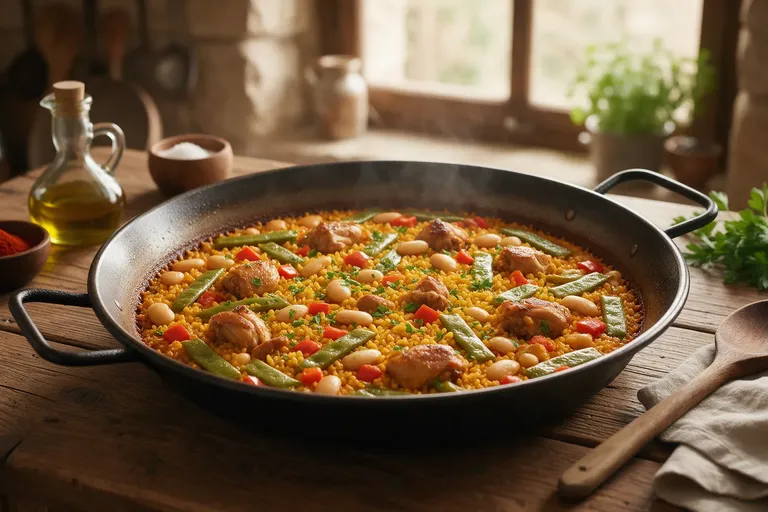
Outside Spain, paella has swallowed the entire category. Any Spanish rice cooked in a wide pan gets called paella, and menus abroad often stop at two versions of it. In Spain that is like walking into a bakery and only ever asking for bread.
The Valencian rice repertoire runs to dozens of dishes, and the interesting ones are usually not the paella. Here is what to look for.
The first split: dry, creamy, soupy
Every Spanish rice dish falls into one of three textures, and the texture decides the pot.
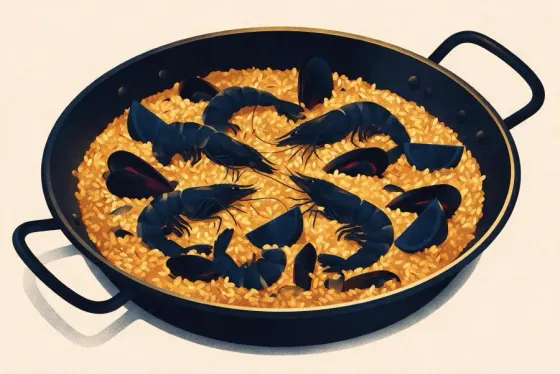
- Seco (dry). Cooked flat and shallow in a wide pan so the liquid evaporates and the grains stay separate. The layer of rice should be thin — a centimetre or so, not a mound. This is paella territory, and also arroz a banda and arroz negro.
- Meloso (creamy). Somewhere between the two, cooked in a deeper pot, loose enough to move on the plate but not soup.
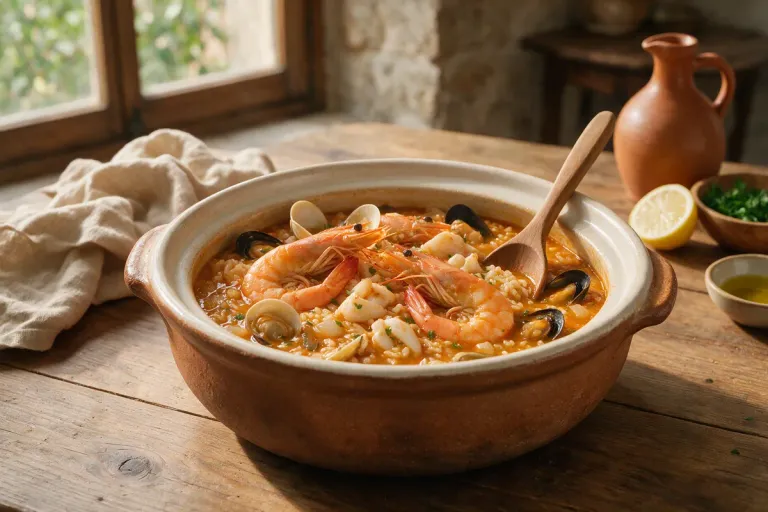
- Caldoso (soupy). Cooked in a deep casserole with much more stock and served with a spoon. Arroz con bogavante, rice with lobster, is usually done this way.
This is why the pan matters, and why a kitchen that only owns one pan can only cook one kind of rice. A caldoso made in a paella pan boils dry; a paella made in a casserole steams instead of toasting.
The five to order
Four of these are rice. The fifth, fideua, contains no rice at all — it is on the list because it is cooked by the same method, in the same pan, and sits in the same part of a Spanish menu.
Arroz a banda. Rice cooked in a strong fish stock and served on its own — a banda means "to the side", because traditionally the fish that made the stock came out separately, often with allioli. It is the plainest-looking rice on any menu and the hardest to hide behind. No prawns arranged on top, no colour, nothing but the stock. If a kitchen can cook this, it can cook anything else on the list.
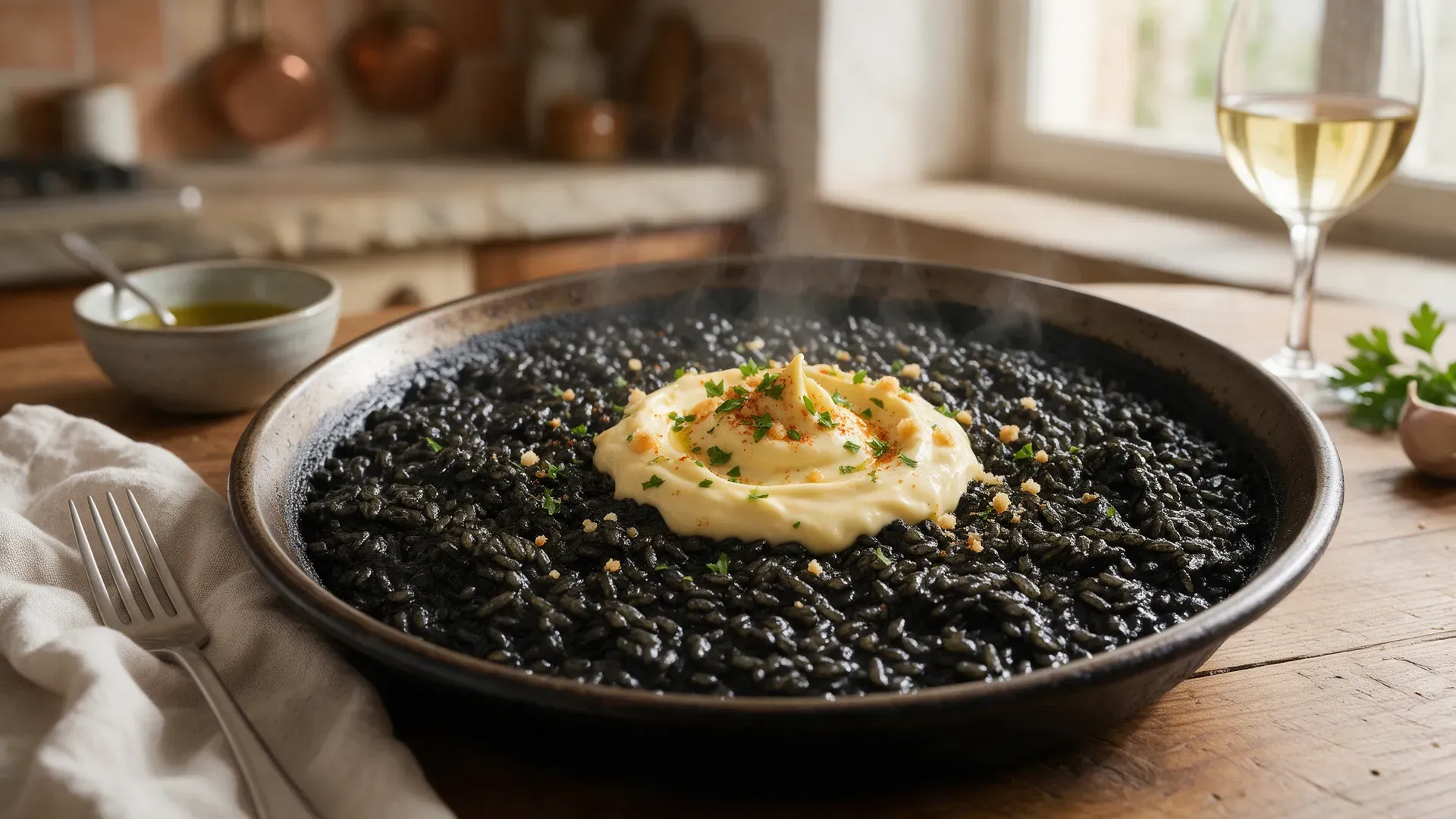
Arroz negro. Black rice, coloured and flavoured with squid ink, usually with squid or cuttlefish in it and a spoon of garlic allioli on the side. The ink is not a garnish — it goes into the sofrito and the stock.
Arroz caldoso. The winter version: soupy, served in the pot, eaten with a spoon. It has to come to the table immediately, because the rice keeps drinking the broth and a caldoso that sat under a pass for five minutes is a meloso by the time it reaches you.
Arroz al horno. Baked rice, cooked in an earthenware dish in the oven, traditionally built on what was left of a chickpea and pork stew — chickpeas, black pudding, pork ribs, a whole head of garlic sitting in the middle. It is the least photogenic and the most comforting.
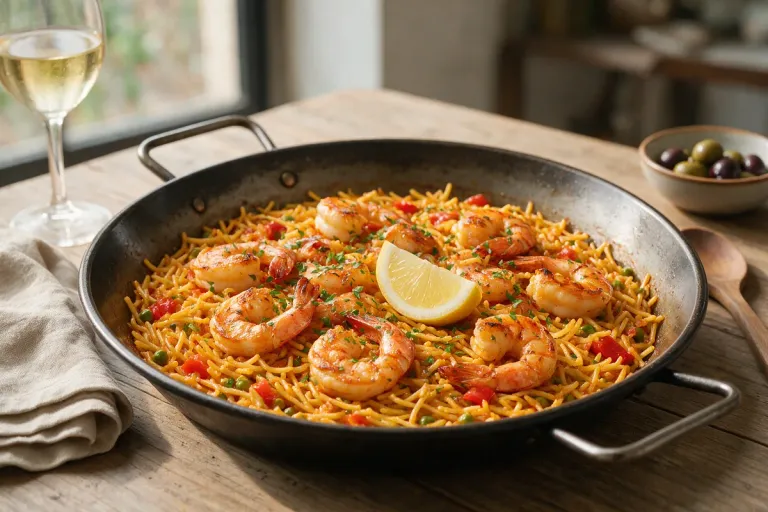
Fideua. Not a rice dish: fideua swaps the rice for short, thin, toasted pasta, cooked in fish stock in a paella pan, from the coast around Gandia. Same technique, same pan, same allioli, different grain. If you like the crust more than the rice, order this.
How to order without annoying anyone
House rules vary, so treat these as what to expect rather than what every restaurant does. Menus and staff will tell you the specifics.
- Rice is often sold per person with a two-person minimum, because it is cooked to order in a single pan. Plenty of restaurants abroad have dropped the minimum — check the menu.
- Expect to wait, because a rice cooked to order only starts once you order it. Where a kitchen quotes a waiting time, twenty to forty minutes is a common range to see on a menu.
- Order it at the start of the meal, not after the tapas arrive.
- Ask for the socarrat — the toasted layer stuck to the bottom of the pan — and scrape for it. It only forms in the dry rices, because it needs the liquid to go. There is no socarrat in a caldoso.
- Lemon is contentious in Valencia and unremarkable almost everywhere else. Nobody will stop you.
The word to look for: arroceria
An arroceria is a restaurant built around rice. The word on a sign is a useful filter abroad, because it means someone decided rice was the business rather than one line on a tapas menu.
Where to try them
- Casa Paella in Christchurch lists twelve rice dishes, including arroz del senyoret, bullit de peix, arroz a banda and fideua de Gandia, and describes itself as the only authentic arroceria in the Pacific.
- Ay Manuela in Xiamen names arroz negro and fideua on its list of Spanish dishes alongside tortilla and huevos rotos con chorizo.
- Vega in Mexico City serves arroz del senorito next to clams in albarino and Asturian fabada.
- Arroz Spanish Rice House in Bangkok puts rice in the name and imports most of its ingredients from Spain.
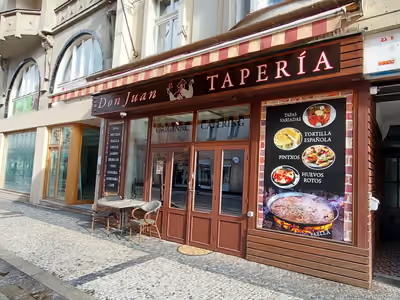
- Don Juan Taperia & Arroceria in Hradec Kralove specialises in traditional rice dishes alongside classic tapas.
Arroz del senyoret, which two of those mention, is worth knowing: everything in it is peeled and shelled before it goes in the pan, so nobody has to do any work at the table. The name translates roughly as "the young gentleman's rice", and the implication is that the diner could not be bothered.