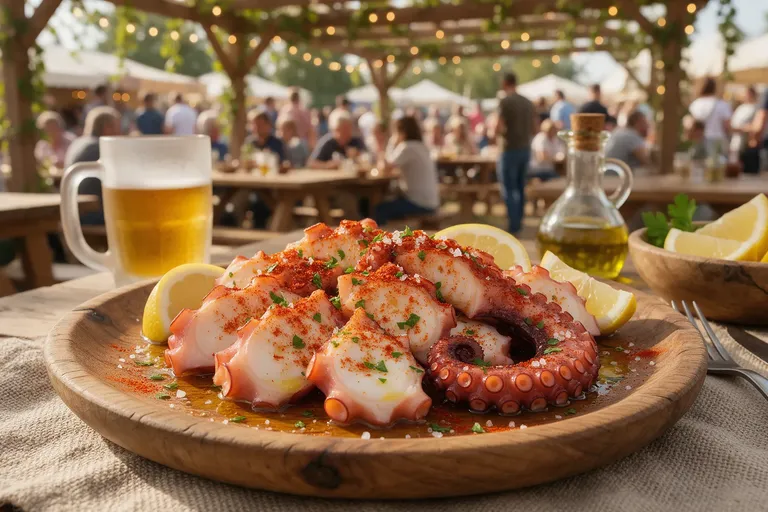
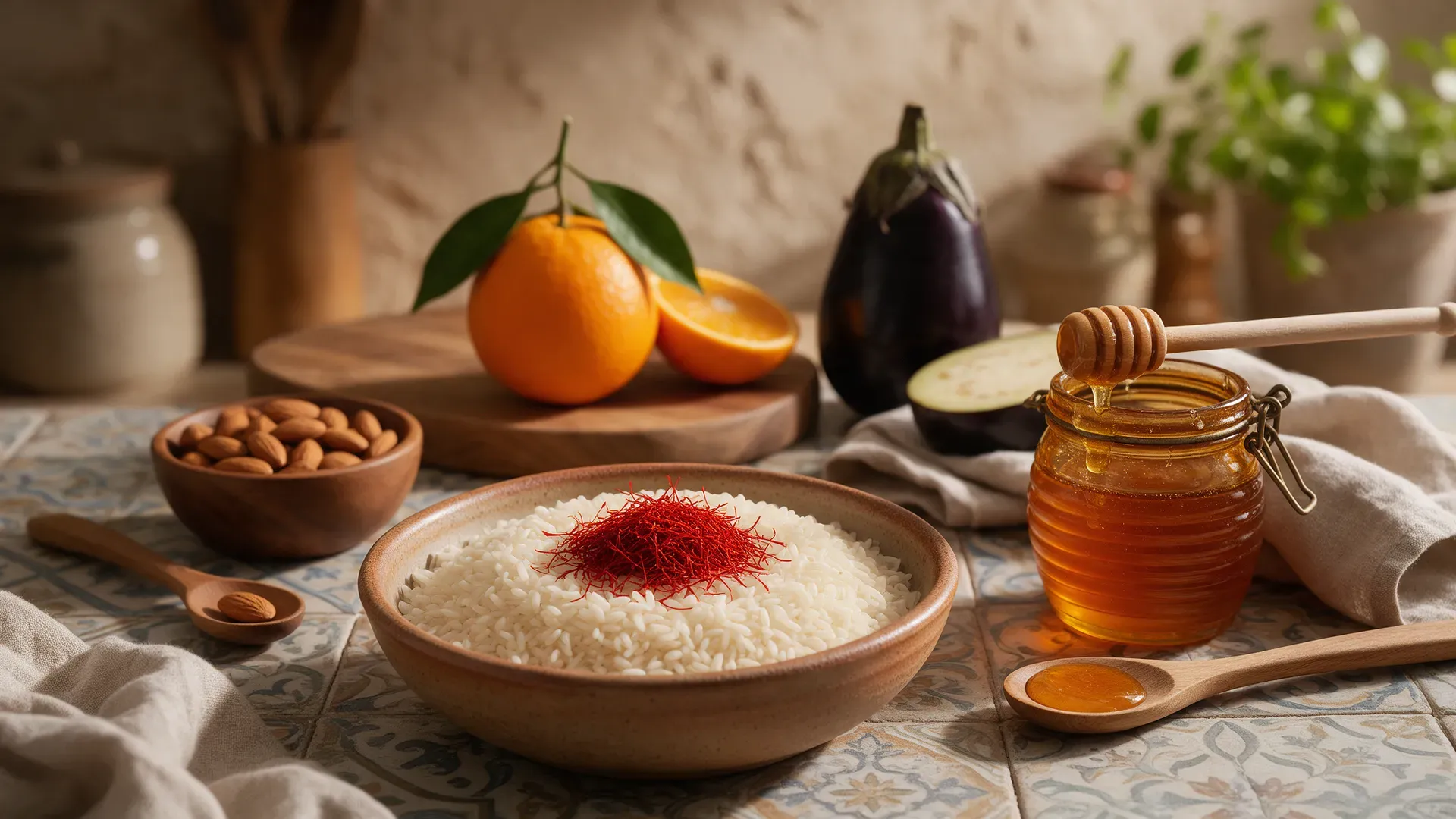
Read a Spanish menu out loud and you'll hear Arabic in it. Arroz, aceite, azafrán, albóndigas: all of these words reached Spanish from Arabic. They are a record of al-Andalus, the name for the parts of the Iberian Peninsula under Muslim rule from 711 until the Nasrid kingdom of Granada surrendered in 1492. That's close to eight centuries, and the kitchen is one of the places where it still shows most clearly.
Words on the menu
Spanish has thousands of words of Arabic origin, and food and farming account for a good share of them. Many start with "a" or "al", from the Arabic article al-. A few you'll meet on any Spanish menu:
- Aceite (oil) and aceituna (olive), from Arabic az-zayt and az-zaytūna. The Latin-derived word "olivo" survives for the tree.
- Arroz (rice), from ar-ruzz, and azafrán (saffron), from za'farān.
- Azúcar (sugar), from as-sukkar.
- Berenjena (aubergine), from bādhinjāna.
- Albóndiga (meatball), from al-bunduqa, a word for hazelnut, a nod to the shape.
- Alcachofa (artichoke), from al-kharshūf, and albaricoque (apricot), from al-barqūq.
Even the farming vocabulary comes through: acequia, the irrigation channel that still waters the fields around Valencia, is an Arabic word.
What the farms of al-Andalus grew
The words arrived with the crops. Irrigated agriculture in al-Andalus spread or expanded the growing of rice, sugar cane, citrus fruit (the bitter orange in particular), aubergines, spinach and saffron. Several of the most Spanish dishes depend on that list:
- Paella and the other Valencian rice dishes grew out of the rice paddies around the Albufera lagoon near Valencia. Albufera is itself from Arabic al-buḥayra, the little sea. Saffron gives the dish its colour.
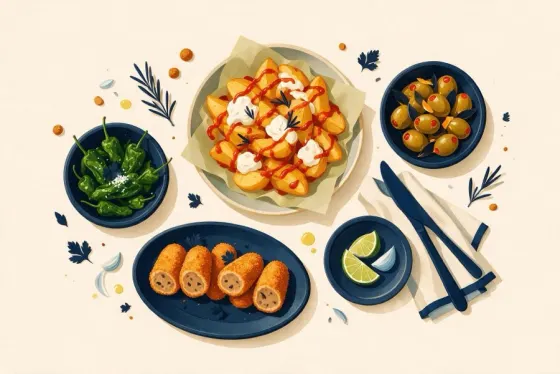
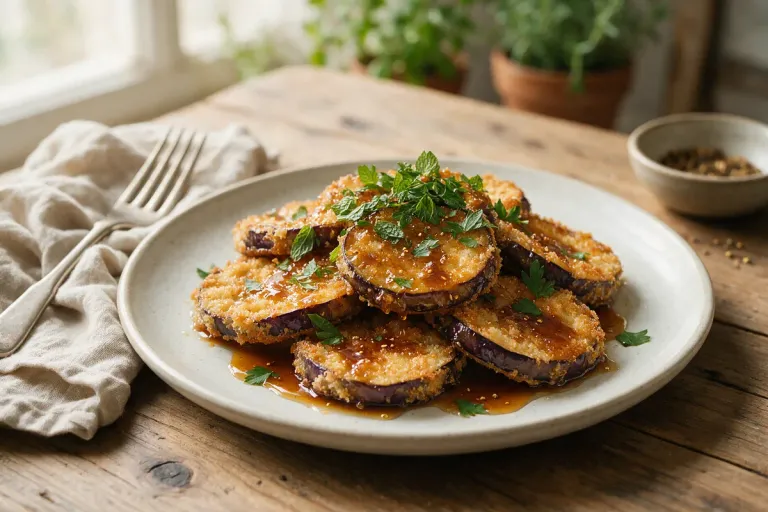
- Berenjenas fritas (fried aubergine) are a standard Andalusian tapa, and in Córdoba and Málaga they are often finished with miel de caña, a dark cane-sugar syrup.
- Espinacas con garbanzos, the spinach and chickpea tapa of Seville, is seasoned with cumin.
Almonds, honey and sugar
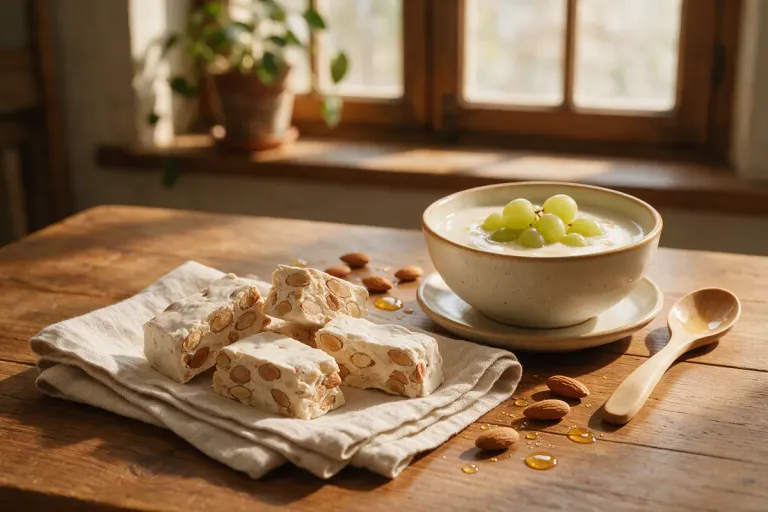
Spanish sweets are where the Andalusi influence is easiest to taste. Turrón, the almond and honey nougat eaten at Christmas, and the almond pastries of the south are usually traced back to the confectionery of al-Andalus. Alfajor itself is an Arabic-derived word, as is almíbar, the sugar syrup used to soak cakes.
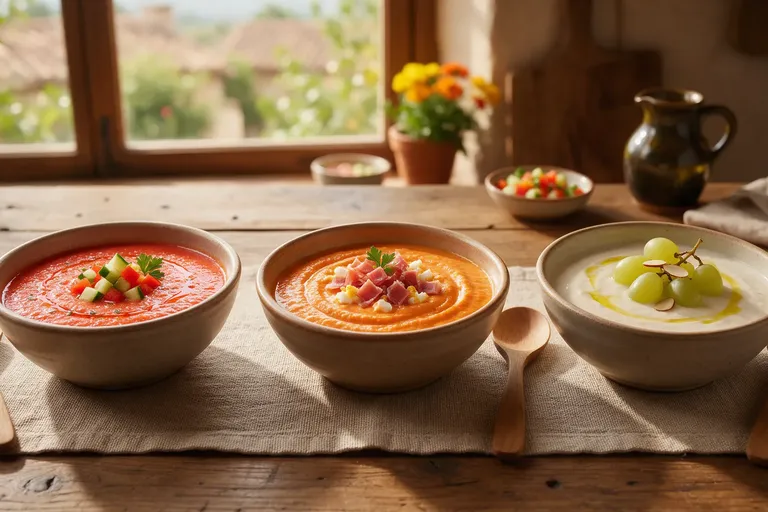
Almonds turn up in savoury cooking too. Ajoblanco, the cold white soup of Málaga, is made from almonds, bread, garlic, olive oil and vinegar. Pickling in vinegar has its own Arabic-derived name as well: escabeche is usually traced to the Arabic sikbāj, a sour meat stew.
What changed after 1492
After the conquest of Granada, Muslims and Jews were pressed to convert or leave, and the descendants of converted Muslims, the moriscos, were expelled in the early 1600s. The cooking stayed. Pork took on a public meaning in this period: eating ham and chorizo openly was one way to show you were an "old Christian" rather than a convert.
Where to taste the connection
A handful of restaurants in our directory put this history at the centre of their menus:
- Moro (Exmouth Market, London): Sam and Sam Clark's restaurant brings together the cooking of Spain and North Africa, and is listed in the Michelin Guide.
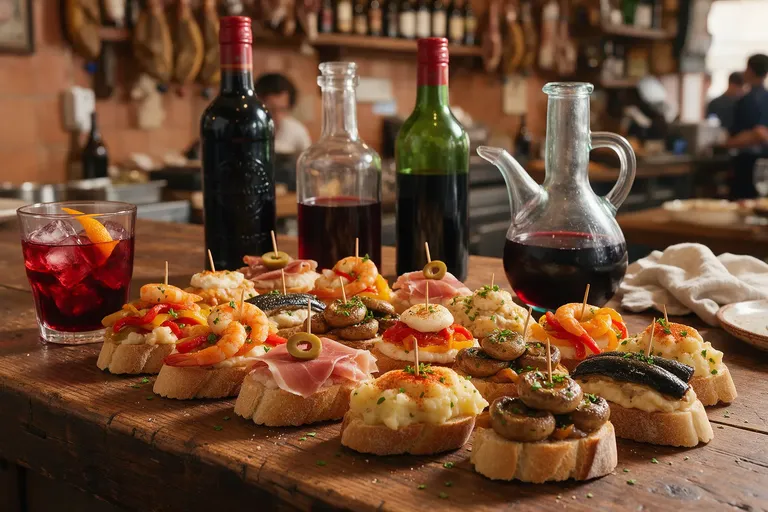
- Morito (next door to Moro): a Spanish and Moorish tapas and mezze bar, open since 2010, with sherry by the glass and crispy aubergine.
- La Vara (Cobble Hill, Brooklyn): opened in 2011 by Alex Raij and Eder Montero, it focuses on the Moorish and Jewish legacies in Spanish cooking.
- Sevilla Mía (Milan): Andalusian cooking with salmorejo and espinacas con garbanzos on the menu.
Next time you order paella or a plate of albóndigas, the name on the menu tells you part of the story.