Andalusia is the big region across the south of Spain, made up of eight provinces: Almería, Cádiz, Córdoba, Granada, Huelva, Jaén, Málaga and Seville. It is hot for much of the year, it has a long coast on both the Atlantic and the Mediterranean, and it was under Muslim rule for centuries, which left marks on the kitchen that we cover in our post on al-Andalus and the Arabic legacy in Spanish cooking. The result is food built around olive oil, bread, fried fish and cold dishes that make sense in the heat.
We have done the same exercise for Basque food and Galician food. Here is what to look for when a menu says Andalusian.
The cold soups
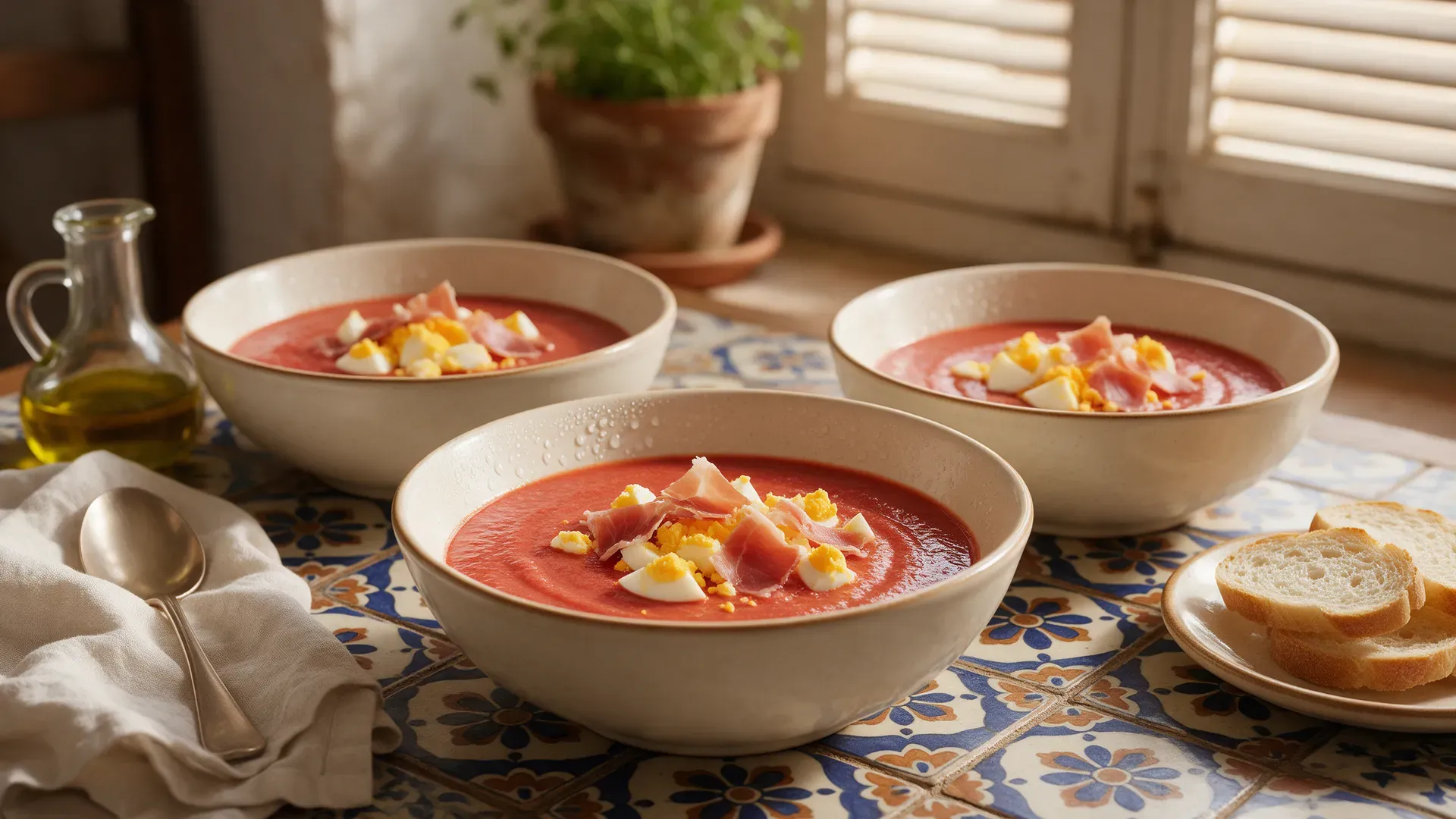
Gazpacho is the one everyone knows: raw tomato, pepper, cucumber and garlic blended with olive oil, vinegar and bread, served cold and often drunk from a glass. Salmorejo comes from Córdoba. It uses tomato, bread, garlic and oil, with no cucumber or pepper, and it is much thicker, closer to a cream than a drink. It usually comes topped with chopped hard-boiled egg and jamón.
Ajoblanco is the oldest-tasting of the three: almonds, garlic, bread, oil and vinegar, blended white. It is closely tied to Málaga, where it is often served with grapes.
Fried fish and the coast
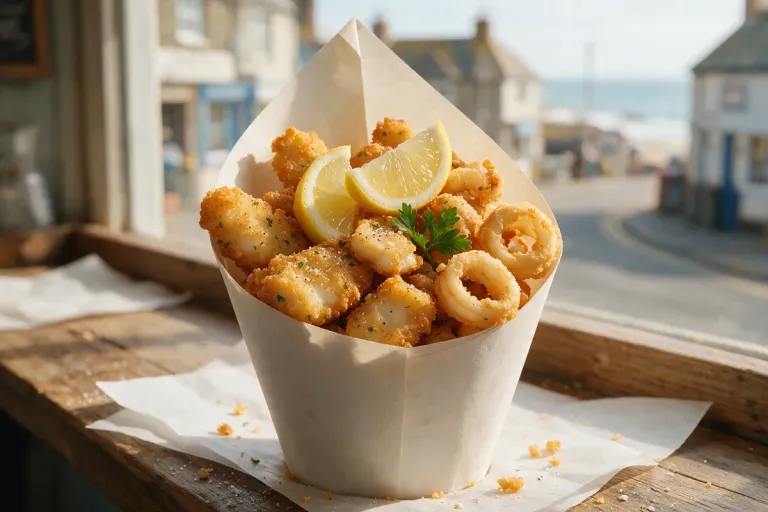
On the coast, especially around Cádiz and Málaga, pescaíto frito is the everyday treat. Small fish and seafood are dusted in flour and fried in olive oil. Common items include boquerones (fresh anchovies), puntillitas (tiny squid eaten whole), and cazón en adobo, dogfish marinated in vinegar, cumin and paprika before frying. Cádiz is also known for tortillitas de camarones, thin, crisp fritters made with tiny shrimp.
In Málaga, look for espetos: sardines threaded on a cane skewer and grilled over a wood fire, traditionally on the beach.
Meat, ham and a few Córdoba dishes
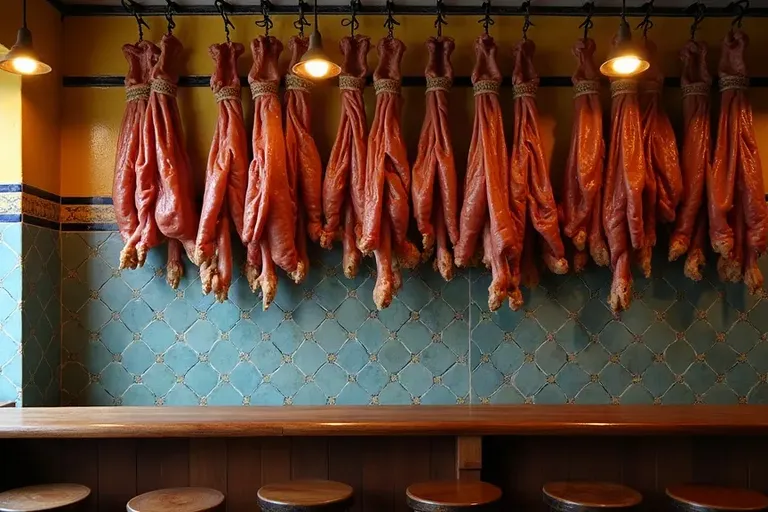
Andalusia is not only fish. Huelva's Sierra de Aracena, around the village of Jabugo, is one of the best-known areas for ibérico ham; our guide to jamón serrano vs ibérico explains the difference. Córdoba gives you rabo de toro, oxtail slowly braised in wine, and flamenquín, pork or ham rolled, breaded and fried. In Seville, pringá is the meat left from a stew, shredded and eaten in a small bread roll.
There are vegetable dishes too. Espinacas con garbanzos, spinach and chickpeas with garlic, bread and cumin, is a Seville bar classic.
Sherry and olive oil
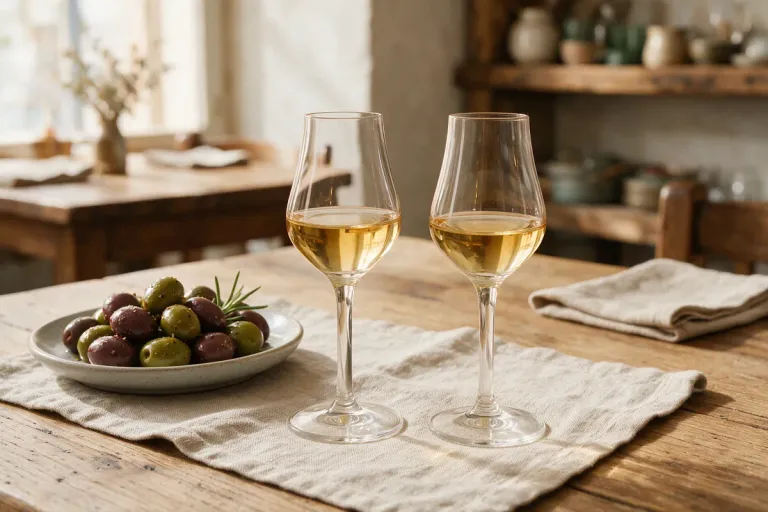
Sherry is traditionally linked to the so-called sherry triangle in Cádiz province, formed by three towns: Jerez de la Frontera, El Puerto de Santa María and Sanlúcar de Barrameda. Manzanilla is the pale, dry style aged in Sanlúcar. A chilled fino or manzanilla with fried fish or ham is about as Andalusian as a meal gets. Our sherry guide covers the styles.
Jaén province is the biggest olive oil producer in Spain, and olive oil runs through all of this cooking: in the soups, in the fryer and on toast at breakfast. For the varieties, see our olive oil guide.
How Andalusians eat
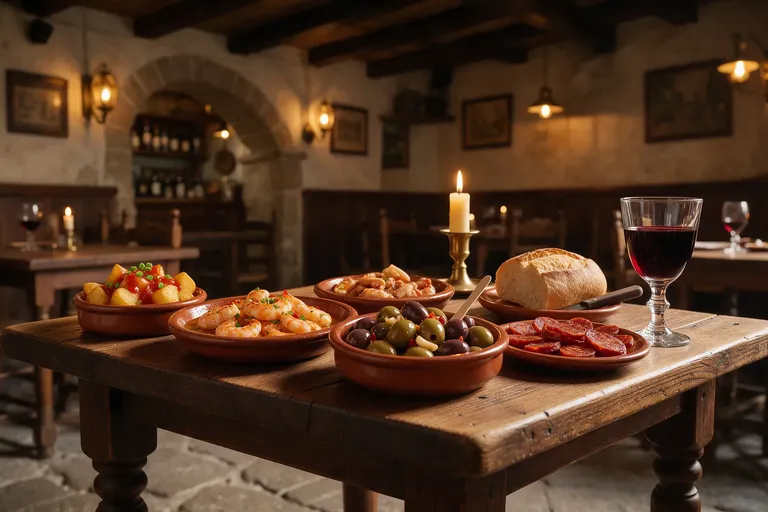
Andalusia is tapas country. In Granada many bars still bring a small free tapa with each drink, a habit we compared with Thai drinking food in tapas and kap klaem. Free tapas with a drink turn up in other parts of Andalusia too, though in many places you pay for them. Either way the idea is the same: standing at the bar, a drink, a few small plates, then on to the next place.
Where to try Andalusian cooking outside Spain
These venues in our directory mention Andalusia in their own records:
- La Feria, Detroit: owner and head chef Pilar is from Seville and built the menu on her mother's and grandmother's recipes.
- Sevilla Mía, Milan: focused on Andalusian cooking, with dishes such as salmorejo and espinacas con garbanzos.
- Ajoblanco, Mexico City: named after the almond soup of Málaga, with fish, rice dishes, shellfish and gazpachos.
- MoVida Next Door, Melbourne: an Andalusian-style bar pouring fino and manzanilla with seafood a la plancha.
- Capote y Olé, Rijeka: set up like an Andalusian tavern, with flamenco playing through the day.