Valencia gave the world paella, and that is usually where the conversation stops. Spend a little time with a Valencian menu, though, and you find a whole kitchen built around rice, the vegetable gardens (the huerta) that ring the city, the Albufera lagoon to the south, and the orange groves. This guide covers what a Valencian restaurant tends to serve, how to read the menu, and where outside Spain you can try it.
Paella belongs to Valencia, and to lunch
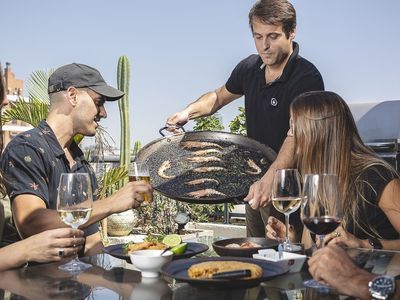
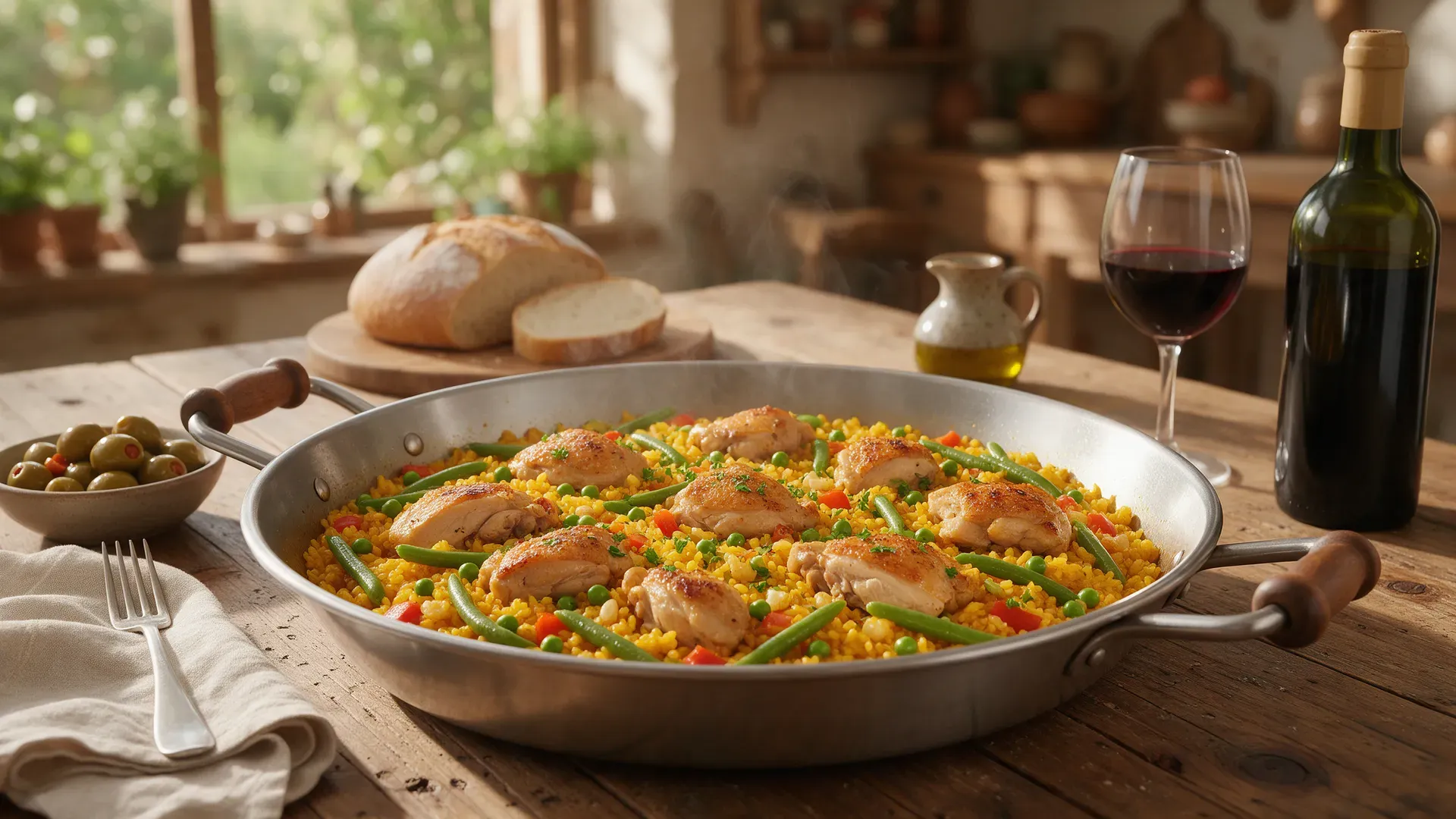
In Valencian, "paella" is the name of the pan: wide, shallow, with two handles. The dish took the pan's name. The version Valencians call paella valenciana is a country dish, not a seafood one. It is cooked with chicken, rabbit, flat green beans (ferraura), large white garrofó beans, tomato, olive oil, saffron and water, and some cooks add snails or a sprig of rosemary. Seafood paella exists and is popular, but it is a different dish. Our paella and paella de marisco pages explain both.
Two habits are worth knowing. First, paella is traditionally a midday meal, often a weekend or family lunch, rather than a dinner. Second, the crust of toasted rice that forms on the bottom of the pan has its own name, socarrat, and it is a prized part of the dish. A good paella is cooked in a thin layer and the rice is not stirred once the stock goes in.
Rice beyond paella
Valencian menus usually list several rice dishes under "arroces" (in Valencian, "arrossos"). Each one is a separate recipe, not a paella variation:
- Arròs a banda: rice cooked in a rich fish stock. "A banda" means "on the side", because the fish used for the stock was traditionally served separately. It usually comes with alioli.
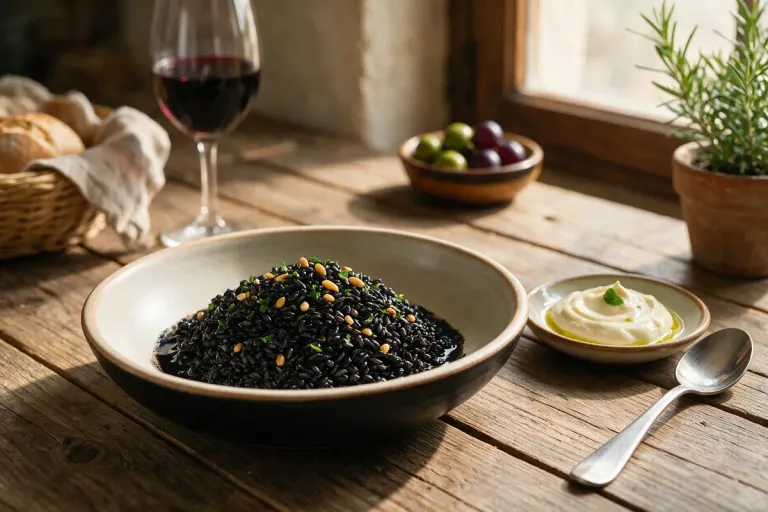
- Arròs negre: rice coloured black with squid or cuttlefish ink, also served with alioli.
- Arròs al forn: baked rice, cooked in an earthenware dish in the oven with pork, morcilla, chickpeas, potato and tomato, often with a whole head of garlic in the middle.
- Arròs del senyoret: seafood rice where everything arrives already peeled. The name is a joke about the "little gentleman" who doesn't want to get his hands dirty.
- Fideuà: the same idea as a seafood paella, made with short thin noodles instead of rice. It is closely associated with Gandia, on the coast south of Valencia.
For a wider look at Spanish rice, including dishes from outside the Valencian region, see our earlier piece on rice dishes beyond paella.
The Albufera and all i pebre
The Albufera is a freshwater lagoon just south of the city, surrounded by rice fields. Its signature dish is all i pebre ("garlic and pepper"), a stew of eel and potatoes in a sauce made with garlic, pimentón and oil. It is a good choice if you want something Valencian that isn't rice. It is most at home in the restaurants around the lagoon, and none of the five venues listed at the end of this guide mention it.
Horchata, oranges and agua de Valencia
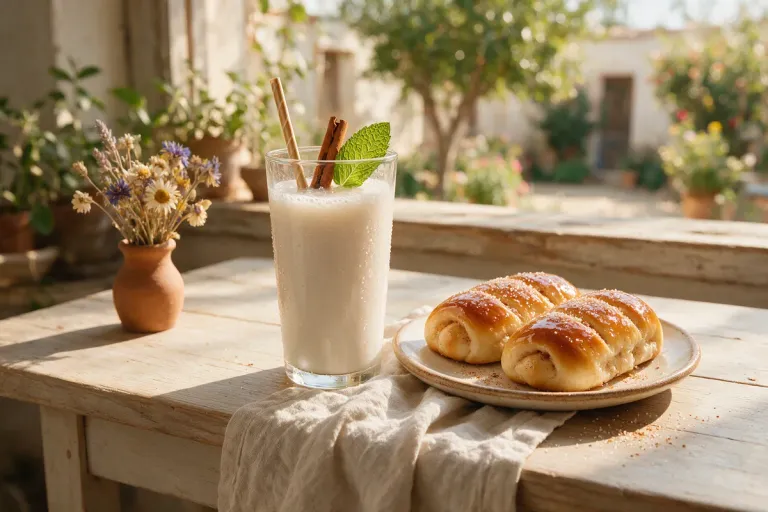
Horchata in Valencia is made from tiger nuts (chufa), not rice or almonds as in some Latin American versions. It is sweet, milky and served very cold, and the classic thing to dip in it is a farton, a long, soft, sugar-glazed bun. Chufa from the Valencian region has its own protected designation of origin.
Valencia is also orange country, which explains agua de Valencia, a cocktail of cava and orange juice, usually strengthened with gin and vodka. It looks like juice and drinks like something much stronger.
During the Fallas festival in March, street stalls fry buñuelos, and the Valencian version is often made with pumpkin in the dough. They are eaten hot, with thick hot chocolate.
Reading a Valencian menu
Valencian (valencià) is a co-official language in the region, and many menus use it alongside Spanish. A few words that come up:
- Arròs = arroz (rice). Arrossos = rice dishes.
- All = ajo (garlic). Allioli = alioli.
- Peix = pescado (fish). Marisc = marisco (shellfish).
- Forn = horno (oven).
Rice dishes are often listed with a minimum of two people and a waiting time. A paella needs a wide pan and time on the heat, so it is worth ordering something to share while you wait.
Where to try Valencian cooking outside Spain
These venues all mention Valencian rice or traditions in their own listings on our site:
- Casa Paella, Christchurch, New Zealand: its listing says the Paella Valenciana follows the recipe of Sueca, and the menu has 12 rice and paella varieties, including Arroz del Senyoret, Bullit de Peix, Arroz a Banda and Fideuà de Gandia.
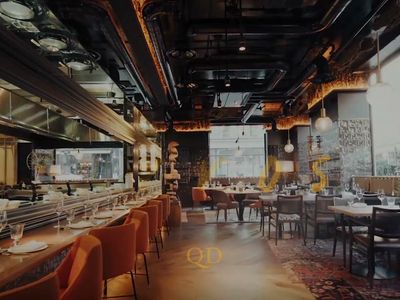
- Arros QD, London: Quique Dacosta's Fitzrovia restaurant, built around seasonal rice dishes cooked over wood fires.
- El Valenciano, Santiago, Chile: paellas made with Valencian technique, at the MUT and at a second location in Mall Plaza Vespucio.
- Montreal Paella, Montreal: chef-owner Mariano Fernandez makes Valencian paella daily, to eat in or take away.
- La Pepica, Warsaw: a café, tapas bar and drinks spot in Praga Północ whose decor, music and activities celebrate Spanish and Valencian traditions.