Ask a room of Spaniards how to make a tortilla de patatas and you will not get one answer. The dish is simple: eggs, potatoes, olive oil and salt. That simplicity is exactly why people argue about it. With so few ingredients, every choice shows.
Here are the arguments, what each side means, and where to order a tortilla if you are outside Spain.
Argument one: onion or no onion
This is the big one, usually shortened to con cebolla o sin cebolla. Onion cooked slowly with the potatoes makes the tortilla sweeter and softer. People who leave it out say the dish should taste of egg and potato and nothing else.
There is no official answer. Both versions are common in homes and bars across Spain, and some bars make both. If a menu doesn't say, ask. It is a normal question.
Argument two: set or runny
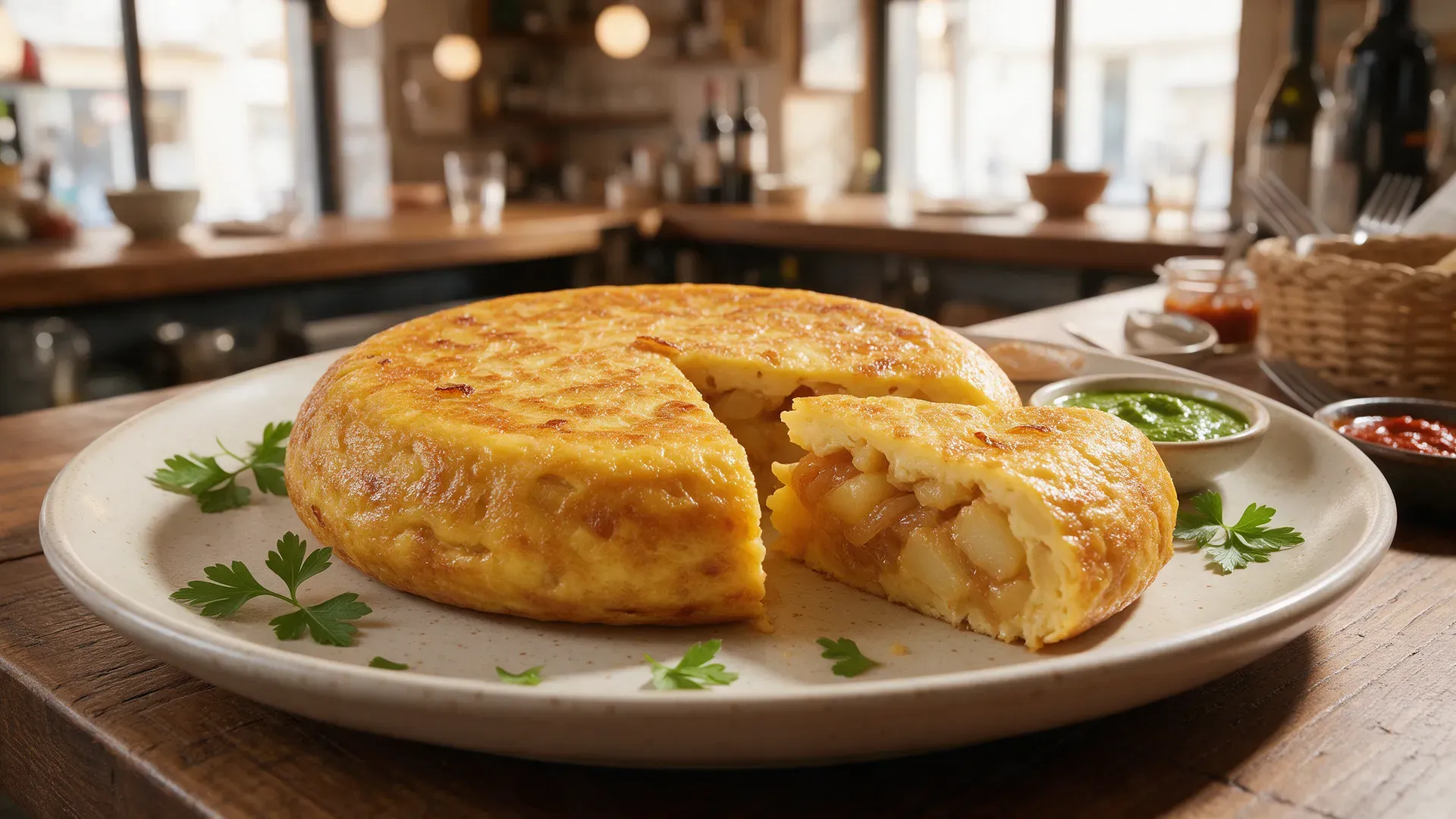
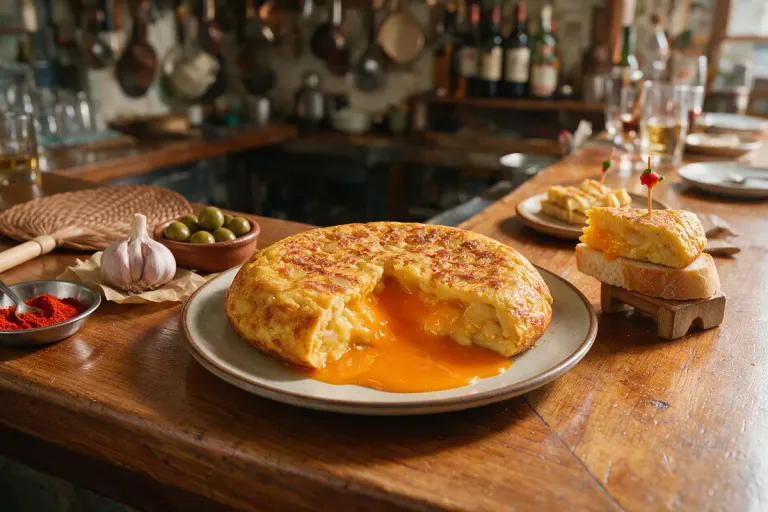
The second argument is about the middle. A cuajada tortilla is cooked through and firm enough to slice cleanly. A jugosa tortilla is moist and tender inside. A poco hecha tortilla is lightly cooked, so the centre can still be loose when you cut it. Bars don't use these words consistently, so if you care, describe what you want.
The loosest end of the scale is associated with Betanzos, a town in Galicia whose tortilla is famous for being very loose in the middle. Galician restaurants abroad sometimes put it on the menu by name.
How it is made, whatever side you are on
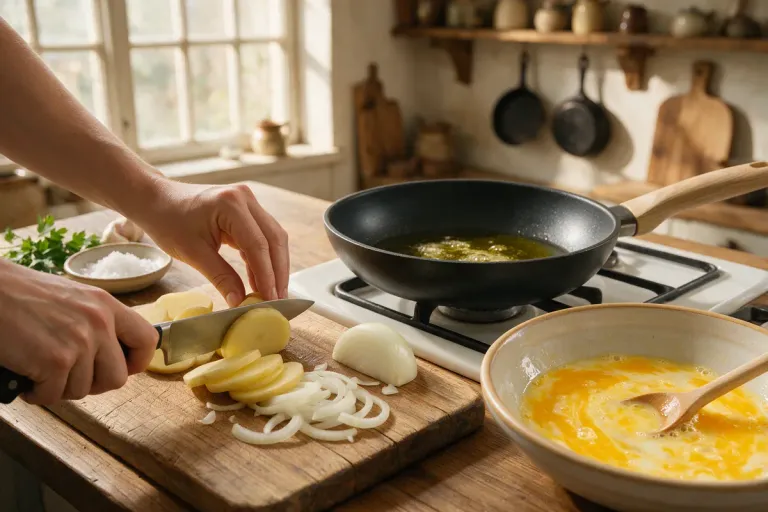
The technique is mostly shared. The potatoes are sliced thin and cooked slowly in a generous amount of olive oil until soft, not browned or crisp. They are drained and folded into beaten eggs, and the mixture goes back into a hot pan. Halfway through, the tortilla is turned over with a plate: you put the plate on top of the pan, flip the pan, and slide the tortilla back in on its uncooked side.
How Spain eats it
At a bar, the usual serving is a pincho de tortilla: a wedge on a small plate, often with a piece of bread, in the morning or before lunch. A slice inside a bread roll makes a bocadillo de tortilla, a standard packed-lunch sandwich.
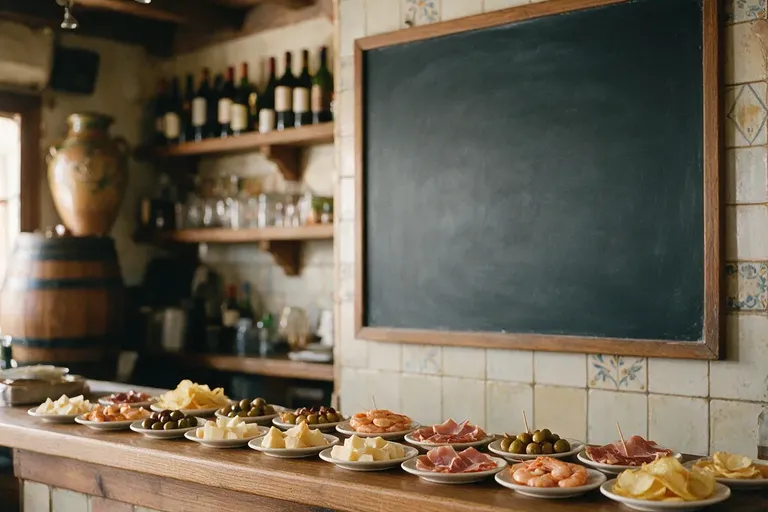
Tortilla isn't usually served piping hot. It is eaten warm or at room temperature, and plenty of people like it the next day. At a longer meal it is one tapa among several, next to pan con tomate or croquetas.
Not the Mexican tortilla
Outside Spain, the name causes confusion. In Mexico and across much of the Americas, a tortilla is a flat corn or wheat bread. In Spain it means an egg dish. A plain folded omelette without potatoes is a tortilla francesa, a French omelette.
Where to order one
These restaurants mention tortilla in their own directory records:
- Tomiño Taberna Gallega, New York: tortilla de Betanzos, alongside pulpo a feira and pimientos de Padrón.
- Como Tapería, Vancouver: tortilla española made to order.
- Poster Bar by José, London: José Pizarro's daytime café at the Royal Academy of Arts, with Spanish tortilla on the menu.
- Casa Alejandro, Panama City: tortilla española on a menu that also has cocido gallego and pulpo a la gallega.
- La Fuente, Bávaro: tortilla on an all-Spanish menu at the Barceló Bávaro Palace.
When you order, it is fine to ask two questions: with or without onion, and how runny.