A lot of Spanish festivals are religious or civic, with a saint's day procession or a town's patron at the centre. A handful are about food or drink first. Some are messy, one involves eating a lot of onions, and one is basically a very large lunch. Here are four of the best known, with the dates they keep and the dishes behind them.
La Tomatina, Buñol (last Wednesday of August)
Buñol is a town in the province of Valencia. On the last Wednesday of August, its streets fill with people throwing tomatoes at each other for about an hour. Trucks bring in the tomatoes, the crowd squashes them before throwing (the usual rule, so they don't hurt), and at the end the town is hosed down.
The event dates back to the 1940s. Participation has been limited and ticketed since 2013, so sort out tickets well before you go. Nobody eats the tomatoes, which makes La Tomatina the odd one out on this list, but it's the Spanish food festival most people outside Spain have heard of.
Calçotadas, Catalonia (winter into spring)
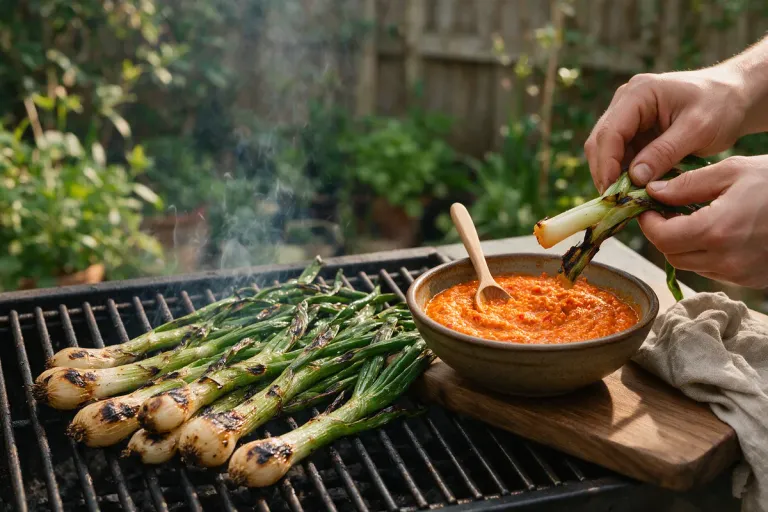
A calçot is a mild, long green onion. Growers pile soil around the stems as they grow, which keeps them white and tender, a bit like a leek. The town of Valls, in the province of Tarragona, is the home of the tradition, and the Calçot de Valls has protected geographical indication status.
A calçotada is the meal built around them. The calçots are charred over a hot flame, traditionally vine cuttings, then wrapped in newspaper so they steam and soften. You pull off the blackened outer layer, dip the white stem in a sauce of roasted tomato, peppers, garlic, nuts and olive oil (salvitxada in Valls; romesco is the close relative most people know), tip your head back and eat it. Bibs are standard. Grilled meat and sausages usually follow.
Calçotadas run through the season, roughly winter into spring. Valls holds its Gran Festa de la Calçotada on the last Sunday of January.
The Batalla del Vino, Haro (29 June)
Haro is a wine town in La Rioja, home to many of the region's older wineries. On 29 June, the feast of San Pedro, people walk up to the Riscos de Bilibio, a set of crags outside town, and soak each other in red wine using wineskins, buckets, sprayers and anything else that holds liquid. Most people wear white, and nobody's clothes stay that way.
It's a party rather than a tasting. If you want the wine itself, our guide to Spanish wine labels explains the crianza, reserva and gran reserva terms you'll see on Rioja bottles.
The Festa do Pulpo, O Carballiño (second Sunday of August)
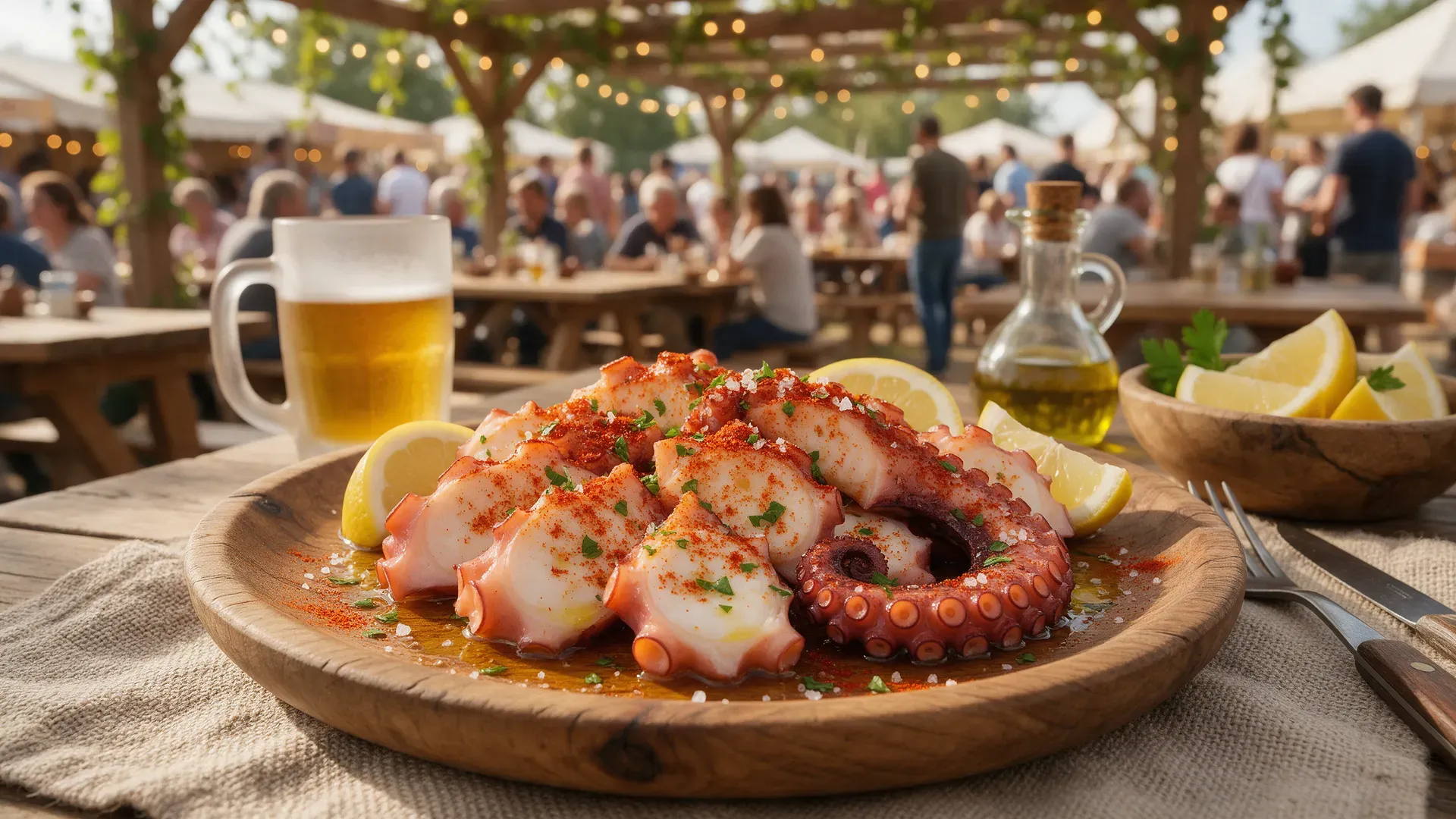
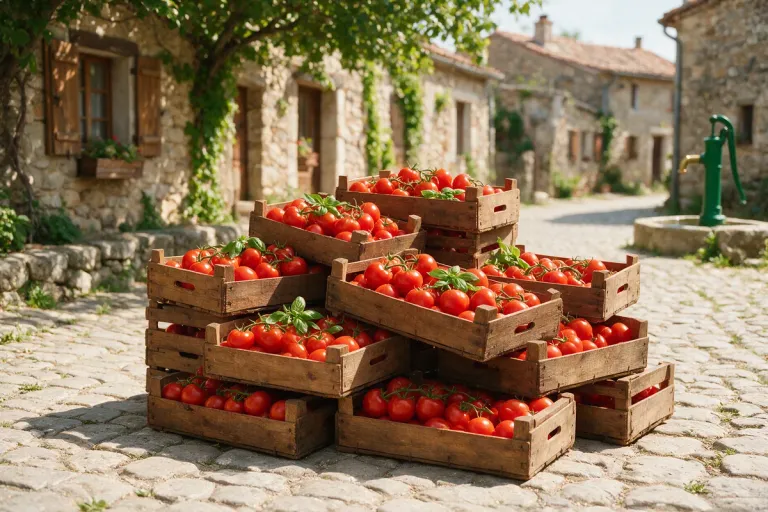
O Carballiño is an inland town in the province of Ourense, Galicia, far from the sea. It still holds a well-known octopus festival, on the second Sunday of August. The dish is pulpo a la gallega, also called pulpo a feira (fair-style octopus): boiled octopus cut with scissors onto a wooden plate and dressed with olive oil, coarse salt and pimentón. It's eaten with bread, often at long shared tables.
Octopus at an inland fair sounds strange, and our dish page covers more of the dish's background.
Where to eat the festival dishes outside Spain
Of these festival foods, Galician octopus is the one we can point you to abroad. These restaurants name Galician octopus in their own listings, and a fourth cooks from La Rioja:
- Tomiño Taberna Gallega, New York: a Galician tavern whose listing names pulpo a feira first, along with almejas a la marinera and pimientos de Padrón.
- Casa Alejandro, Panama City: pulpo a la gallega and cocido gallego are on the menu, per its listing.
- Barceloneta, Warsaw: its menu includes Galician octopus alongside jamón ibérico and tortilla de patatas.
- Galerna, Paris: the chef cooks the traditions of La Rioja, his home region, according to the listing.