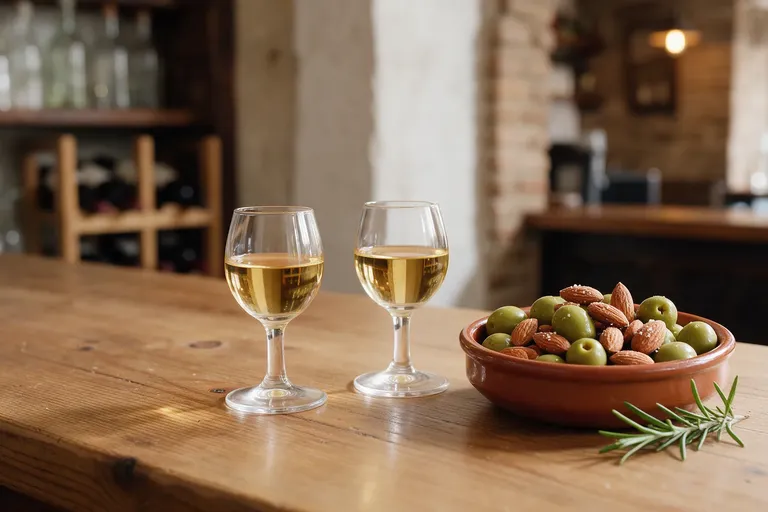
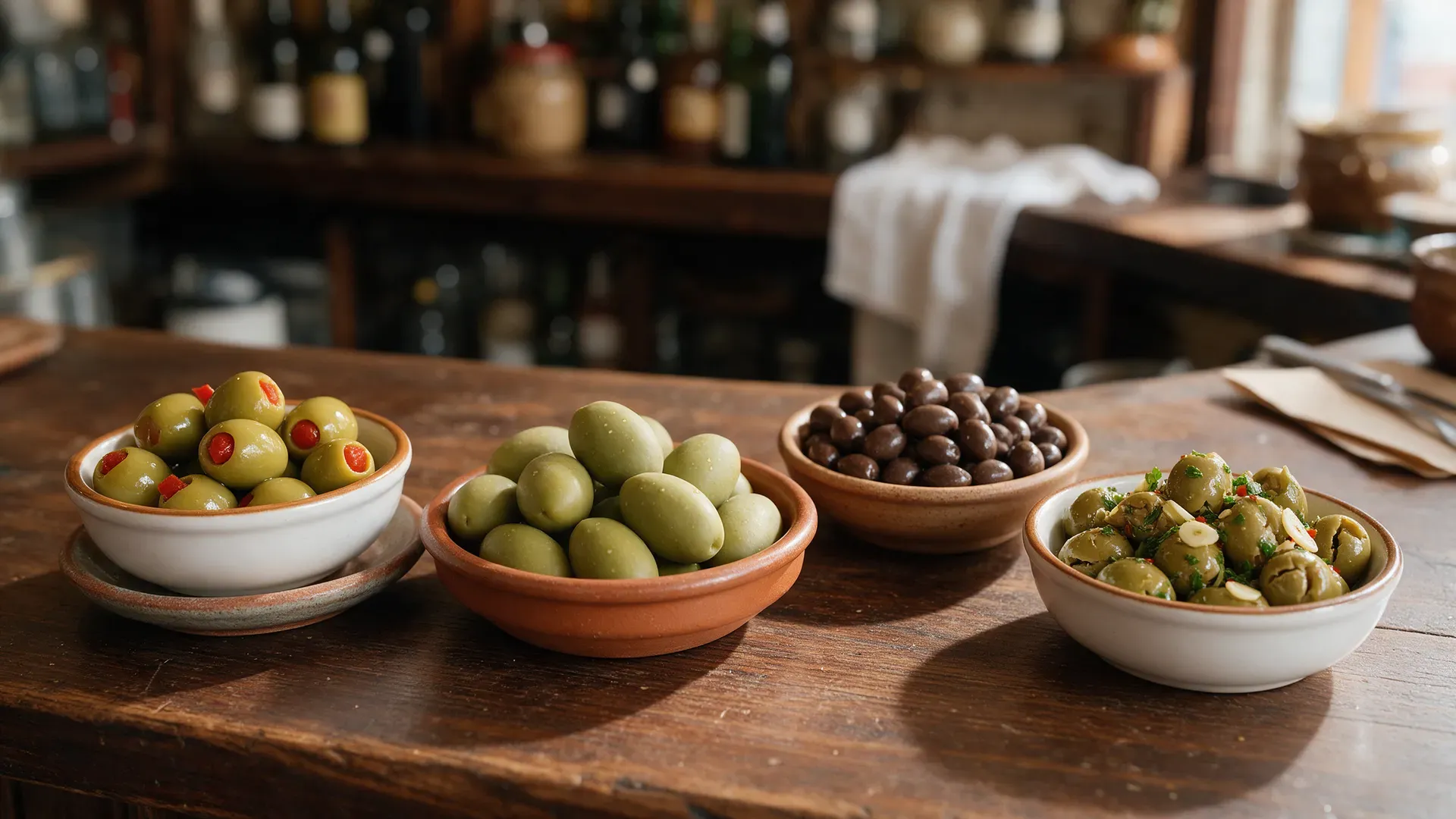
A small dish of olives is often the first thing to reach the table in a Spanish bar. Spain grows a lot of olives, and much of the crop is pressed into oil (our olive oil guide covers that side). A separate group of varieties is grown and cured for eating. This guide covers the main ones, how they are cured and dressed, and how to order them.
The main table varieties
- Manzanilla. A small to medium green olive from the Seville area, firm and slightly bitter. It is widely exported and often sold stuffed.
- Gordal. The name means "the fat one". A large, meaty green olive, also from Seville, served whole or stuffed.
- Hojiblanca. An Andalusian variety used both for oil and for the table, including as a black olive.
- Arbequina. A tiny olive from Catalonia, mostly pressed for oil but also served as a small table olive.
- Empeltre. An olive from Aragón, often eaten as a dried, wrinkled black olive.
How they are cured
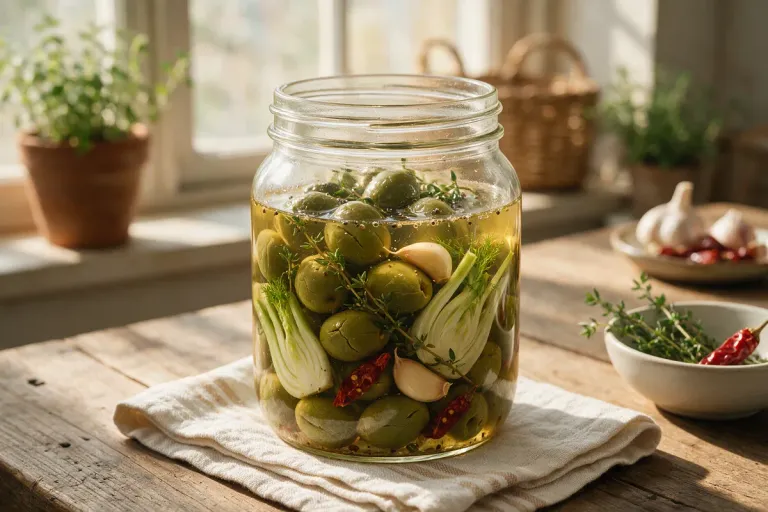
Fresh off the tree, olives are too bitter to eat because of a compound called oleuropein. Curing removes it. Spanish-style green olives, the Sevillian method, are soaked briefly in a lye solution, rinsed, then fermented in brine for weeks or months. Other olives are cured slowly in brine alone, or packed in dry salt, which gives the wrinkled look of some black olives.
Black olives can be ripened on the tree, or they can be green olives darkened by exposure to air during processing. The second kind is uniform in colour and mild, and is the type usually sold sliced and pitted.
Dressed, cracked and stuffed
Aliñadas means dressed: olives marinated with garlic, herbs, vinegar and spices such as cumin or fennel. Our aceitunas aliñadas page has the details. Olives for dressing are often partidas or machacadas, split or cracked so the dressing gets inside.
One dressed olive with official protection is Aloreña de Málaga, a cracked green olive from the Guadalhorce valley in Málaga, seasoned with thyme, fennel, garlic and pepper. It holds a protected designation of origin.
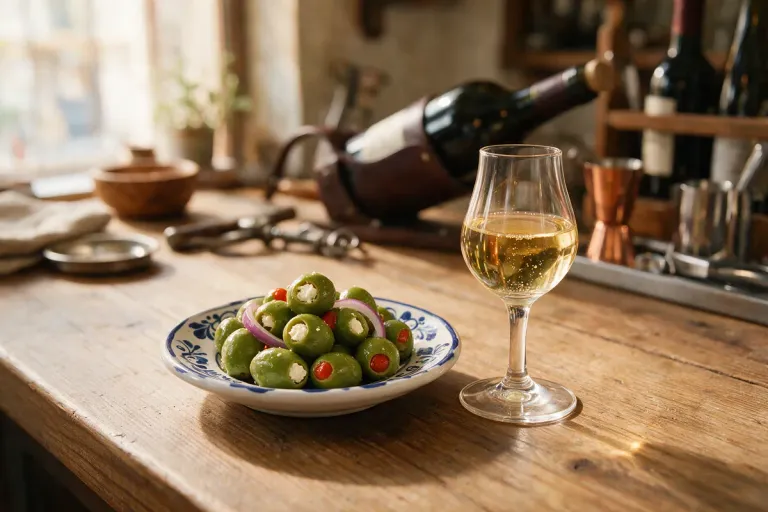
Stuffed olives are the other big category. Manzanilla stuffed with anchovy is the classic Spanish tin, and pepper is the other common filling. The same three flavours, olive, anchovy and pickled pepper, are what make up the gilda, the Basque pintxo on a toothpick (see our gilda page).
How to order them
- Ask whether the olives are dressed in house.
- In parts of Spain a small dish of olives comes free with a drink. Outside Spain, expect them to be on the bill.
- Olives with the stone in usually come with a small dish for the pits. If none arrives, ask.
- Manzanilla the olive and manzanilla the sherry share a word but nothing else. If you want a classic pairing, a dry fino or manzanilla sherry works well with salty green olives. Our sherry guide explains the styles.
Where to try them
These venues in our directory mention olives in their own listings:
- Bar 44 in Cardiff, Bristol and Penarth: each outlet runs its own menu, built on Tom and Owen's travels across Spain, and the listing names Carmona olives (Carmona is a town in the province of Seville) alongside aged manzanilla sherry.
- Macarena Spanish Restaurant & Bar, Shanghai: olives are listed with Iberian ham, tapas, seafood and paella.