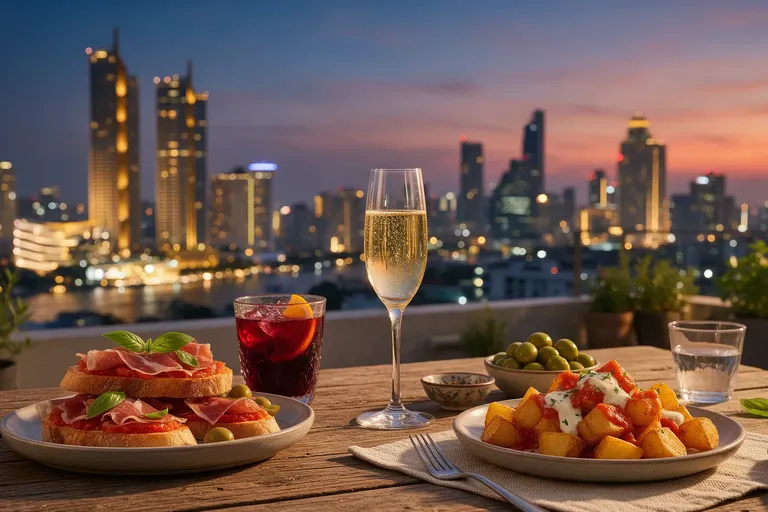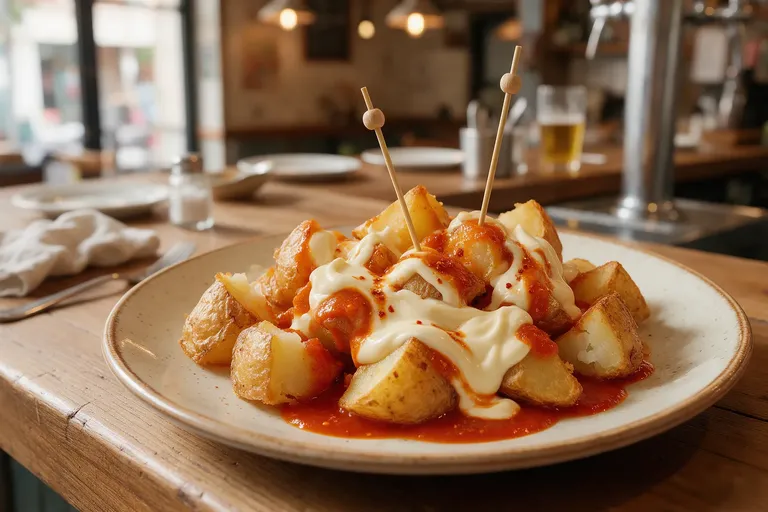
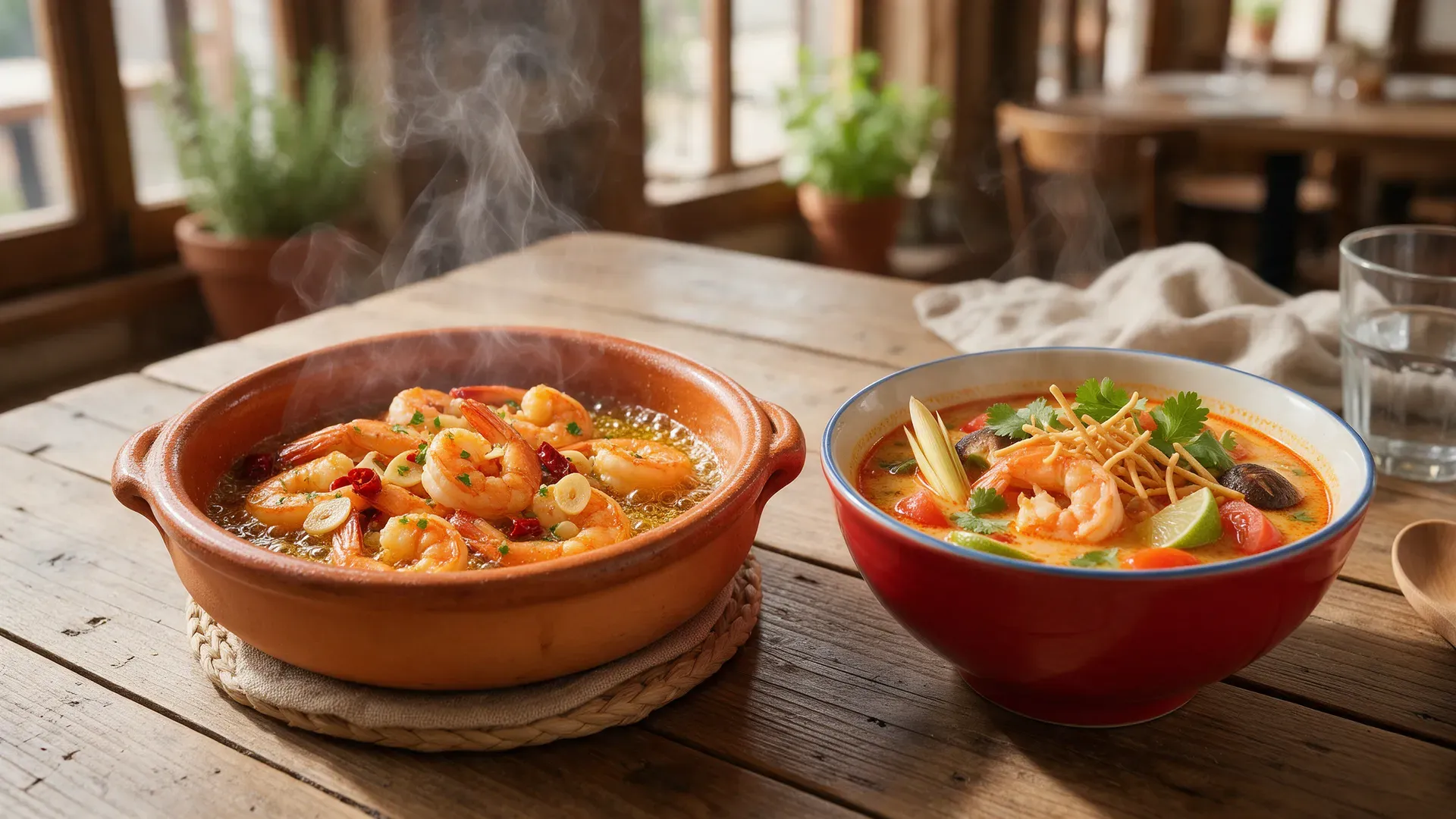
Walk into a tapas bar in Madrid and a Thai seafood restaurant in Bangkok, and there is a good chance both will have prawns cooked with a lot of garlic. After the garlic, the two kitchens go different ways. Spain tends to strip prawns back to oil, salt and heat. Thailand builds layers around them: sour, salty, hot and herbal.
This is a quick tour of both, followed by the Spanish restaurants in our directory whose own records mention prawns.
The Spanish way: oil, garlic, salt
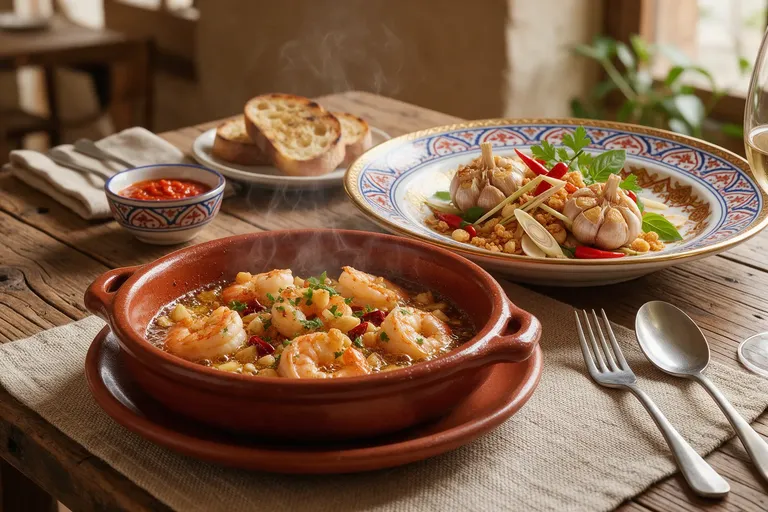
Gambas al ajillo is the tapa most people know. Peeled prawns go into hot olive oil with sliced garlic and a dried guindilla chilli. It is traditionally served still bubbling in a small clay cazuela, and the oil is half the point: you order bread to mop it up.
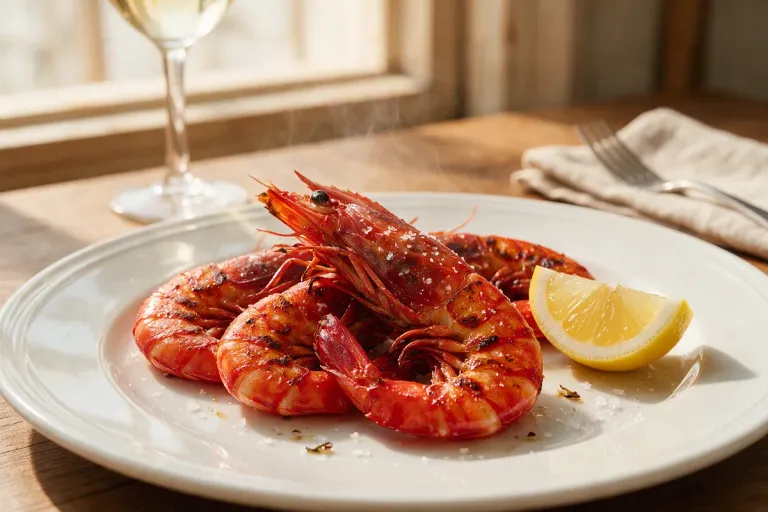
The other common method is a la plancha. Whole prawns go on a very hot griddle with coarse salt and come off with their heads on. In Spain, sucking the juices out of the head is common.
Many prized Spanish prawns are known by the place associated with them: the gamba roja (red prawn) of Dénia and Garrucha, the white prawn of Huelva and the langostino of Sanlúcar de Barrameda. The large, deep-red carabinero is named for the species rather than a place.
The Thai way: sour, hot, herbal
Goong is Thai for prawn, and a few dishes show how differently it gets treated:
- Tom yum goong: hot and sour soup with prawns, lemongrass, galangal, makrut lime leaves, chilli and lime juice.
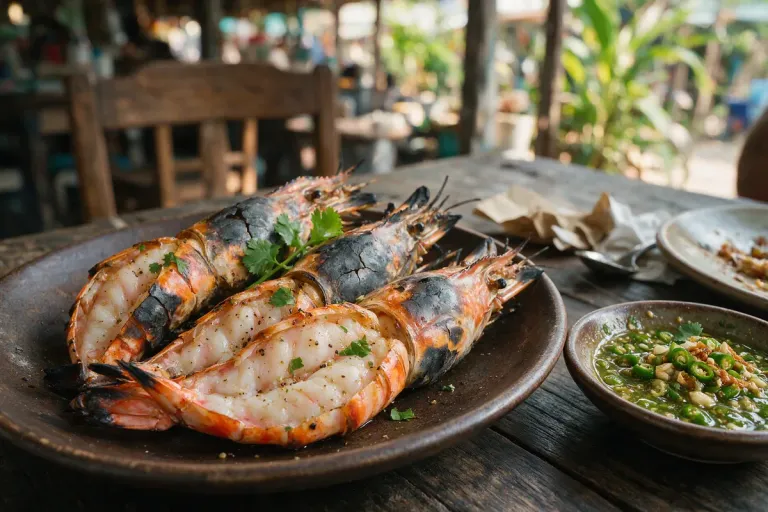
- Goong pao: grilled prawns, often large freshwater river prawns, served with nam jim seafood sauce made from lime, fish sauce, garlic and green chilli.
- Goong chae nam pla: raw prawns dressed in fish sauce, lime, garlic and chilli.
- Goong tod kratiam: prawns fried with plenty of garlic and pepper.
Goong tod kratiam is the closest Thai relative of gambas al ajillo: garlic and heat, very little else. The difference is in the finish. Spanish garlic prawns sit in their oil. Thai garlic prawns are usually fried until the garlic is crisp and eaten with rice and a sauce on the side.
Two clay pots
The neatest overlap is the vessel. Gambas al ajillo are traditionally served in a terracotta cazuela. Thailand's goong ob woon sen (prawns baked with glass noodles) is traditionally cooked in a clay pot too, with the prawns on top of noodles that soak up soy sauce, pepper and, in many versions, pork fat underneath.
In both cases a clay pot holds heat and keeps cooking after it leaves the stove, so the dish arrives hot and keeps going on the table.
What changes when you order
- In Spain, prawns are usually a shared tapa or a starter, with bread. In Thailand they are usually one dish among several, with rice.
- Spanish griddled or garlic prawns are usually served without a dipping sauce. Thai grilled prawns usually come with one, such as nam jim.
- Spanish menus sometimes name where the prawns come from. In Thailand, river prawns (goong mae nam) are a category of their own.
If you are Thai and ordering in a Spanish restaurant for the first time, gambas al ajillo is an easy place to start, because garlic, chilli and prawns are already a familiar combination.
Where to order Spanish prawns
These restaurants mention prawns in their own directory records:
- La Cava, Phuket: gambas al ajillo is listed as the signature dish.
- VASO Spanish Tapas Bar, Bangkok: gambas al ajillo is on a tapas menu that changes regularly.
- Little Spain, Hua Hin: garlic prawns are part of its tapas classics, next to croquetas and Padrón peppers.
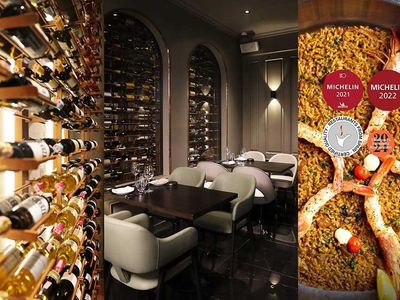
- Bodegas Wine Bar & Restaurant, Bangkok: prawn paella is among its traditional dishes with a modern twist.
Outside Thailand, Bar 44 in Bristol lists Sanlúcar prawns among the Spanish produce it brings in.