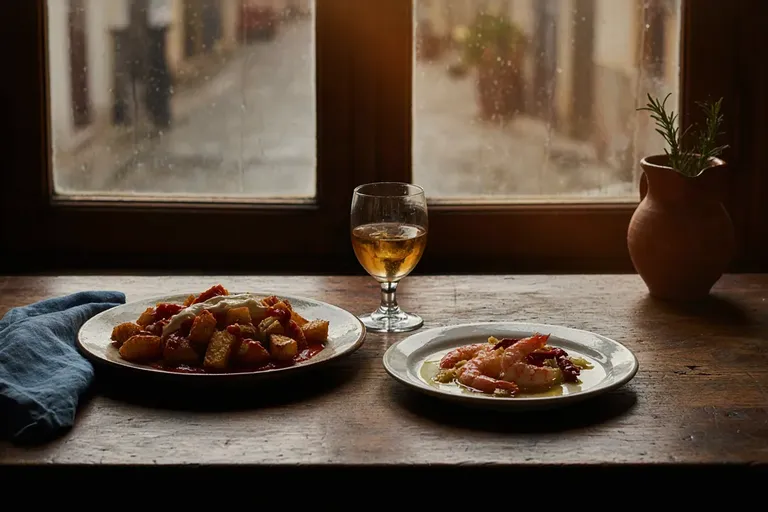
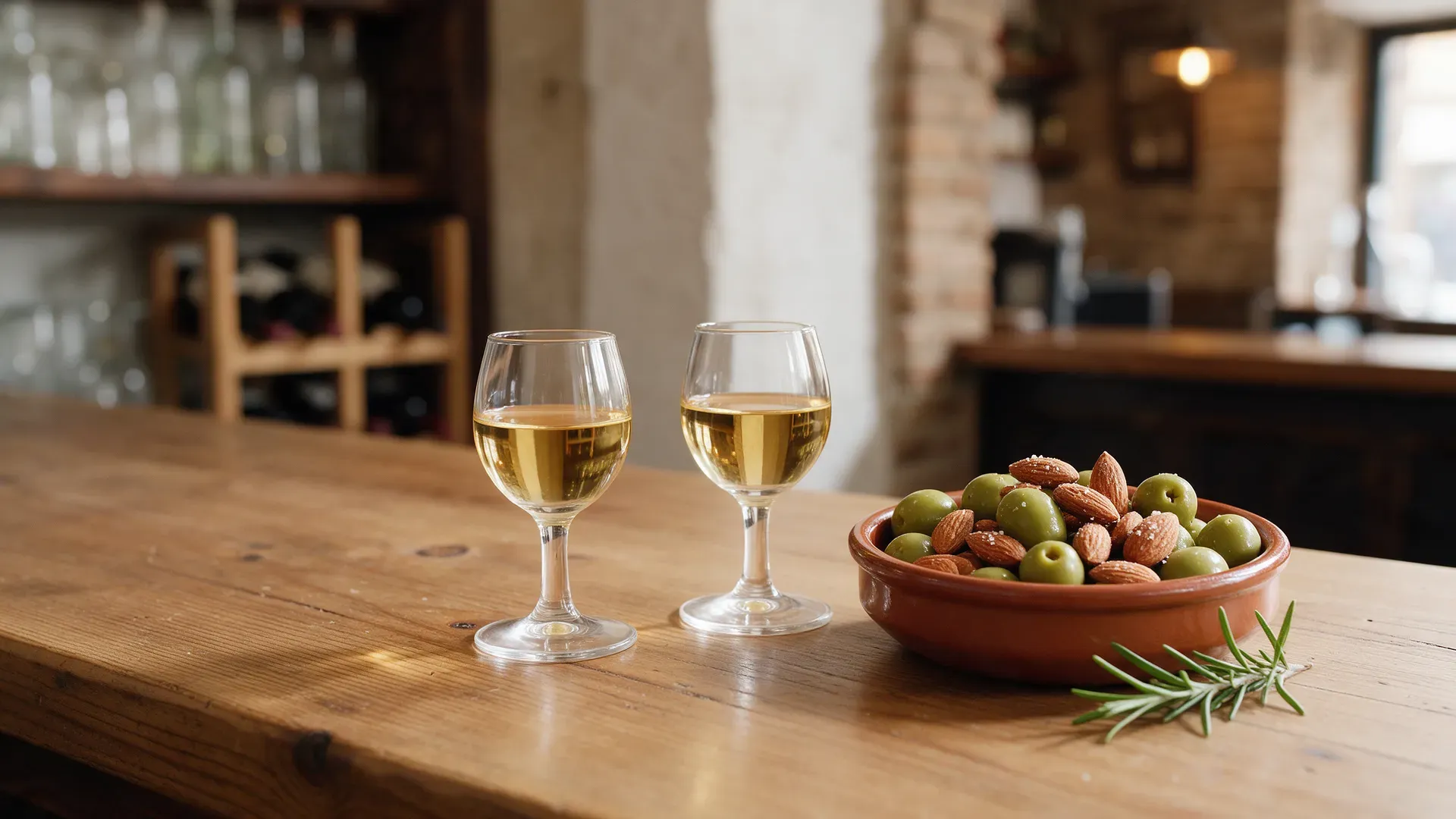
If you think of sherry as something sweet and brown, Fino and Manzanilla are the opposite: pale, dry, sharp and served cold. Our Sherry 101 guide covers the full range of styles. This post is just about these two, the sherries most often poured with tapas.
What Fino and Manzanilla have in common
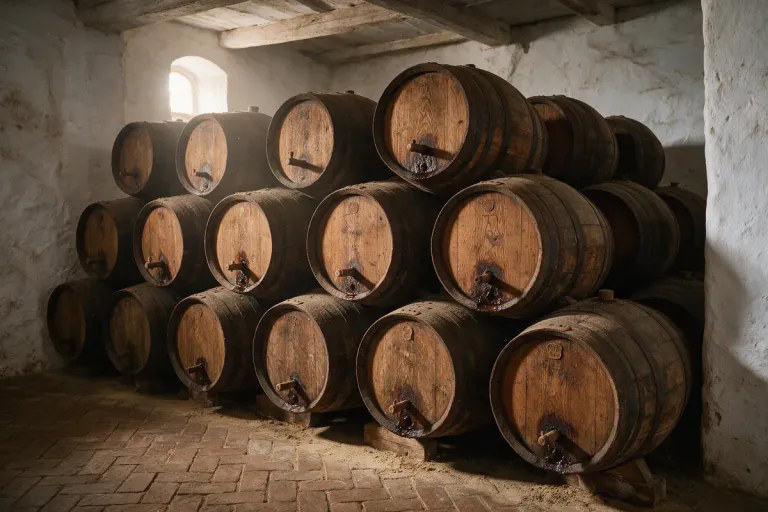
Both are made from the Palomino grape in the far south-west of Andalusia, and both are fortified to around 15% alcohol. What makes them different from other wines is flor: a layer of yeast that forms on the surface of the wine in barrels that are not filled to the top. The flor keeps oxygen away, so the wine stays pale and develops a dry, yeasty, almond-like character instead of turning brown.
The wines age in a solera system: rows of barrels where wine is drawn from the oldest level for bottling and topped up with younger wine from the level above. The result is a blend of many vintages, which is why most sherry has no year on the label.
What sets them apart
Manzanilla is Fino-style sherry aged in the seaside town of Sanlúcar de Barrameda, and it has its own designation, DO Manzanilla-Sanlúcar de Barrameda. It must be aged there. The humid coastal air keeps the flor thick through the year, and Manzanilla is often described as lighter and more saline than Fino.
Fino is aged mainly in Jerez de la Frontera and El Puerto de Santa María, under the DO Jerez-Xérès-Sherry. It tends to be a little fuller in body. Three related labels you may see:
- Manzanilla pasada: an older Manzanilla, with more depth.
- En rama: bottled with little or no filtering, close to how it tastes from the barrel.
- Amontillado: not a Fino at all, but a wine that started under flor and was then aged with air contact, so it is darker and nuttier. Worth knowing so you don't order it expecting a Fino.
How to order and serve them
- Ask for it cold. Both are served well chilled, in a small glass called a copita or catavino.
- Ask when the bottle was opened. Like white wine, an open bottle fades within days. A bar that pours a lot of it will have fresher bottles.
- Order by name. In a Spanish bar, "una manzanilla" means the wine. The same word also means chamomile tea, and it is a variety of olive too (see our Spanish table olives guide), so context matters.
- Try a rebujito if it is hot. At the Seville and Jerez fairs people mix Manzanilla or Fino with lemon-lime soda over ice. See our rebujito page.
What to eat with a glass
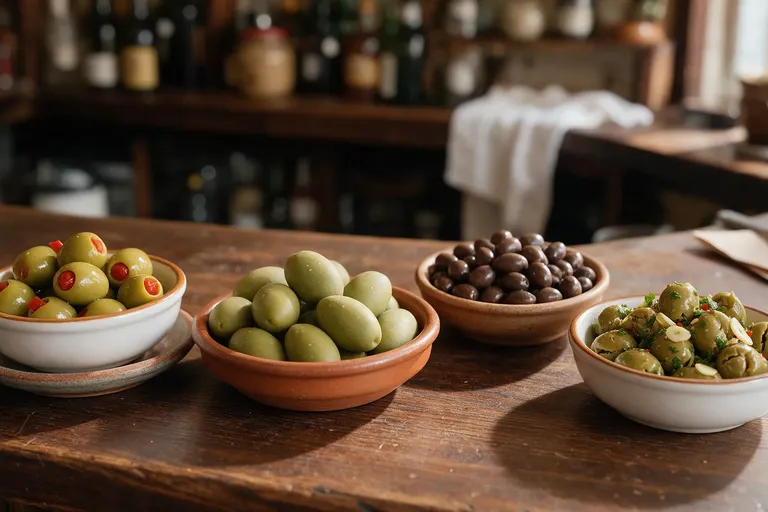
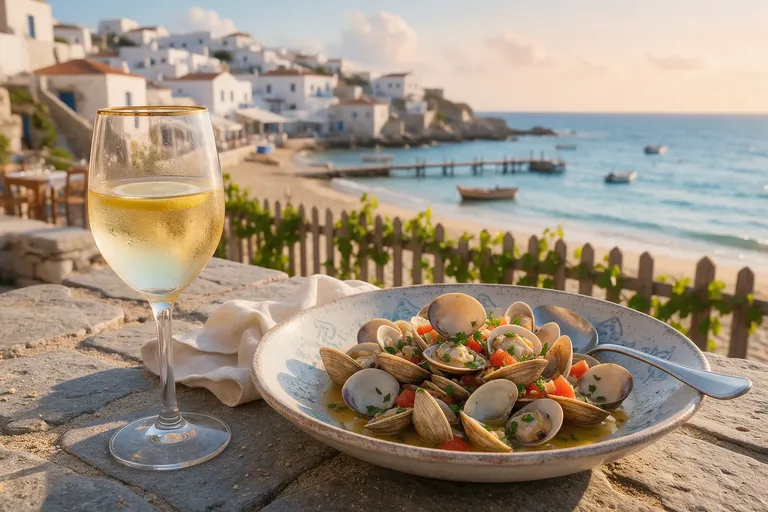
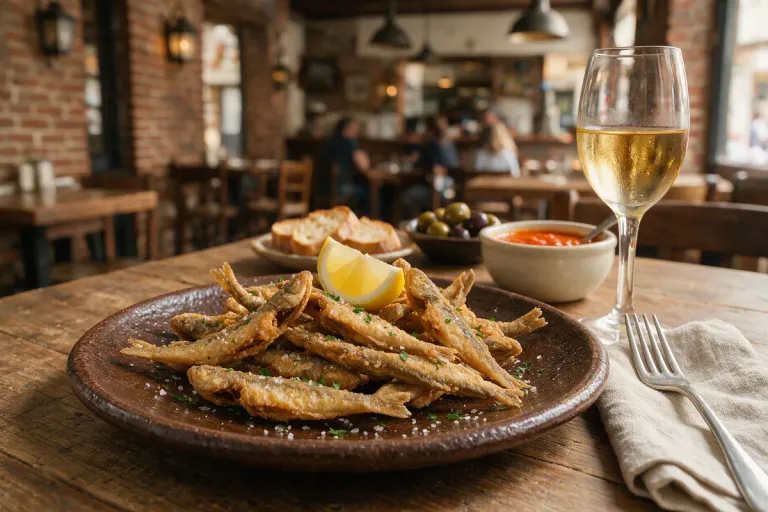
Salty, fried and savoury food is the usual match: jamón ibérico, olives, salted almonds, fried fish, prawns and shellfish. Manzanilla is the traditional drink with seafood in Sanlúcar. A cold Fino with a plate of ham is about as classic as Spanish bar food gets. For the rest of the bar menu, see our guide to ordering drinks in a Spanish bar.
Where to try it
These restaurants mention Fino, Manzanilla or sherry in their own records with us:
- MoVida Next Door (Melbourne): describes itself as an Andalusian bar serving sherry, and suggests an ice-cold Fino with its tapas.
- Bar 44 Bristol (UK): lists aged Manzanilla sherry among the Spanish produce on its menus.
- Mama Delia (Chicago): a restaurant, sherry bar and neighbourhood market in one.
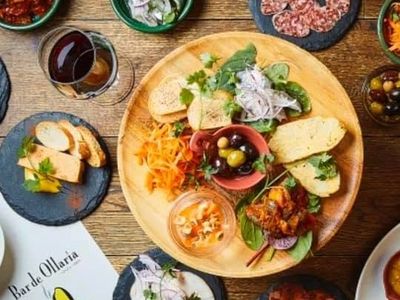
- Bar de Ollaría (Tokyo): lists a large selection of sherry wines.