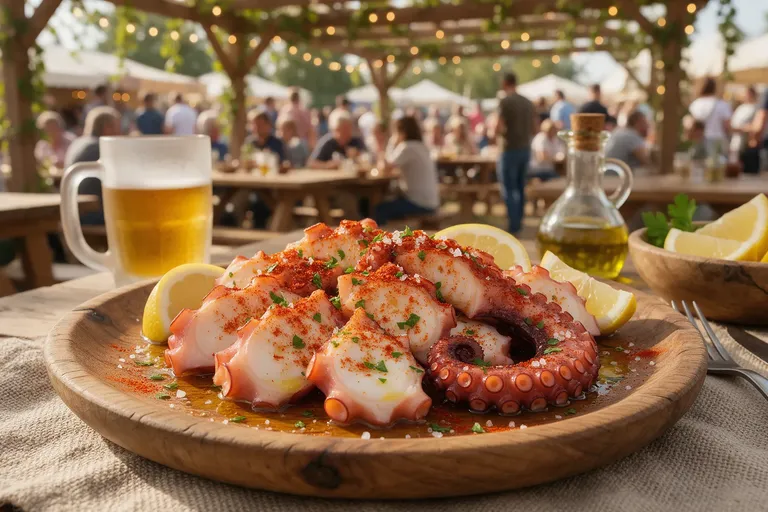
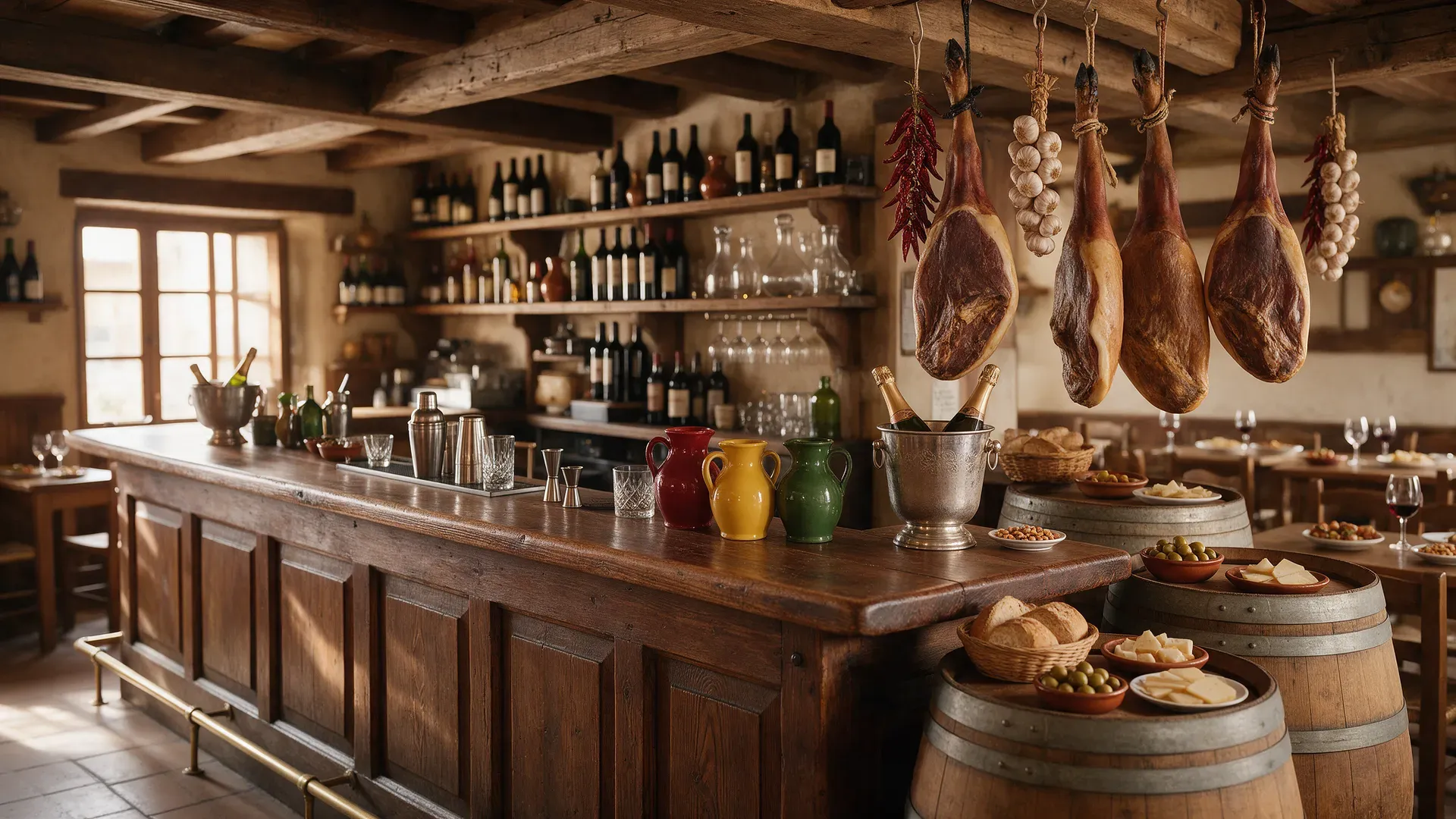
Look down the list of Spanish restaurants in any big city abroad and the same words keep appearing in the names: Taberna this, Bodega that, La Tasca de someone. In Spain these words describe types of places, and they still give a rough idea of what to expect. They are not regulated, so treat them as a hint rather than a promise, but the hint is often right.
This post covers the most common ones, with examples from our own directory where the venue's record explains how it uses the word.
Taberna and tasca
A taberna is a tavern: a traditional bar where people drink wine, vermouth or beer and eat something with it, usually standing at the bar or at a few tables. The word goes back to Latin taberna, a shop or inn. A tasca is close in meaning and is often used for a smaller, plainer, old-fashioned bar. In practice the two overlap a lot.
Abroad, both words are used to signal a relaxed tapas-and-wine place rather than a formal restaurant. La Taberna de Juan in Guatemala City describes itself as inspired by the Spanish taberna as a social and food institution built around food, wine and conversation. La Tasca Madrileña in Antigua Guatemala calls itself a tapas bar at heart offering a Spanish tasca experience, with tapas, Spanish wine or a cold beer.
You will also see regional versions: Tomiño Taberna Gallega in New York and Morriña - Taberna Galega in Poznan both use the name for a Galician tavern. For what to order in one, see Galician food explained.
Bodega
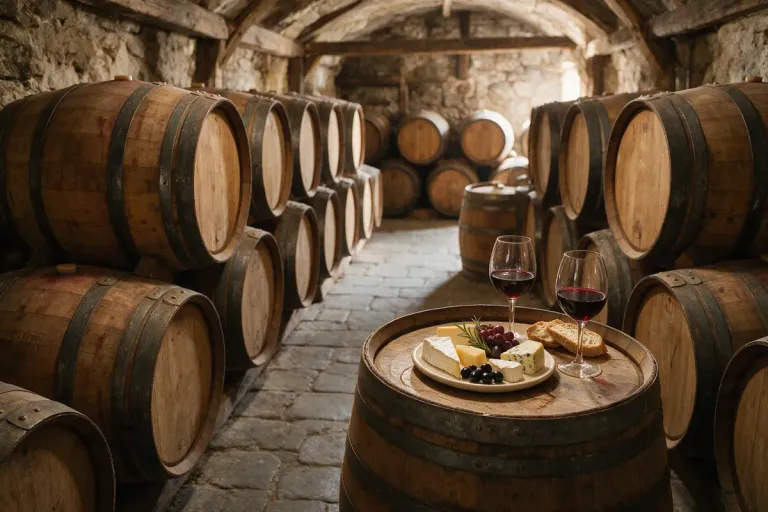
A bodega is a wine cellar. The same word is used for a winery, a place where wine is stored, and a shop that sells wine. Many old bodegas in Spanish towns also pour wine by the glass and serve simple food, so the word came to cover a wine bar with tapas too. In sherry country, the bodegas are the big ageing cellars of the sherry houses; see Sherry 101.
Bodega Espanola in Zurich's old town fits the original meaning closely: its record describes it as the oldest Spanish wine store in Zurich with its own restaurant, serving traditional Spanish dishes, tapas, sherries and port. El Vaso de Oro HK in Hong Kong does not use the word in its name, but describes itself as a tapas bar inspired by traditional 1970s Spanish bodegas.
Mesón
A mesón was originally an inn, a place where travellers could eat and sleep. Today in Spain it usually means a traditional restaurant with a rustic look and home-style food, often roasts and hearty dishes.
Mesón Sabika in Naperville, Illinois, is housed in a mansion dating from 1847 and has been open since 1990; its menu runs from paella to tortilla española, with sherries and sangria on the drinks list.
Asador, arrocería, cervecería
Some names tell you what the kitchen focuses on:
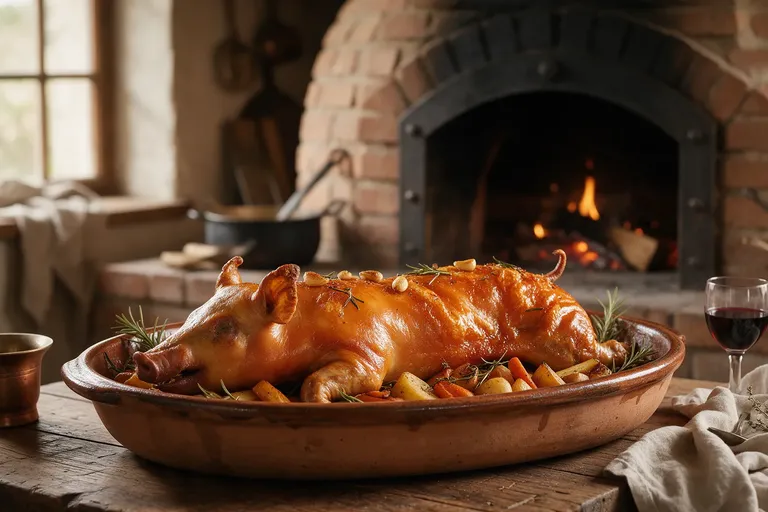
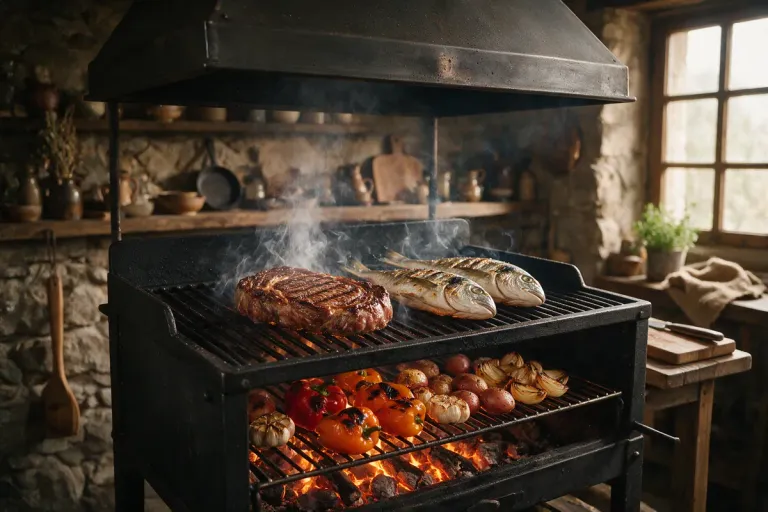
- Asador: a grill or roast house. In Castile it usually means wood-oven roasts such as suckling pig and lamb; in the Basque Country and the north it often means a charcoal grill for steak and fish. Asador 44 in Cardiff cooks meat on a wood-fired parrilla grill, inspired by the asador restaurants of northern Spain. More in Cochinillo and lechazo.
- Arrocería: a rice house, where paella and other rice dishes are the main event. Restaurante Arrocería Sal y Amor in Tokyo is described as specialising in paella and rice plates.
- Cervecería: a beer hall or beer bar, usually with tapas. Cervecería La Sureña in Lisbon is an Andalusian-style tapas beer hall from the Spanish group Restalia, opened in December 2025.
Two more you may meet: a marisquería specialises in seafood and shellfish, and a chiringuito is a beach bar, often serving fried fish and rice by the sea.
How much does the name tell you?
Quite a lot in Spain, less abroad. A restaurant in another country may call itself a taberna because it likes the sound of the word, and a place called Bodega may have a short wine list. Read the name as the owner's statement of the kind of place they want to run, then check the menu. An arrocería should have several rice dishes; an asador should have a grill or oven at the centre of the kitchen; a bodega should take its wine seriously. If you want help with the dishes on the menu itself, our Spanish cooking terms decoder covers words like plancha, ajillo and escabeche.