Many Spanish menus have a section that just says a la brasa or de la parrilla. It is often the most expensive part of the menu. This guide explains the words, the dishes that usually appear there, and how to order without overpaying or getting a steak cooked the wrong way.
Brasa, parrilla and plancha
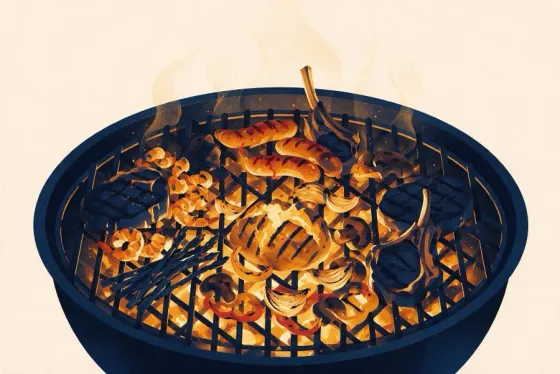
- A la brasa: cooked over embers. Brasa means live coals, so the word tells you the heat source, usually charcoal or wood.
- A la parrilla: cooked on a parrilla, a grill grate. In practice parrilla dishes in Spain are very often cooked over embers too, so the two terms overlap.
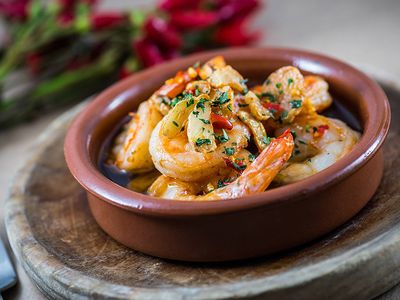
- A la plancha: cooked on a flat, very hot metal plate. No flames and no smoke flavour, just a hard sear. Prawns, squid and fish fillets are classic plancha dishes.
- Asado: roasted. In Spain this usually means an oven roast, such as suckling pig or lamb, rather than a grill.
If you want smoke on your food, look for brasa or parrilla. If you want something seared fast and clean, choose plancha. Our Spanish menu decoder covers the other cooking terms you will meet.
What Spanish kitchens put over the coals
The Basque Country has a long tradition of asadores, grill houses built around a charcoal grill. Two dishes define them:
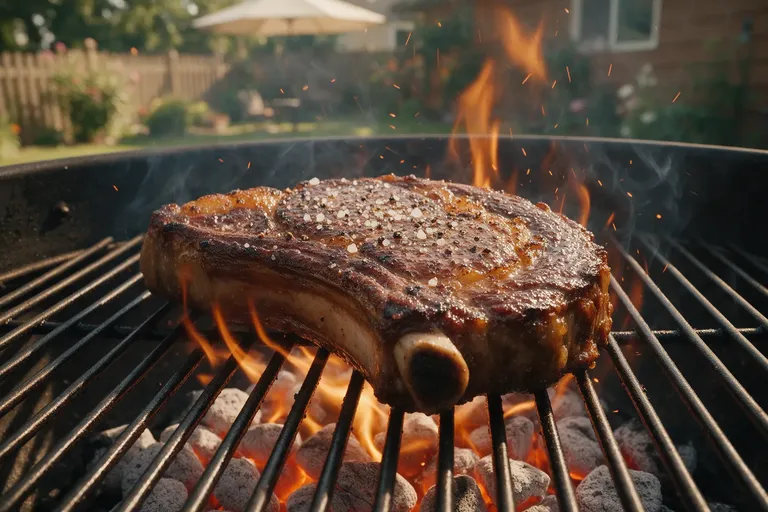
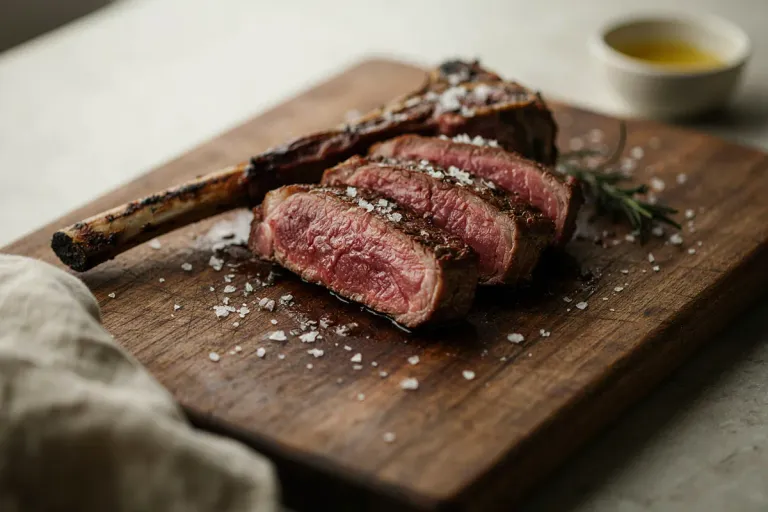
- Chuletón or txuleta: a thick bone-in beef rib steak, salted and grilled over coals. See our chuletón page.
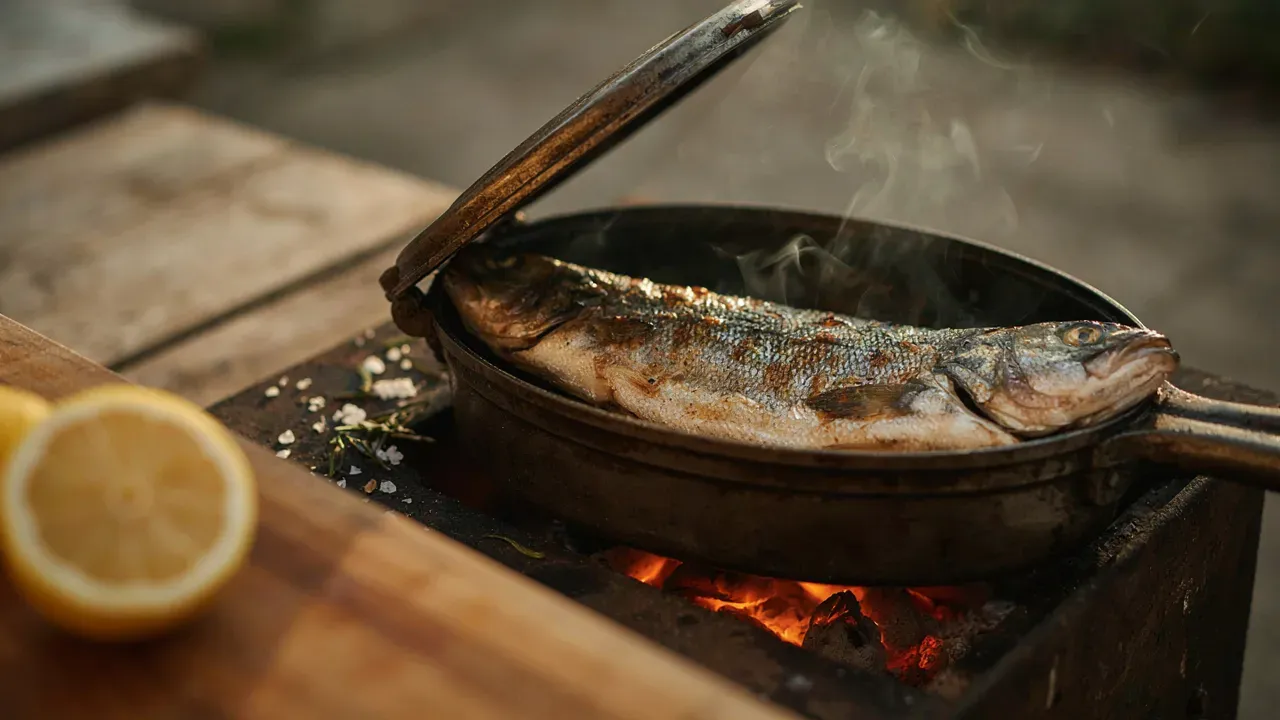
- Whole grilled fish: the fishing town of Getaria, on the Basque coast, is famous for turbot and other whole fish grilled over charcoal in hinged metal baskets.
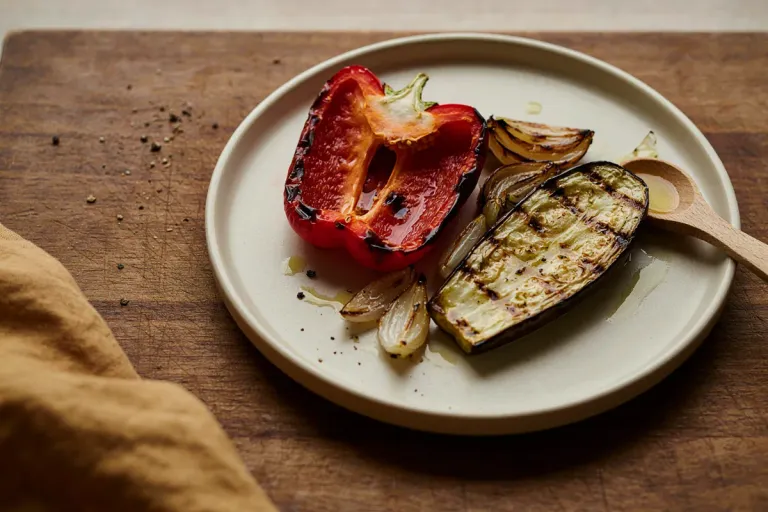
Other regions have their own grill dishes. In Catalonia, escalivada is aubergine, peppers and onion roasted in embers, then peeled and dressed with olive oil. On the beaches of Málaga, espetos are sardines skewered on canes and cooked beside an open fire. Grilled octopus, lamb chops and Ibérico cuts like secreto also turn up on many brasa menus.
How to order a steak or a whole fish
Big grill dishes are often listed by weight, sometimes as a price per kilo, so ask how heavy the piece is and how many people it feeds before you order. A chuletón is usually meant for sharing.
Spanish doneness terms are worth knowing:
- Vuelta y vuelta: seared on each side, very rare inside.
- Poco hecho: rare.
- Al punto: medium.
- Muy hecho: well done.
Many asadores serve chuletón rare, sliced, and seasoned with coarse salt. If you want it cooked further, say so when you order. For whole fish, ask for the catch of the day and its weight, and ask whether it is grilled whole or opened flat.
Common mistakes
- Ordering a chuletón for one without asking its weight.
- Expecting smoke flavour from a plancha dish.
- Ordering a big grill dish and five tapas on top. The grilled piece is usually the main event.
- Skipping the vegetables, which often come off the same grill.
Where to try it
These restaurants in our directory describe grills or charcoal cooking in their own records:
- Parrillan Borough Yards, London: cooks whole fish, Galician steaks, arroces and seasonal vegetables over a wood-fired grill, and lets terrace guests cook on their own mini parrillas.
- Asador 44, Cardiff: specialises in meat cooked on a wood-fired parrilla grill, inspired by the asador restaurants of Spain's northern provinces.
- Puerto Getaria, Mexico City: chef Iñigo Aramburu's menu includes charcoal-grilled huachinango "Getaria style" and charcoal-grilled steak with piquillo peppers.
- Pura Brasa Bangkok: says most of its dishes are prepared in Josper charcoal ovens.
- Fuego, Kołobrzeg: built around a Josper crafted for the restaurant in Spain, used for grilled fish, gambas and meats.
- Pata Negra Asador, Budapest: cooks Spanish meats and fish in a charcoal oven, including Iberian pork and Basque chuletón.