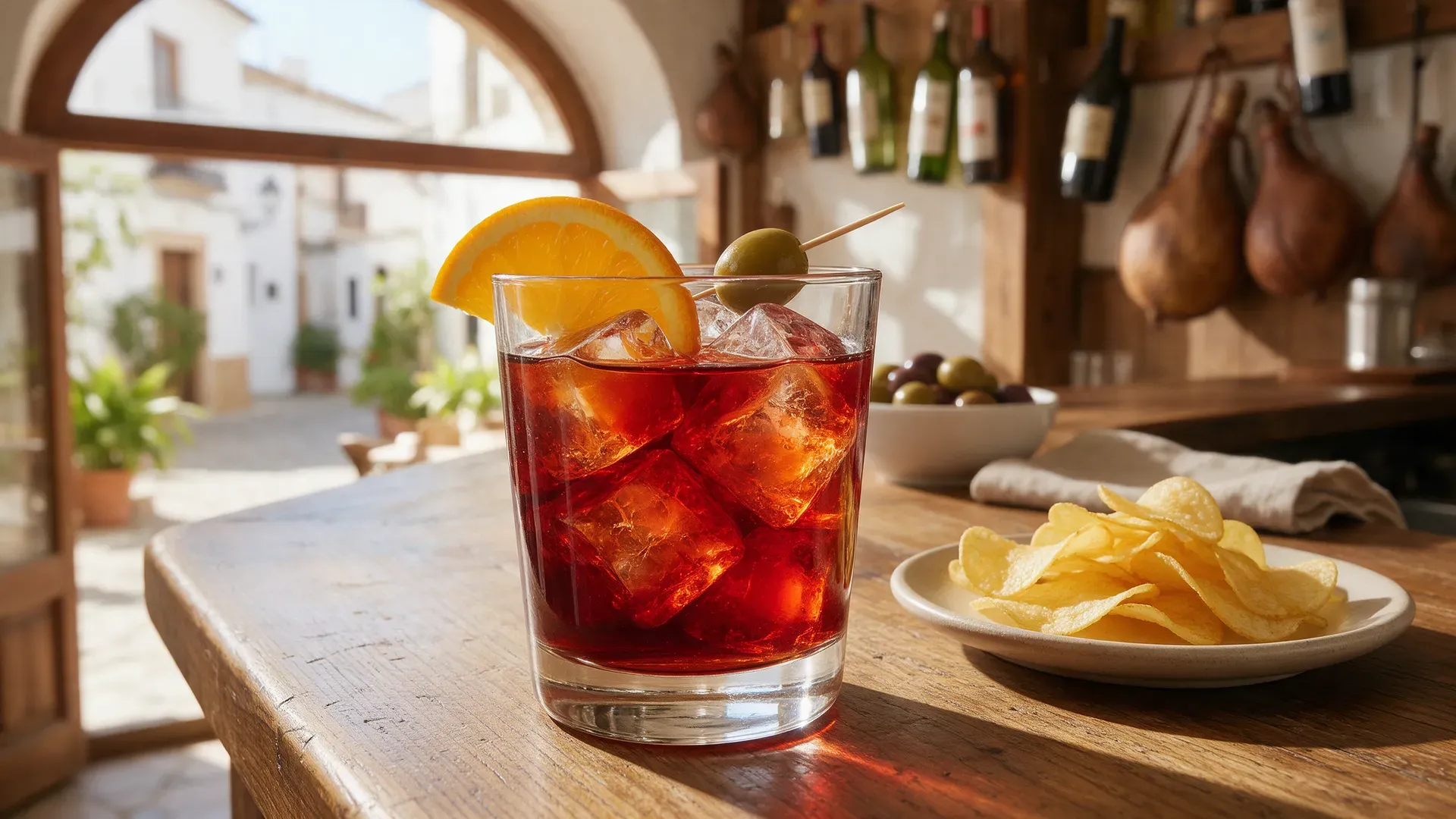
Ask for vermouth in most countries and you get a cocktail ingredient: a splash in a Martini, a measure in a Negroni, a bottle that has been open in a warm cupboard since last Christmas. Ask for it in Spain at one in the afternoon and you get a drink in its own right, over ice, with an olive and a slice of orange in it, and probably a small plate beside it.
The Spanish call the ritual la hora del vermut, the vermouth hour, and also use it as a verb. Hacer el vermut means going out for a drink and a snack before lunch, usually on a Sunday, usually standing up.
What vermouth actually is
Vermouth is wine that has been fortified with spirit and flavoured with botanicals. The one botanical that has to be there is wormwood, Artemisia absinthium, which is where the name comes from: German Wermut, wormwood. Everything else is the producer's choice, and there can be dozens of things in a recipe, from citrus peel to cinnamon to gentian root.
The wormwood is also why vermouth tastes bitter underneath the sugar. That bitterness is the point. It is an aperitif, a drink designed to make you hungry, and a sweet drink with no bitter edge would not do the job.
How Spanish vermouth differs
The style most people know is Italian, and it splits into sweet red and dry white. In Spain, vermut means red by default. Ask for vermut and you will get the red one unless you specify otherwise. Blanco exists and is a minority taste.
Spanish red vermouth tends to be a little sweeter and more heavily spiced than the standard Italian red, and it is built to be drunk on its own rather than mixed. It is also drunk a lot younger in the day. Nobody in Spain is saving vermouth for the evening.
Two towns carry the history. Reus in Catalonia was the centre of the Spanish vermouth industry and still has a museum devoted to it. Chinchón, south of Madrid, is the other name people mention, better known abroad for its anise but a vermouth town as well.
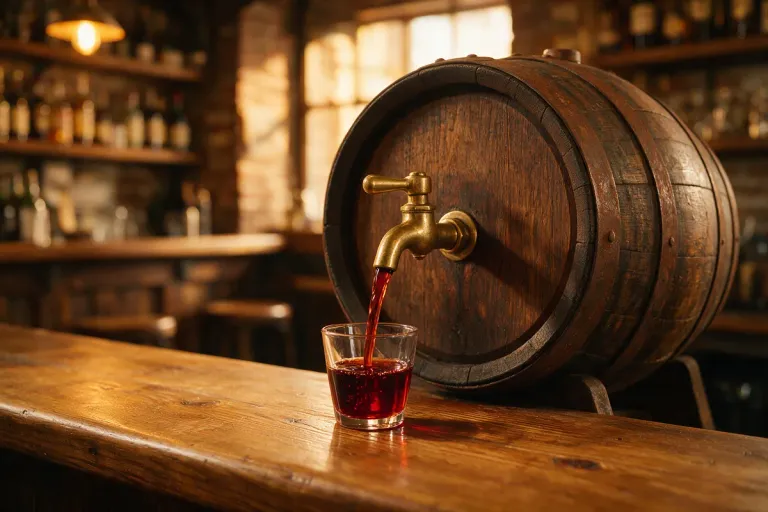
Vermut de grifo
The detail worth knowing is draught vermouth. Vermut de grifo is poured from a tap, often from a barrel behind the bar, and a bar that pours it is telling you vermouth is a real part of its business rather than a dusty bottle on a shelf.
Draught is usually the house blend, cheaper than the bottled brands and better than it has any right to be. If you see a tap, order from it.
How to order it abroad
- Ask for it on ice in a short tumbler, not a stemmed glass.
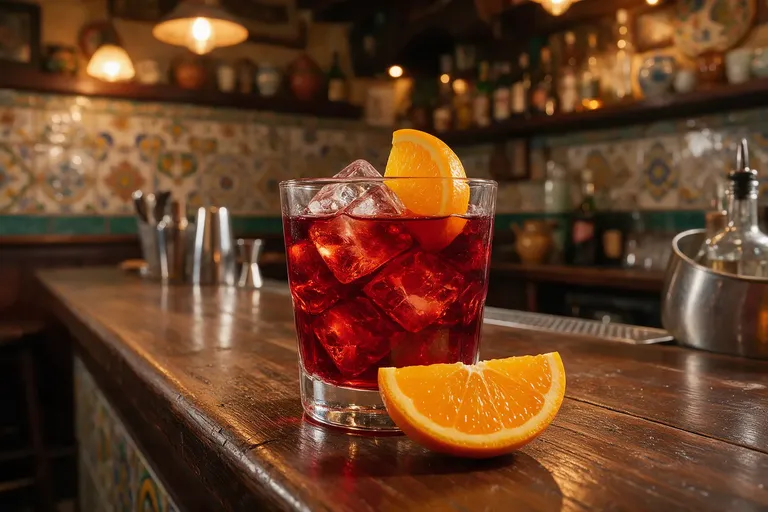
- Olive and orange. A green olive on a stick and a slice of orange are the standard garnish. Some bars add a splash of soda.
- Drink it before the meal, not after. It is there to open the appetite.
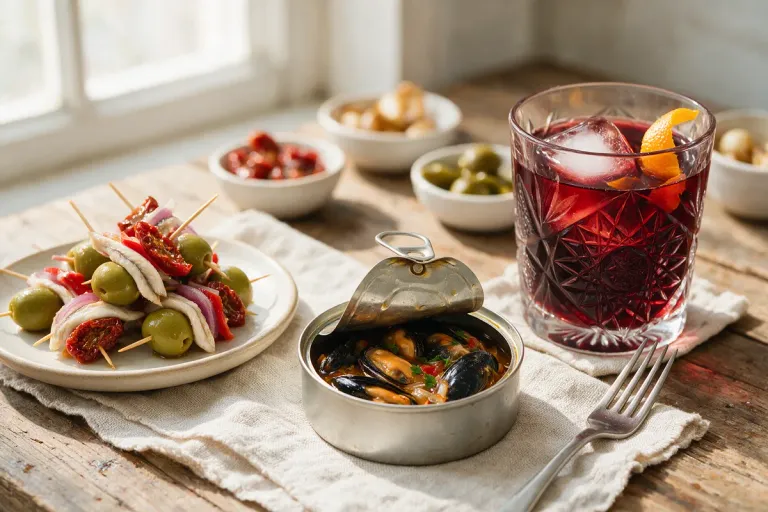
- Eat something with it. Olives, crisps, a tin of something, a gilda if the bar makes them.
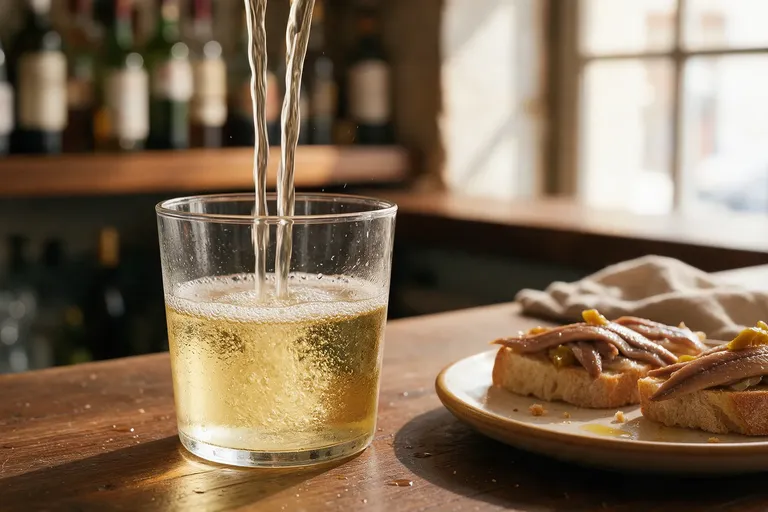
The gilda is the classic partner: an anchovy, a green olive and a pickled guindilla pepper on a stick. Salt, acid and heat against a sweet bitter drink. It works the way salted peanuts work with beer, only better.
Where to find it outside Spain
Vermouth is one of the first things a Spanish restaurant abroad drops, because it needs a bar culture to make sense and does not photograph as well as sangria. When a restaurant does keep it, that is usually deliberate. La Cocina del Bizco in Mexico City is built around Madrid and Castilian tavern cooking and puts vermouth culture at the centre of what it does. Gaudir Taverna, also in Mexico City, is built on the same idea of wine, a shared plate and company.
If the place you are in has no vermouth at all, that is a small piece of information about how Spanish it really is. It is not a disqualification, but put it next to the other signals in signs of an authentic Spanish restaurant.
Buying a bottle
Vermouth is wine, so it goes off. Once opened it belongs in the fridge and should be drunk within a month or so, sooner in a hot climate. A bottle that has sat open on a shelf for a year has oxidised into something flat and stale, which is why so many people think they dislike vermouth.
Buy a small bottle, keep it cold, and drink it the Spanish way: midday, over ice, with an olive in it and something salty to eat. It is the cheapest Spanish ritual to import, and one of the few that needs no kitchen at all.