Christmas in Spain is long. For many people it starts with the lottery on 22 December and it doesn't end until 6 January, and along the way there are several meals with their own foods and rules. If you are spending the holidays abroad and want something that tastes like a Spanish Christmas, it helps to know what goes on the table and when.
22 December: the lottery
The season opens with the Lotería de Navidad, the Christmas lottery, drawn on the morning of 22 December. The top prize is known as El Gordo, "the fat one". Many people buy shares of tickets with family, friends or colleagues, so the draw is a shared event, and for a lot of Spaniards it marks the moment Christmas begins.
Nochebuena and Navidad
For many families the main meal is dinner on Nochebuena, Christmas Eve, 24 December, when families gather at home. Christmas Day lunch on the 25th is often a second big meal.
What is served depends on the region and the family. A few common choices:
- Seafood: prawns, langostinos and other shellfish are a common starter, and their prices climb in the days before Christmas.
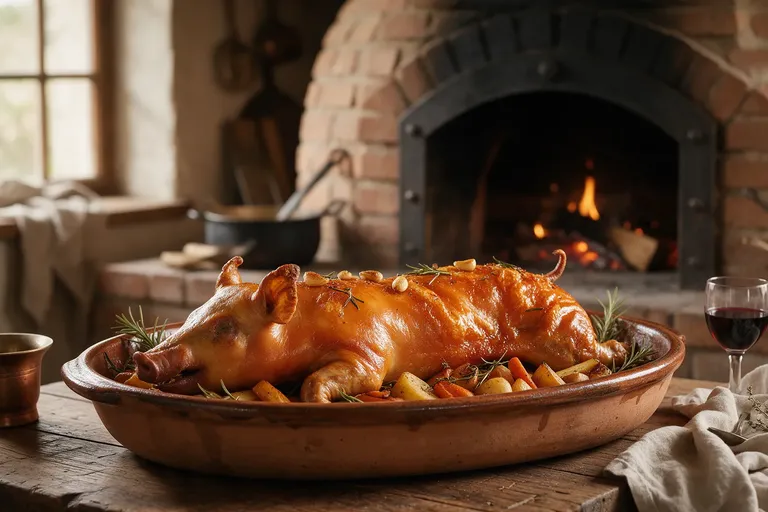
- In Castile, roast lamb or suckling pig is a classic main. Our post on cochinillo and lechazo explains how these are cooked.
- Besugo (sea bream) is a traditional Christmas Eve fish in Madrid.
- In Catalonia, Christmas Day lunch starts with escudella i carn d'olla, a broth served as sopa de galets (with large pasta shells), followed by the meat cooked in it. On 26 December, Sant Esteve, the leftover meat goes into canelons. See our Catalan food guide.
The sweets: turrón, polvorones, mazapán
A Spanish Christmas table ends with a tray of sweets, often set out after the meal and picked at for hours.
- Turrón is the main one, a nougat of almonds with honey and sugar. Turrón de Jijona is soft, made with ground almonds. Turrón de Alicante is hard, with whole almonds. Both come from the province of Alicante.
- Polvorones and mantecados are crumbly shortbreads made with lard. The town of Estepa, in the province of Seville, is famous for them.
- Mazapán is marzipan, and Toledo's is the best known.
28 December: Santos Inocentes
Día de los Santos Inocentes, 28 December, is Spain's day for pranks, much like April Fools' Day elsewhere. Newspapers and TV run fake stories, so be careful what you believe that day.
Nochevieja: the twelve grapes
On New Year's Eve, Nochevieja, Spaniards eat twelve grapes at midnight, one for each chime of the clock, for luck in each month of the coming year. The chimes from the clock at the Puerta del Sol in Madrid are broadcast live on television, and much of the country eats along with them. Keeping up with the chimes is harder than it sounds.
Reyes and the roscón
For many Spanish children the main day for presents is not 25 December but 6 January, the Day of the Three Kings. On the evening of the 5th, towns hold parades, the cabalgatas, where the kings throw sweets to the crowd.
The food of Reyes is the roscón de reyes, a ring-shaped sweet bread topped with candied fruit and sugar, often split and filled with cream. Two things are hidden inside: a small figure, which brings luck to whoever finds it, and a dried bean. Whoever gets the bean is supposed to pay for the roscón.
Where to find Christmas-table dishes abroad
You won't find turrón on every menu, but several dishes from the Spanish Christmas table appear in the records of venues in our directory:
- La Encina, Bogotá: cochinillo segoviano on a traditional Spanish menu.
- Uno Más, Bangkok: suckling pig from the Josper oven, 54 floors up at Centara Grand at CentralWorld.
- Barrica Tapas y Cañas, Bogotá: suckling pig is named as its specialty.
- El Asador, Moscow: traditional Spanish meat dishes such as roast lamb.
For sweets, Mallorca in Mexico City is a restaurant and pastry shop; we don't have its seasonal list, so ask before you go.