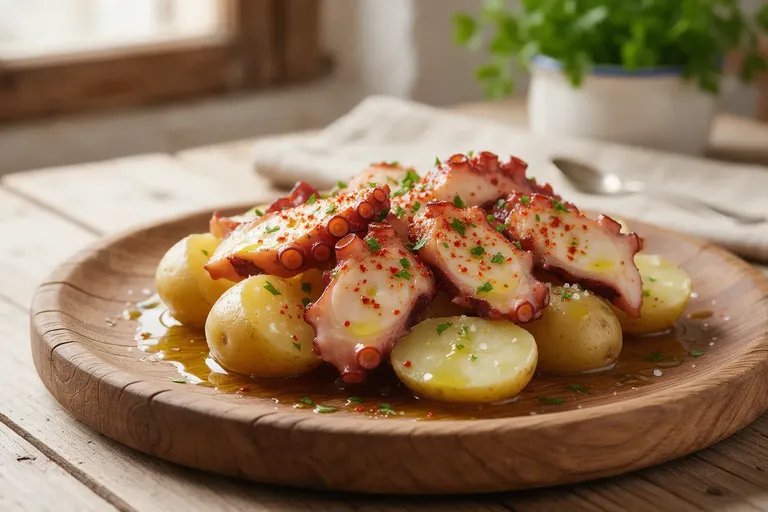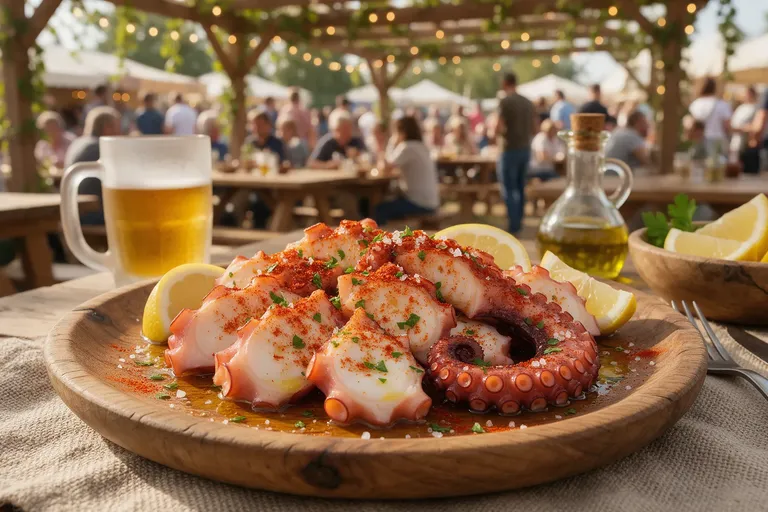
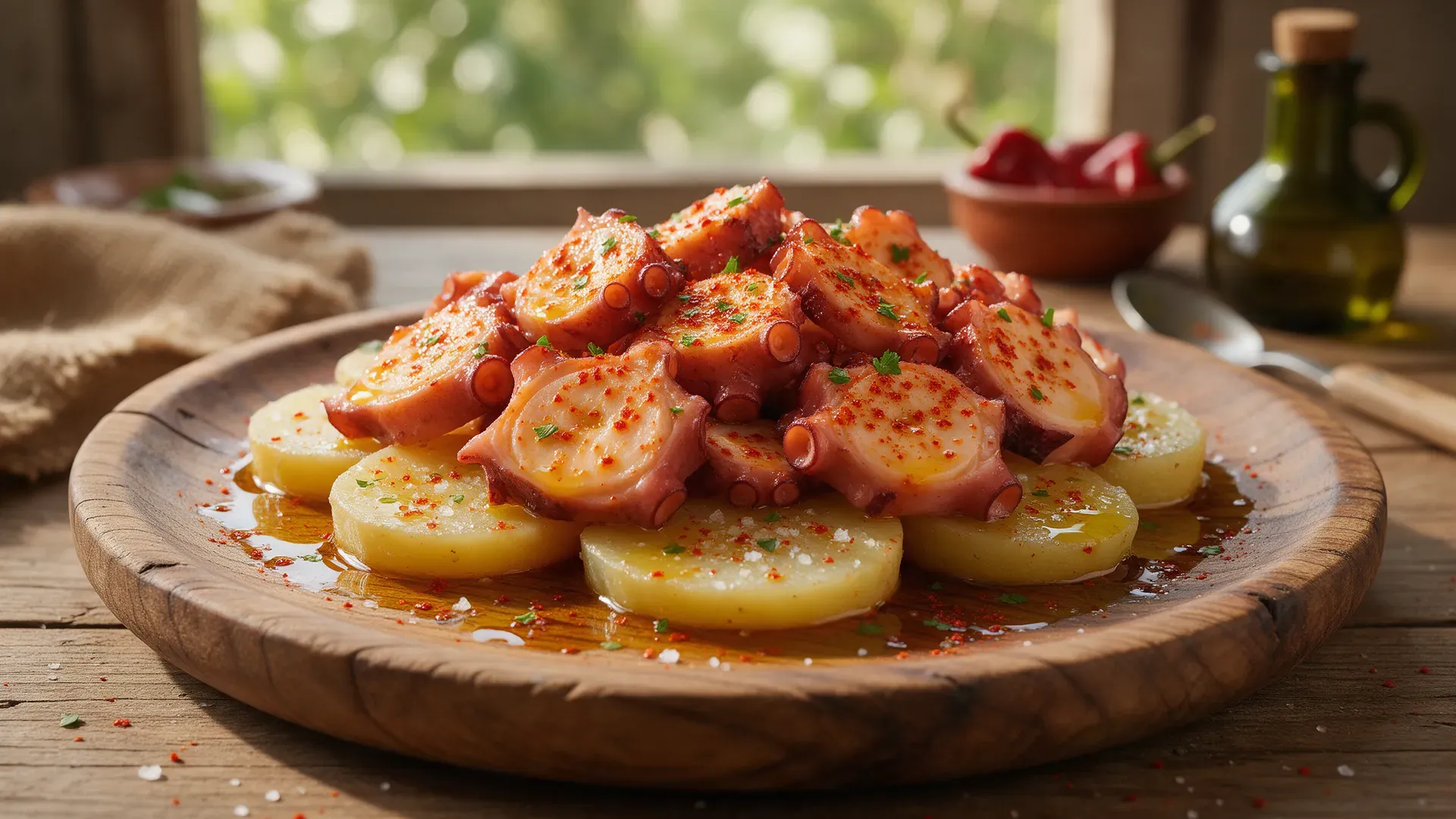
Pulpo a la gallega is a simple dish, which makes it easy to judge. Our pulpo a la gallega dish page describes it as tender boiled octopus sliced over potatoes, dressed with olive oil, sea salt and smoked paprika (pimentón). This post covers how to order it and what to look for.
What the name means
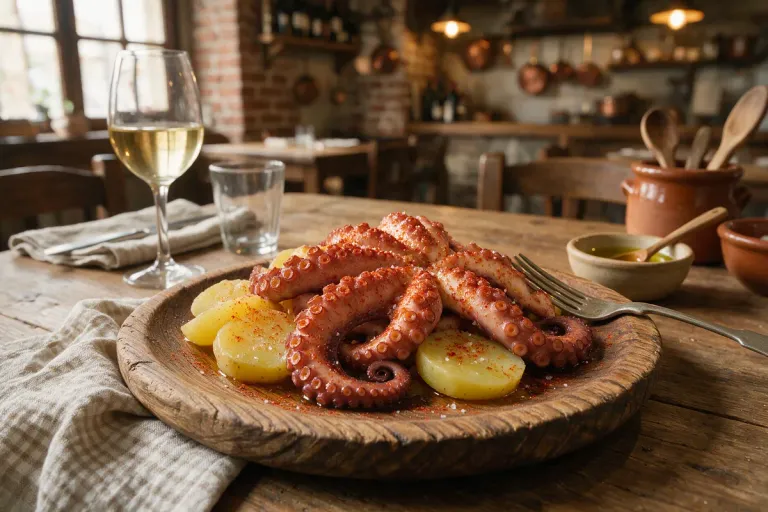
The dish is also called pulpo a feira, which translates as fair-style octopus. According to our dish page, it comes from Galicia's inland fairs, where itinerant pulpeiras boiled octopus in large copper cauldrons and served it on wooden plates. The dish page calls it the emblematic dish of Galician festivals. Our post on Spain's food festivals covers that side.
How to judge it
There are few ingredients to hide behind. Going by our dish page, look at three things:
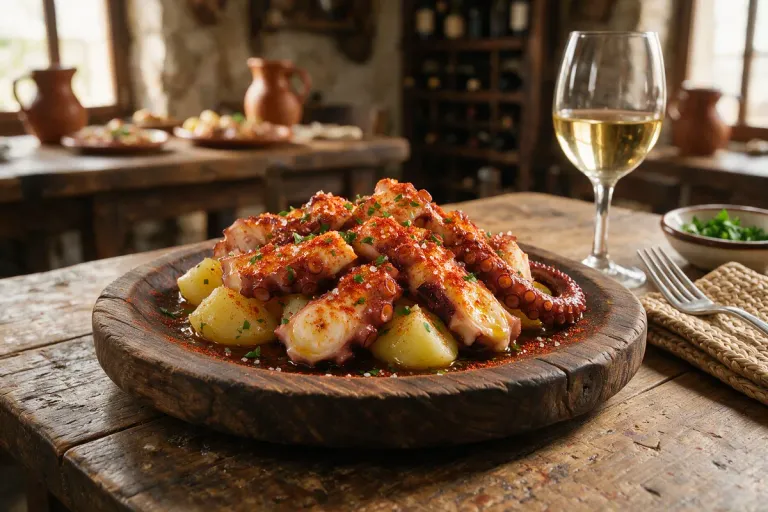
- Texture. Our dish page says rubbery octopus fails instantly. The slices should be tender.
- The dressing. Olive oil, sea salt and pimentón, as described above. It is a dressing, not a sauce.
- The usual plating. Our dish page describes the octopus sliced over potatoes.
Pimentón comes sweet or hot; if the menu does not say which, ask.
Words you may see on the menu
- Pulpo a la gallega or a feira: the dish described above.
- Galician octopus or Galician-style octopus: English names you may see for it.
- Grilled octopus: a different preparation from the boiled dish above.
Where to try it
These listings in our directory name the dish:
- Tomiño Taberna Gallega, New York: its listing opens with pulpo a feira and says the kitchen centres on the cuisine of Galicia.
- La Tapería, Cartagena: the listing mentions the "incomparable Galician octopus" next to its paellas.
- Casa Alejandro, Panama City: lists pulpo a la gallega among a large offer that also includes cocido gallego and tortilla española.
- El Sella, Mexico City: its listing names Galician octopus alongside chamorro and chorizo in cider.
Check the link on each listing for current hours before you go.