Spain and Thailand both put food on sticks, but the stick does a different job in each place. In a Basque bar it usually holds a topping on a piece of bread. On a Thai street cart it holds meat over a charcoal grill. Comparing the two is a quick way to understand both.
The pintxo: a stick that holds things together
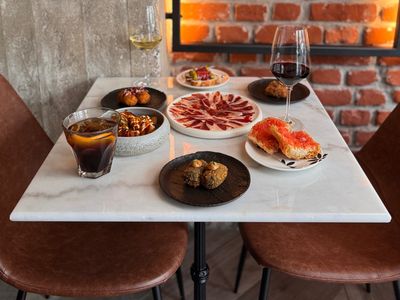
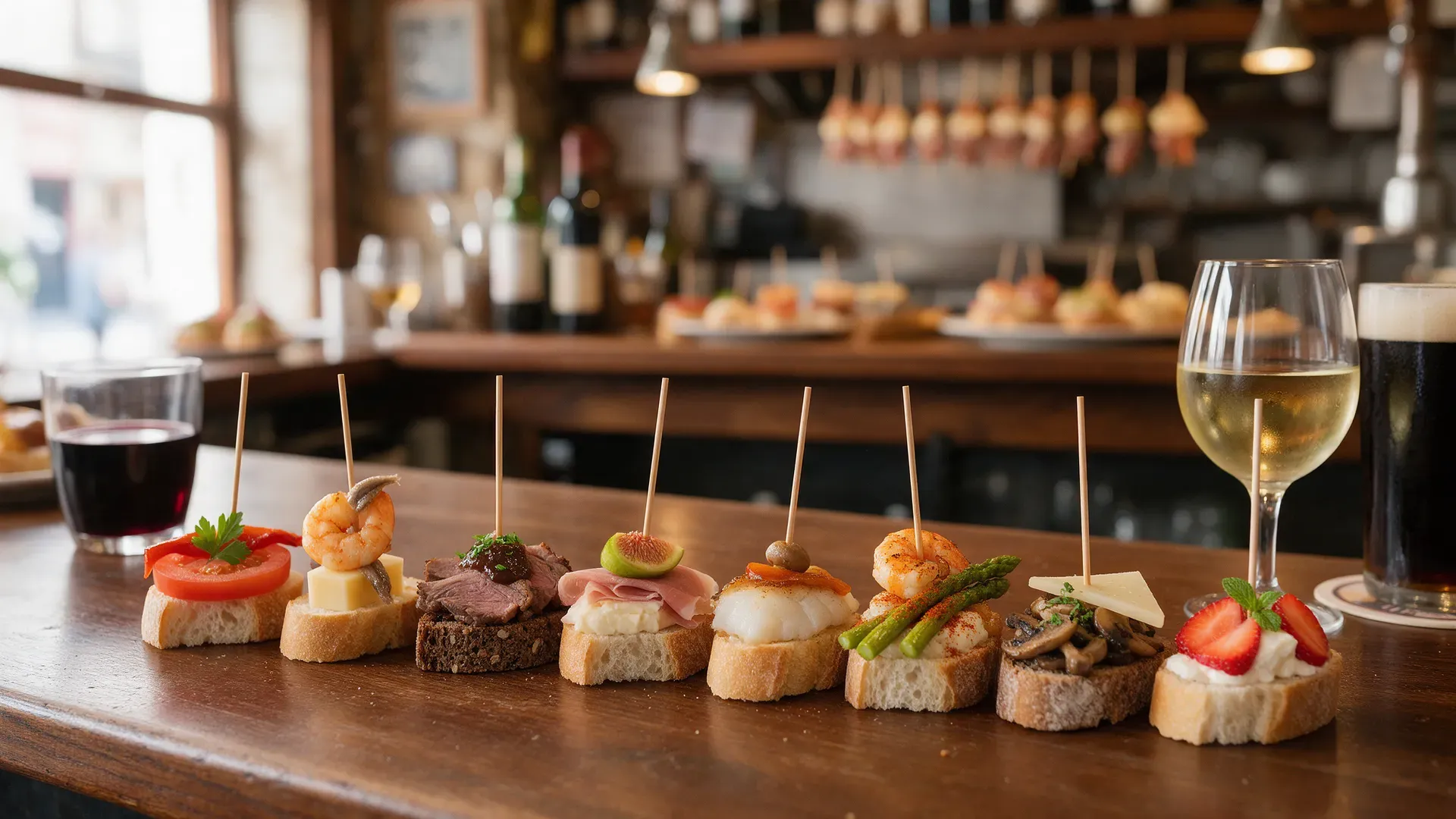
Pintxo is the Basque spelling of the Spanish pincho, from the verb pinchar, to pierce. The name refers to the cocktail stick that pins the topping to a slice of bread. Many pintxos are served at room temperature and laid out along the bar counter, and others are cooked to order.
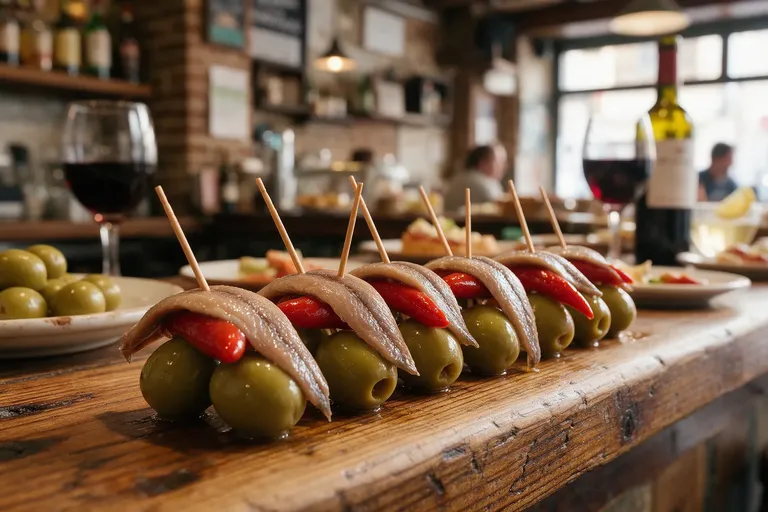
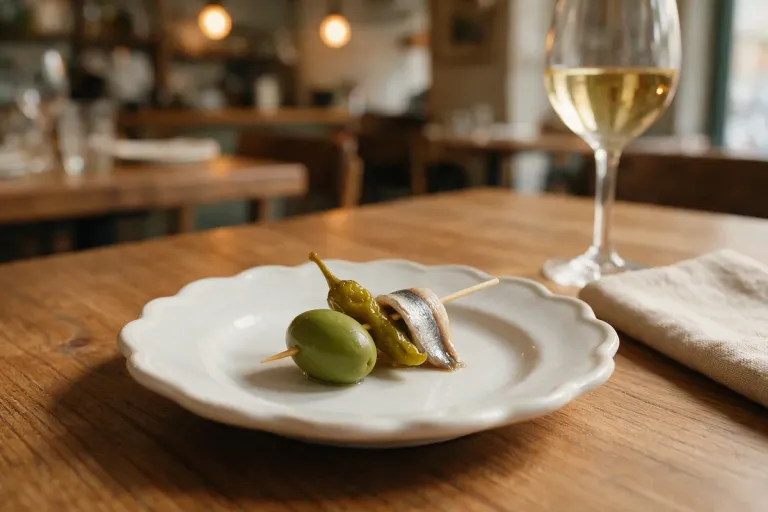
The best-known stick-only pintxo is the gilda: an olive, a pickled guindilla pepper and an anchovy threaded onto one stick, with no bread. For more on the format, see our guide to pintxos vs tapas and the pintxos dish page.
The stick can also be part of the bill. In some Basque bars you help yourself from the counter, keep the sticks on your plate, and the staff count them when you pay. Not every bar works this way, so watch what the regulars do or ask.
The pincho moruno: Spain's grilled skewer
Spain's closest match to Thai street skewers is the pincho moruno, the 'Moorish skewer'. Cubes of meat are marinated with spices such as cumin, paprika and coriander seed, threaded onto a skewer and cooked on a grill or griddle. The name points to North African influence. In Spain today they are often made with pork.
Moo ping and other Thai skewers
Moo ping is Thai grilled pork on a bamboo skewer. The pork is marinated with ingredients such as garlic, coriander root, white pepper, sugar and fish sauce or soy sauce, and some cooks add coconut milk. It is grilled over charcoal and sold from street carts, and it is commonly eaten with a bag of sticky rice (khao niao), often in the morning.
Luk chin ping are grilled meatballs (fish, pork or beef) on a stick, served with a sweet and spicy dipping sauce. Thai satay, with its peanut sauce and cucumber relish (ajad), has its roots in Malay and Indonesian cooking.
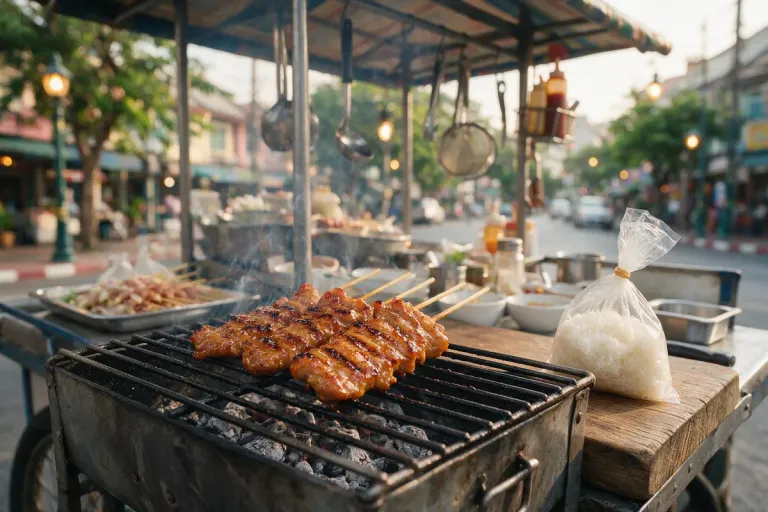
How they compare
- On a pintxo the stick holds the food together. On moo ping and pinchos morunos it holds meat over the heat.
- A pincho moruno leans on cumin and paprika, while moo ping leans on garlic, coriander root and sugar.
- A pintxo usually sits on bread. Moo ping usually comes with sticky rice.
- Thai skewers are sold by the stick, and some Basque bars count your sticks at the end.
Where to try pintxos
- Pintxø (Milan, Via Losanna): contemporary pintxos based on Basque and Spanish recipes. Its logo is a stylised olive on a skewer, inspired by the gilda.
- Euskadi (Kraków): Basque pintxos and tapas; its listing suggests choosing three or four dishes to make a meal.
- Ernesto's (New York, East Broadway): a Basque-inspired restaurant serving traditional Basque pintxos and tapas, open since early 2020.
- Tapa Madre (Seoul, Jongno-gu): pintxos, paella and other Spanish dishes.