Navarra sits between the Basque Country, La Rioja and Aragón, and its food borrows from all three. The north is mountain country, with Pyrenean valleys, sheep and cheese. The south, called the Ribera, follows the Ebro river and grows vegetables. Pamplona, the capital, sits in between. Spanish menus abroad often include Navarran dishes without naming the region. These are the names to know.
The Ribera: Spain's vegetable plain
The Ebro valley around Tudela is irrigated farmland, and vegetables are central to Navarran cooking. A plate of vegetables is often served as a course of its own, not a side.
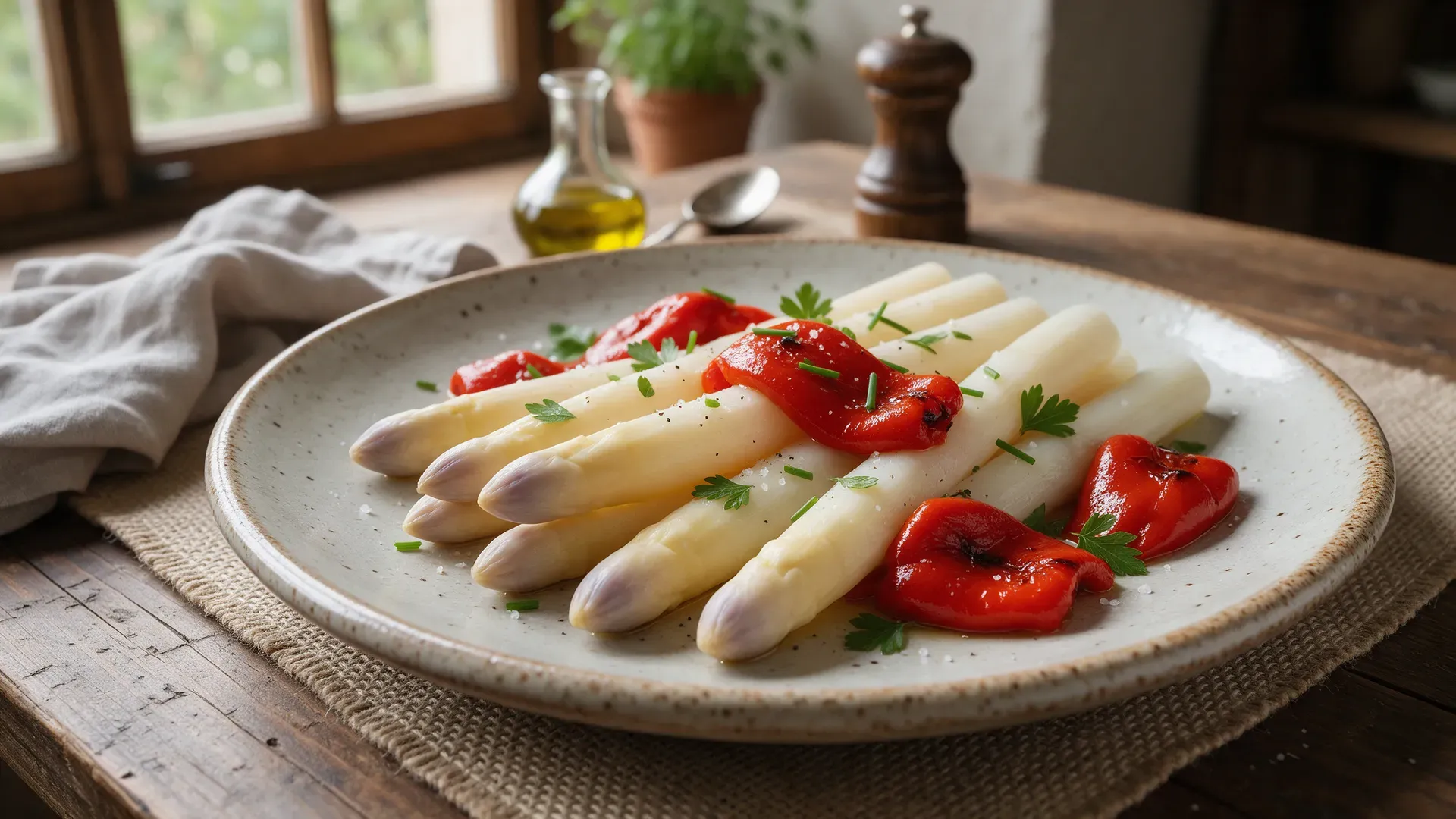
- Espárrago de Navarra is white asparagus with protected geographical status. It stays white because it grows covered by soil, away from the light. Most of it is sold peeled in jars or tins and served cold with mayonnaise or vinaigrette.
- Pimiento del piquillo de Lodosa is a protected small red pepper, roasted whole over fire, peeled and jarred. Restaurants often stuff it with salt cod or meat. Our piquillo pepper guide has the details.
- Alcachofa de Tudela is a protected artichoke, often simply grilled or fried.
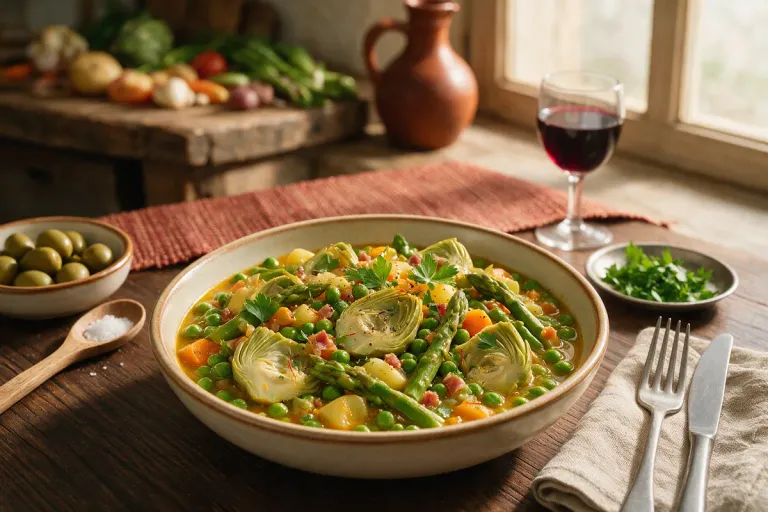
- Menestra de verduras is a stew of seasonal vegetables such as artichoke, peas, asparagus and chard, often finished with a little cured ham. Tudela's version is the best known.
- Pochas are fresh, not dried, white beans, cooked in a light stew in late summer and autumn.
Meat, sausage and river trout
Chistorra is a long, thin fresh sausage of pork (sometimes with beef) seasoned with paprika and garlic. It is cooked, never eaten raw: fried in coils, sliced into bread, or served with fried eggs and potatoes. You will also find it in the Basque Country and in Basque-style bars abroad. Our chistorra dish page has more.
Cordero al chilindrón is lamb stewed with dried and fresh red peppers, tomato and onion. Navarra and Aragón both claim it. Trucha a la navarra is river trout fried with a slice of cured ham, often tucked inside the fish.
Cheese from the Pyrenees
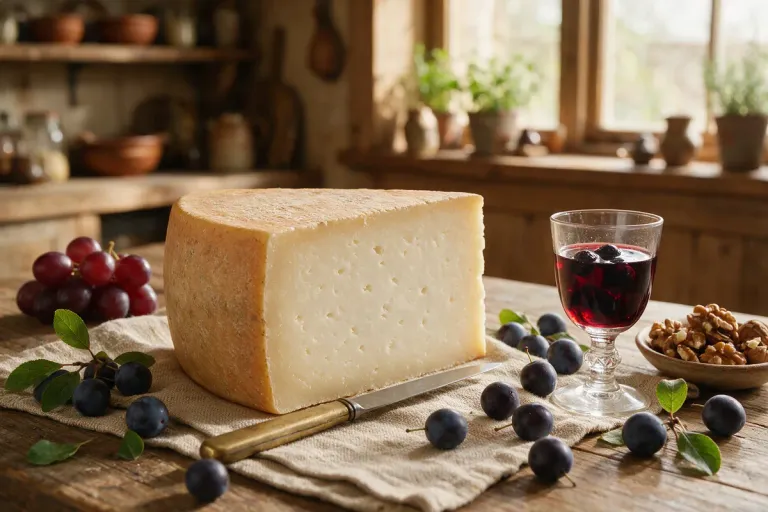
Roncal is a hard, pressed sheep's milk cheese from the Roncal valley in the Navarran Pyrenees. In 1981 it became the first Spanish cheese to receive a denominación de origen. It has a firm texture and a sharp, slightly piquant flavour that grows with age.
The Idiazábal designation covers Navarra as well as the Basque Country, so a smoked or unsmoked Idiazábal on a cheese board may well be Navarran. For a wider picture, see our Spanish cheese guide. Navarra's traditional dessert also comes from sheep: cuajada, curdled sheep's milk served in a small earthenware pot, usually with honey.
What Navarra drinks
Pacharán is made by steeping sloe berries in an anise spirit. It is reddish-brown, sweet and served after a meal, usually chilled or over ice. Pacharán Navarro has its own protected geographical indication.
Navarra is also a wine region. The DO Navarra is known for rosado made mostly from Garnacha, alongside red and white wines. For how Spanish wine labels and designations work, see DO, DOCa and Vino de Pago explained.
Where to find Navarran flavours abroad
These restaurants mention Navarra or a Navarran product in their own records with us:
- DukkAh (Osaka, Japan) lists Navarra among the regions its kitchen focuses on, alongside Galicia, Cantabria and the Basque Country.
- La Tasca de Carlos - Samborondón (Guayaquil, Ecuador) has chistorras on a menu that also includes Galician-style octopus and salmorejo.
- Restaurante Guria - Santa Fé (Mexico City) carries Navarra wines on a Spanish list that also covers Rioja, Ribera del Duero, Toro and Priorat.