Cantabria is one of Spain's smaller regions, a strip of northern coast between Asturias to the west and the Basque Country to the east, with the Picos de Europa rising behind it. Its capital is Santander. The food follows the geography: fish and seafood from the Cantabrian Sea on one side, and beans, pork, dairy and cheese from the green valleys on the other.
Outside Spain, Cantabrian cooking usually turns up inside a broader "northern Spanish" menu, alongside Basque and Asturian dishes. Knowing the Cantabrian names helps you spot them.
Anchovies: the Santoña name
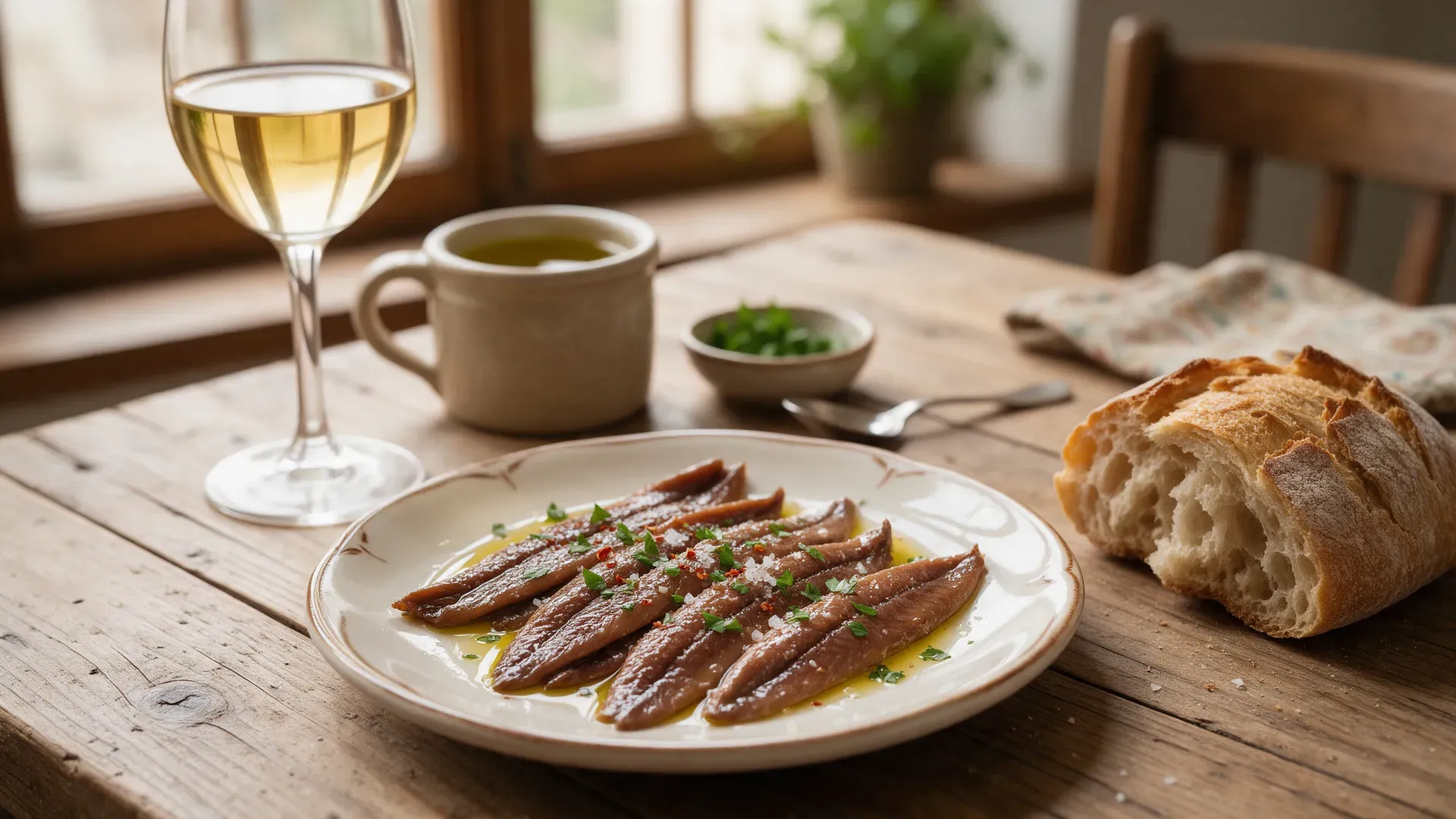
If you know one Cantabrian product, it is probably the anchoa de Santoña. Santoña is a fishing town on the eastern Cantabrian coast, and its name is closely tied to salted anchovies.
The process is slow. Fresh anchovies from the Cantabrian Sea are layered with salt and left to cure for months. They are then cleaned and filleted by hand, and the fillets are packed in olive oil. The salting industry in Santoña grew in the late nineteenth century, when Italian salters settled on that coast.
On a menu, watch the words:
- Anchoas are the cured, salted fillets in oil: deep in colour, firm and savoury.
- Boquerones are fresh anchovies, usually marinated in vinegar, or fried.
- Bocartes is the northern name for fresh anchovies, often served fried.
A tin or plate of good anchovies is usually eaten simply, on bread, with peppers or in a gilda skewer with olives and guindilla chilli.
Rabas and the Santander bar
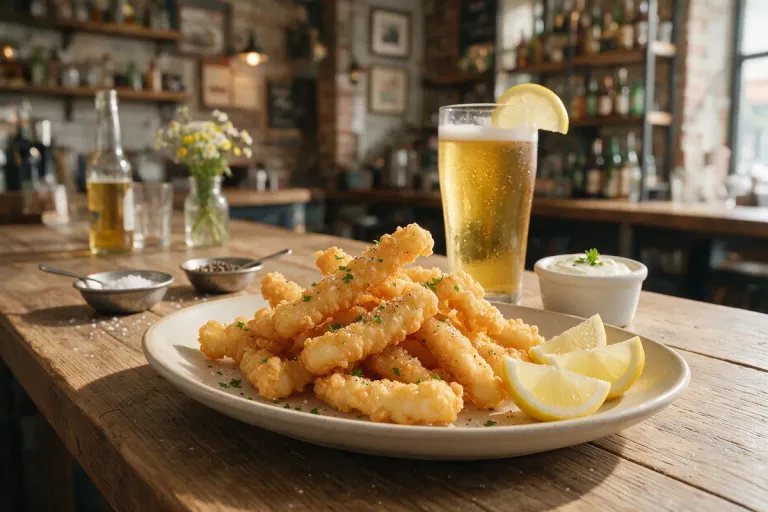
In Santander's bars, the classic order is rabas: strips of squid, battered and fried, eaten with lemon and a cold drink. They are Cantabria's version of the fried squid found along the whole northern coast.
Mountain stews: cocido montañés and cocido lebaniego
Inland Cantabria is cattle and dairy country, and its best-known dish is a stew built for cold, wet weather.
Cocido montañés combines white beans with berza (collard greens or cabbage) and the compango, the pork part: chorizo, morcilla and cuts such as rib or belly. Unlike Madrid's cocido madrileño, which is built on chickpeas, it is a bean stew, closer to the fabada of neighbouring Asturias.
In Liébana, the mountain valley in the southwest of the region, the local version is cocido lebaniego. It uses chickpeas and is traditionally served in stages, broth first, then chickpeas and vegetables, then the meat.
Cantabrian cheeses
Cantabria has three cheeses with protected designation of origin (DOP):
- Picón Bejes-Tresviso: a blue cheese from the Picos de Europa, matured in natural caves. It is related in style to Asturian Cabrales.
- Quesucos de Liébana: small cheeses from Liébana, sold plain or smoked.
- Queso Nata de Cantabria: a soft, creamy cow's milk cheese.
Sweets from the Pas valleys
The Pas valleys, the Valles Pasiegos, give Cantabria its two best-known sweets:
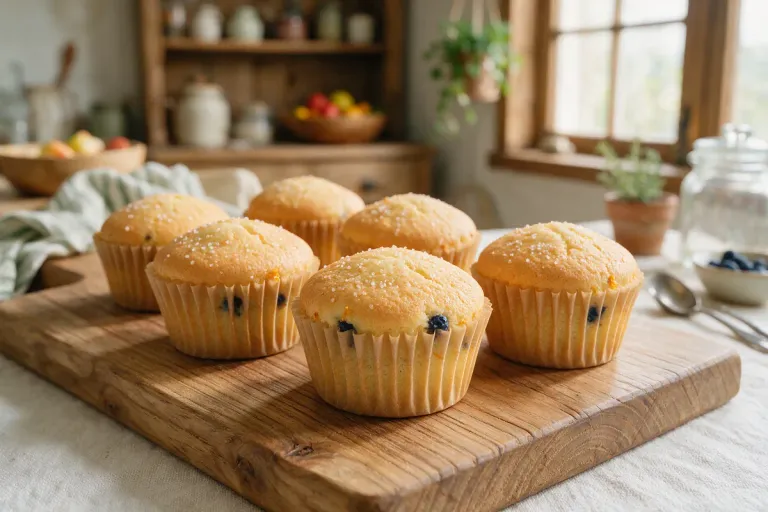
- Sobaos pasiegos: dense, buttery sponge cakes, baked in paper and sold in packs. They have protected geographical indication (IGP) status.
- Quesada pasiega: a baked dessert made from fresh cheese or curd, milk, sugar and eggs, flavoured with lemon and cinnamon.
After a heavy meal, Cantabrians may also order orujo, the pomace brandy distilled in Liébana, where the town of Potes holds an annual orujo festival.
Where to try it
These restaurants in our directory name Cantabria in their own records:
- La Oliva, Amsterdam: describes itself as a Cantabrian and Basque restaurant, with pintxos and northern Spanish dishes.
- MoVida Bangkok, Bangkok: chef Frank Camorra's Ekkamai outpost lists Cantabrian anchoas among its tapas, alongside cecina and fideos negro.
- DukkAh, Osaka: chef Eiichi Matsumoto's Spanish restaurant focuses on Galicia, Cantabria, the Basque Country, Navarra and the northern Mediterranean, and its record notes a Michelin Bib Gourmand.
If a menu just says "northern Spanish", ask which dishes come from where. Anchovies, rabas and a bean stew are good places to start.