Manchego is the only Spanish cheese most people abroad can name, and it deserves its place. It is also roughly one cheese out of dozens with protected status, and the others are not minor variations on it. Spain runs sheep, cow and goat dairies across very different climates, from Atlantic Galicia to the dry central plateau, and the cheeses reflect that.
The shortlist below is the one worth learning, with a drink for each.
Start with manchego, properly
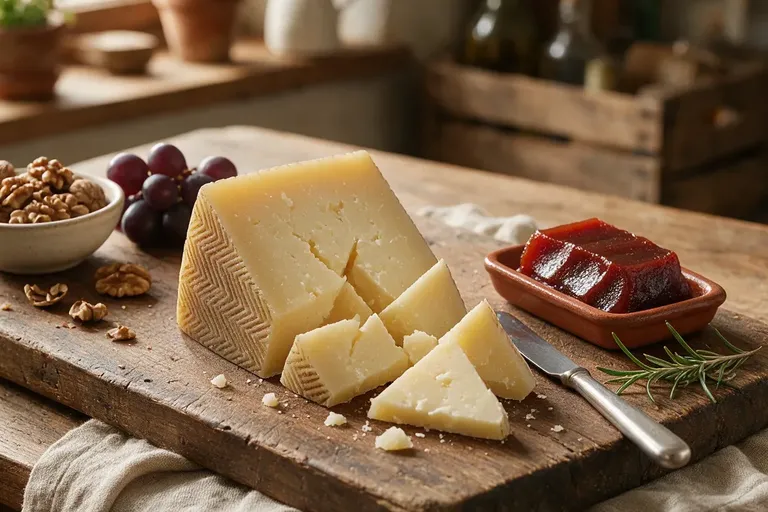
Queso manchego has a protected designation of origin, which means real manchego comes from the milk of Manchega sheep in the La Mancha region and nothing else. Sheep's milk cheese sold as manchego-style elsewhere is a different product.
The zigzag pattern around the side is not decoration. Wheels were traditionally pressed in belts of plaited esparto grass, and the weave left its print; modern moulds reproduce it. The herringbone on the top and bottom comes from the wooden boards used the same way.
Age is the variable that matters when ordering. Semicurado is young, mild and bendy. Curado is firmer and nuttier. Viejo is hard, crystalline and salty enough to stand up to a strong wine. If a menu does not say which, ask.
The four you should order next
Cabrales is the blue, from the Picos de Europa in Asturias. It is made with raw milk, cow's alone or blended with goat and sheep depending on the season, and matured in natural limestone caves where the humidity does the work. It is aggressive: salty and damp, with the blue running right through it. Asturian sidra is the local answer, and a sweet Pedro Ximenez sherry works if you want the sugar to soften it.
Idiazabal comes from the Basque Country and Navarre, made from the raw milk of Latxa and Carranzana sheep. Some of it is smoked, a habit that goes back to shepherds' huts where the cheese hung near the fire. Smoked or not, it is firm and lightly sharp. Drink txakoli or a young red with it.
Mahon is from Menorca, made with cow's milk, and comes out as a squared-off cushion rather than a round wheel because it is drained in a cloth tied at the corners. The rind is rubbed with oil and paprika, which is where the orange colour comes from. Aged versions get sharp and salty; young ones are buttery.
Tetilla is the Galician cow's milk cheese shaped like a cone with a nipple on top, which is exactly what the name refers to. It is mild, soft and creamy, and it is the easy one to put on a board when not everybody at the table wants a fight.
The one that comes with a spoon
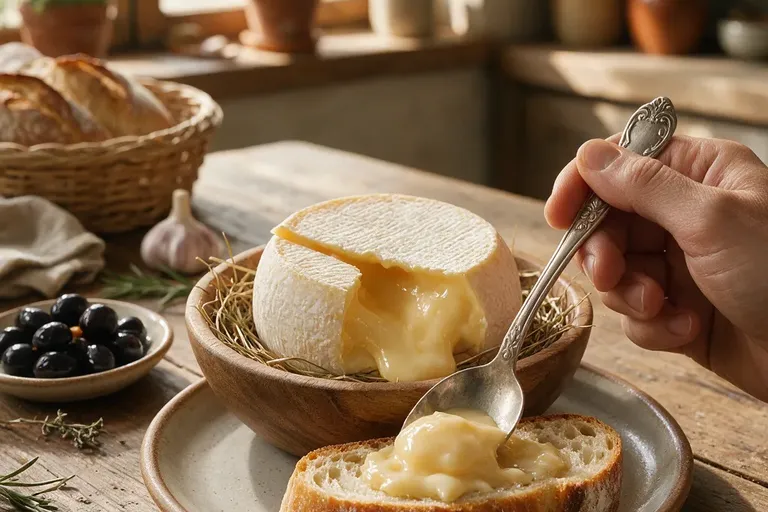
Torta del Casar, from Extremadura, is sheep's milk cheese set with thistle flower rather than animal rennet. Vegetable rennet breaks the proteins down differently, and the result is a cheese that will not hold a firm curd. It sets in a soft-rinded disc with a molten centre.
You do not cut a wedge from it. You slice the top off like a lid and spoon it out onto bread. If a restaurant brings one to the table intact and opens it in front of you, that is the correct way round. A close relative, Queso de la Serena, comes from further south in the same region and is eaten the same way.
How to order a cheese board
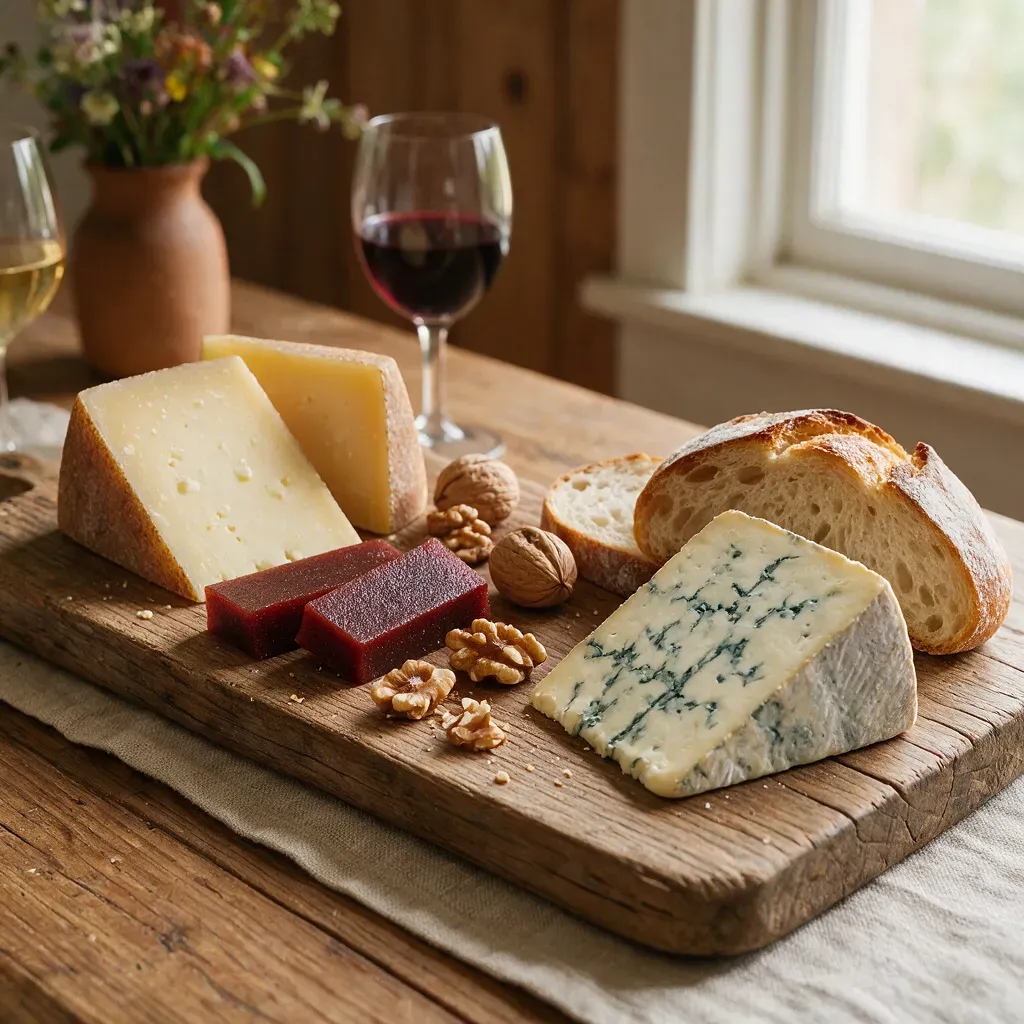
A Spanish tabla de quesos is normally four or five cheeses, not a dozen. The useful way to build one is by milk and by strength: a young cow's milk cheese, a cured sheep, a goat, and one blue at the end.
What comes with it matters as much as the cheese:
- Membrillo, quince paste, cut into slabs. The classic pairing is with manchego, and the sweetness is doing the same job jam does with a hard cheese anywhere.
- Nuts, usually walnuts or Marcona almonds, which are the flatter, softer Spanish almond.
- Bread, plain. Spanish cheese boards rarely come with crackers.
On drinks, the default in Spain is red wine, but sherry is the more interesting move. A dry fino or manzanilla cuts through a cured sheep's cheese, and an oloroso or Pedro Ximenez handles the blue. We went through the styles in our sherry guide.
Where to find them abroad
Four listings whose own records put Spanish cheese on the table.
- Jamon Jamon, Washington DC. Its listing calls it the city's first jamoneria, built around Spanish ham with cheeses and fresh bread alongside.
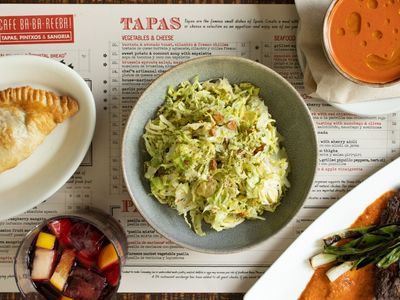
- Cafe Ba-Ba-Reeba!, Chicago. Traditional tapas and seasonal dishes, with manchego and jamon iberico named in the record.
- Boqueria, New York. Inspired by the Barcelona market it is named after; its description singles out a devils-on-horseback plate made with cabrales.
- La Marcha, Berkeley. Iberian cured meats and artisanal cheeses alongside the tapas and paella, by its own account.
One practical warning. Cheese served straight from a fridge tastes of very little. If it arrives cold and hard, give it ten minutes on the table before you judge it.