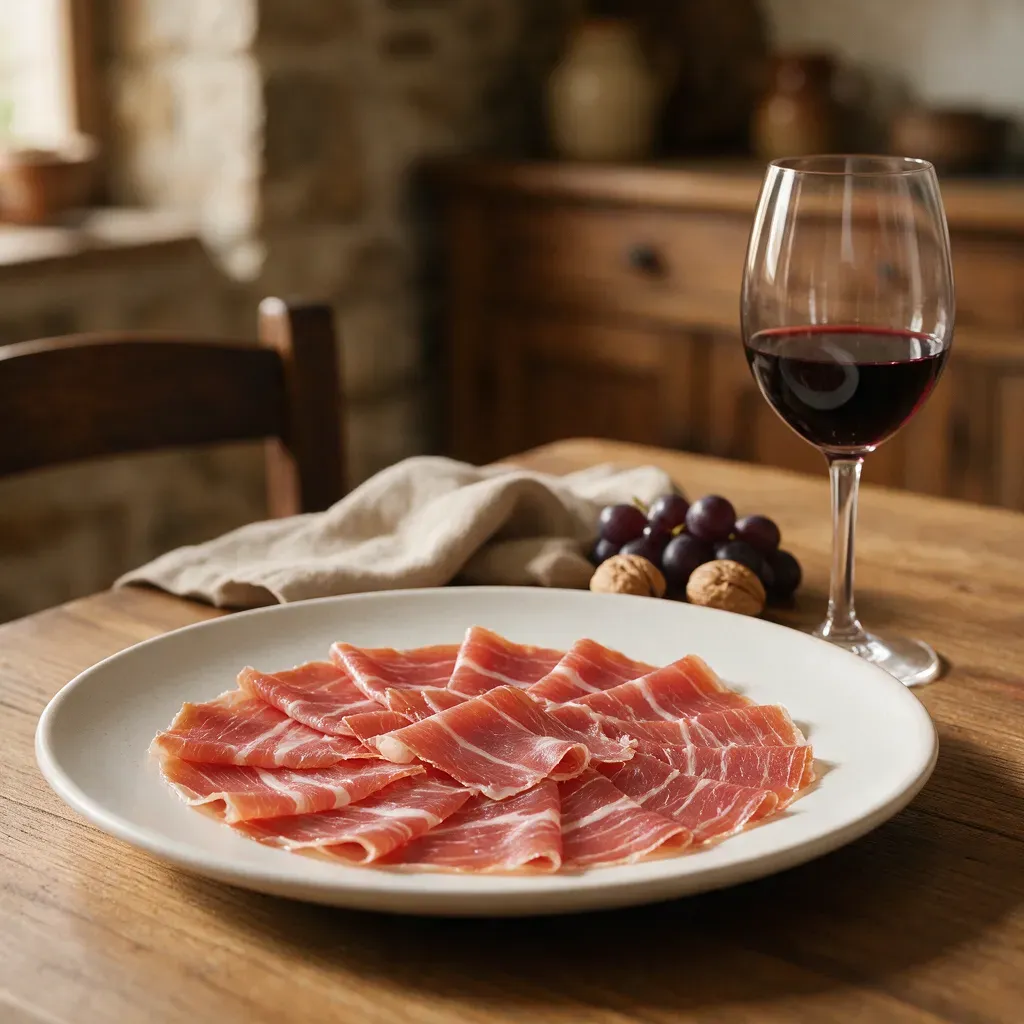
Spain and Thailand both eat a lot of pork, and both use nearly all of the animal. That is where the similarity stops. Spain's great pork idea is to take a leg and do almost nothing to it for two or three years. Thailand's is to turn pork into something else within a week, sometimes within a day.
If you live in Bangkok and you have wondered why a plate of jamon iberico costs what it does, the answer is mostly in that gap.
Spain: salt, air, and a lot of waiting
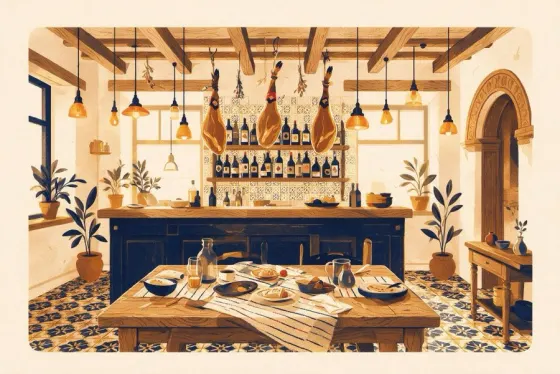
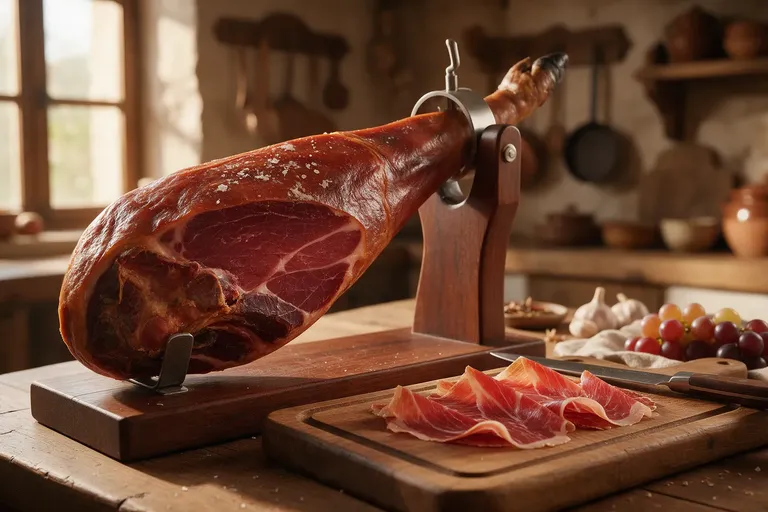
Spanish ham starts with salt. The leg is packed in salt for a period traditionally reckoned at about a day per kilo, rinsed, then hung to dry in cellars where the temperature shifts with the seasons. Nothing is smoked and nothing is cooked. The result depends on breed, feed and time.
The two big categories are worth knowing before you order:
- Jamon serrano comes from white pig breeds and is usually cured for a year or more.
- Jamon iberico comes from the Iberian pig, a dark-hooved breed native to the southwest of the peninsula. It carries more intramuscular fat, which is why the slices look marbled rather than lean.
- Bellota is a grade, not a breed. It means the pig spent its final months in the montanera, the autumn and winter acorn season in the oak pasture, eating acorns and grass. Those hams are cured the longest.
One more distinction that explains a price list. Jamon is the hind leg. Paleta is the shoulder: smaller, less meat, a shorter cure, cheaper. Bangkok's PaLeTa Iberico Wine Bar on Soi Sathon 8 is named after it.
Thailand: fermentation instead of time
A tropical climate makes a two-year cure in open air impractical. Thai preservation of pork runs on fermentation, which does the same job of acidifying and stabilising the meat, only in days.
- Naem is raw pork minced with pork skin, salt, garlic and cooked rice, packed tight and left to sour for a few days. The rice feeds lactic bacteria, which drop the pH and give naem its sharp tang.
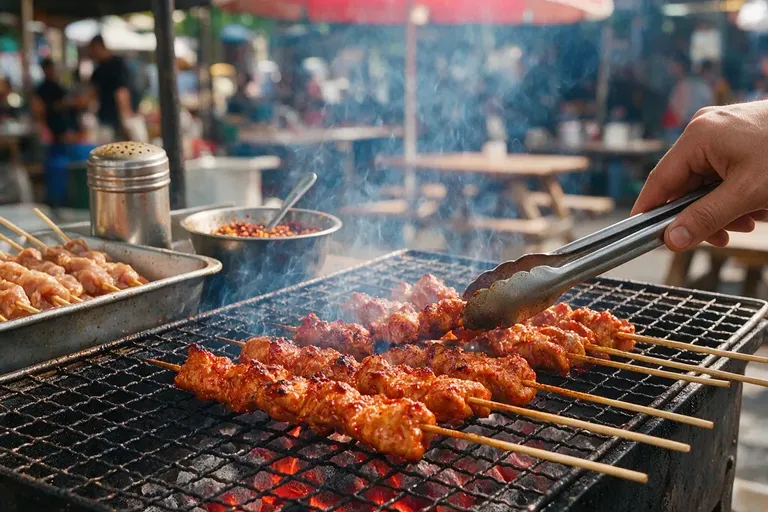
- Sai krok Isan is the sausage version of the same idea, from the northeast: pork, fat and rice fermented in the casing, then grilled, eaten with raw cabbage, ginger and bird's eye chilli.
- Sai ua is the northern sausage, a fresh one, mixed with a curry paste of lemongrass, galangal, turmeric, kaffir lime leaf and chilli.
Line those up against Spain and the map is neat. Sai ua and chorizo sit on the same branch: fresh pork, fat, and a defining spice, paprika in the Spanish case and a green herb paste in the Thai one. Naem and sai krok Isan sit on a branch Spain does not really have, because Spain gets its sourness from wine and vinegar rather than from the meat itself.
Where the two kitchens actually agree
Three places.
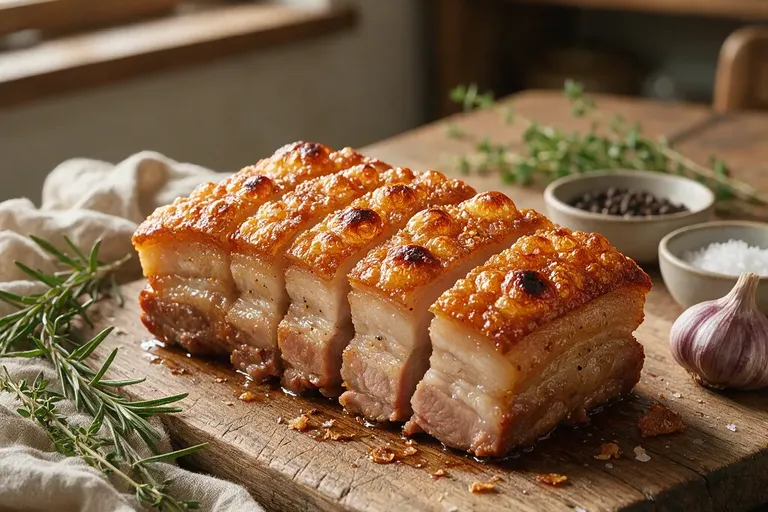
First, crackling. Thailand's moo krob is pork belly simmered or steamed, dried, then roasted or fried until the skin blisters; Spain's cochinillo is a whole suckling pig roasted in a wood oven until the skin goes glassy. Both are judged on the skin and not on the meat.
Second, blood. Spanish morcilla is blood sausage, often bulked out with rice in the Burgos style. Thailand uses pork blood too, but sets it firm and cuts it into cubes for noodle soups rather than binding it into a sausage. Neither kitchen throws it away.
Third, fresh Iberian cuts. Cured ham is not the only thing the Iberian pig is raised for. Secreto and presa are fatty fresh cuts cooked quickly over high heat on the grill or plancha, which puts them much closer to Thai grilled pork than to a ham. If you like moo yang, order secreto.
Where to eat the Spanish side in Thailand
Four listings in the directory put Iberian pork at the centre of what they do.
- Salamanca Iberico Wine Bar, Phrom Phak Alley, Watthana. Its listing is built around Iberian ham and Spanish wine pairings.
- Taberna Jamon Jamon, Soi Sukhumvit 20. Family-run by its owner Miguel, with jamon iberico named as its most popular dish and a large terrace.
- PaLeTa Iberico Wine Bar, Soi Sathon 8. Iberico pork carved to order against a list the record puts at more than 350 Spanish wine references.
- SOPA Restaurant, Bang Phlat. A seven-table tasting-menu room where Iberian ham is listed among the highlights alongside Spanish octopus and fideua.
A last note on serving. Jamon should arrive at room temperature or slightly above, cut by hand into near-transparent slices, and it should not be refrigerated hard before it reaches you. In an air-conditioned Bangkok dining room that takes deliberate effort, so it is a fair test of whether a place knows what it is doing.