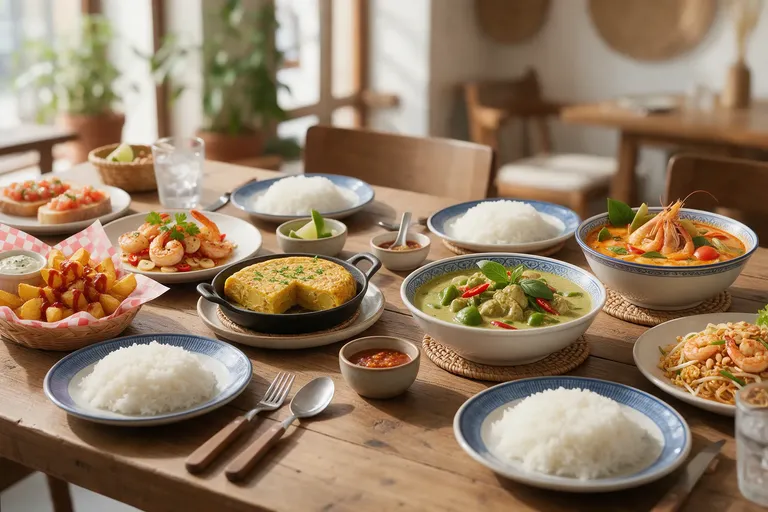
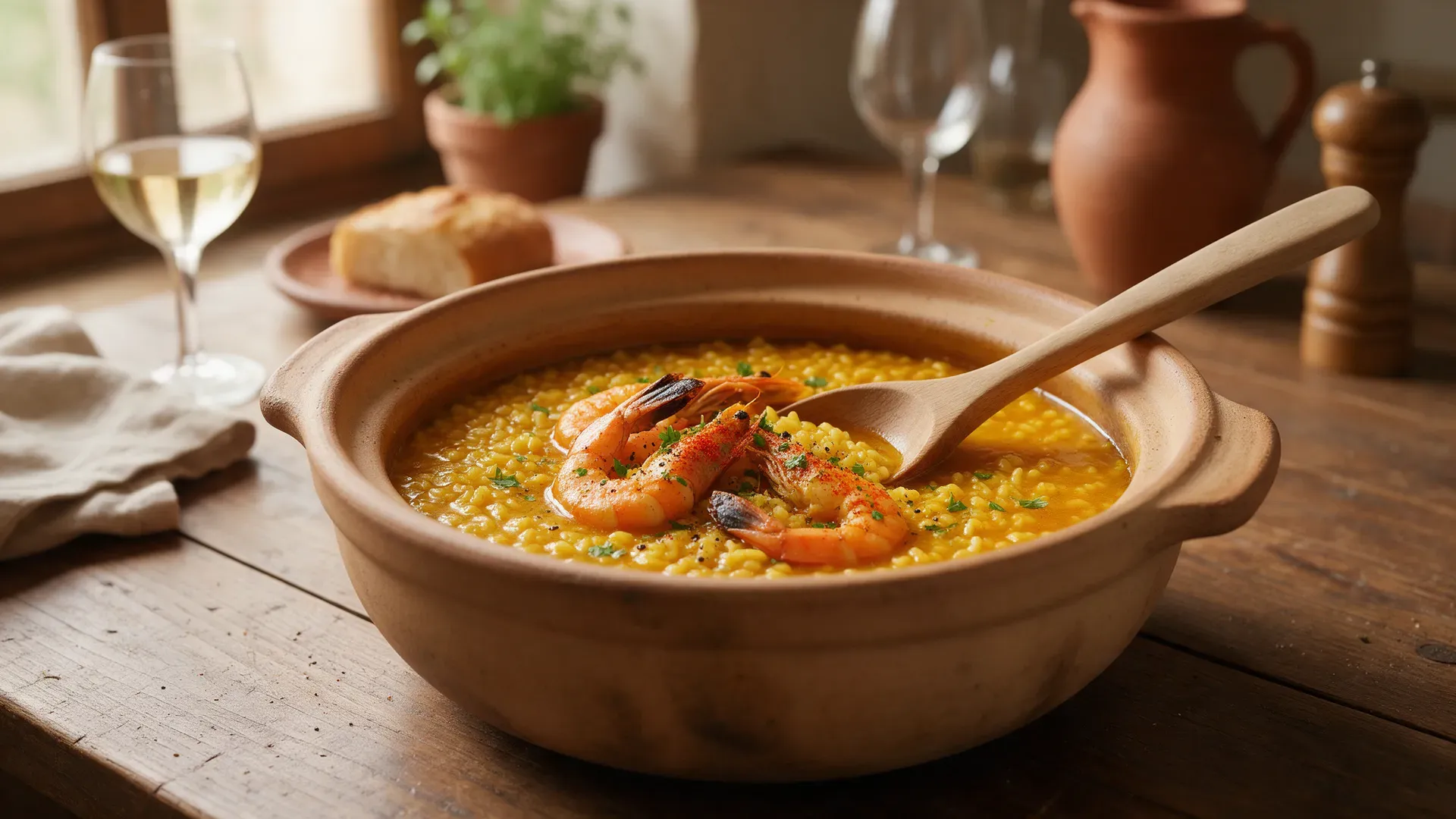
Most people outside Spain picture Spanish rice as paella: a wide, shallow pan of dry rice with a crust on the bottom. Thai rice, for most visitors, means a plate of steamed jasmine rice next to a curry. Both countries also have a wetter way of eating rice, served in its own broth and eaten with a spoon. In Spain it is arroz caldoso. In Thailand it is khao tom, and its smoother relative jok.
Seco, meloso, caldoso: Spain's rice textures
Spanish cooks describe rice dishes by how much liquid is left when they reach the table:
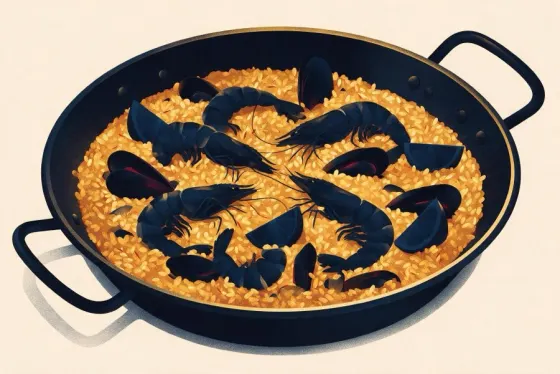
- Seco (dry): the liquid has been absorbed. Paella and arroz a banda are dry rices, cooked in a wide pan.
- Meloso (creamy): somewhere in between, loose and moist, a little like risotto.
- Caldoso (brothy): the rice sits in plenty of broth and is eaten with a spoon.
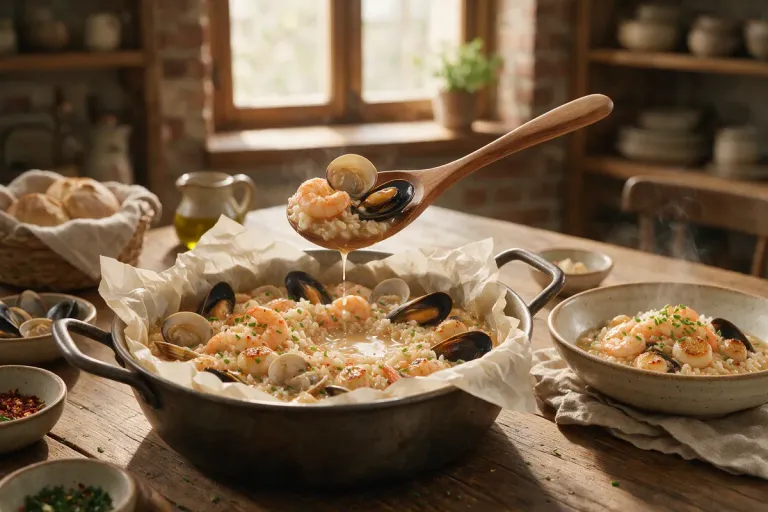
A caldoso is usually made in a deeper pot or a clay cazuela rather than a paella pan. Like other Spanish rices, it usually starts with a sofrito, often garlic and tomato cooked in olive oil, then stock and short-grain rice such as bomba. Seafood versions are common along the Mediterranean coast, and arroz caldoso con bogavante, with lobster, is a well-known restaurant dish.
Khao tom and jok: Thailand's rice in broth
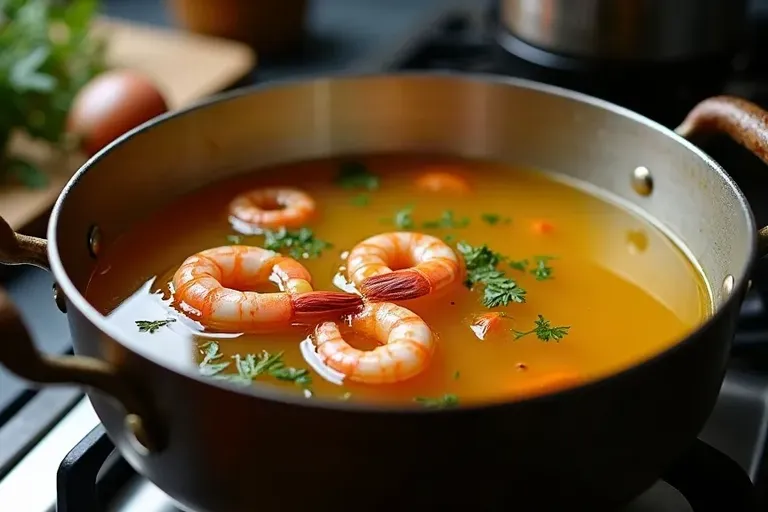
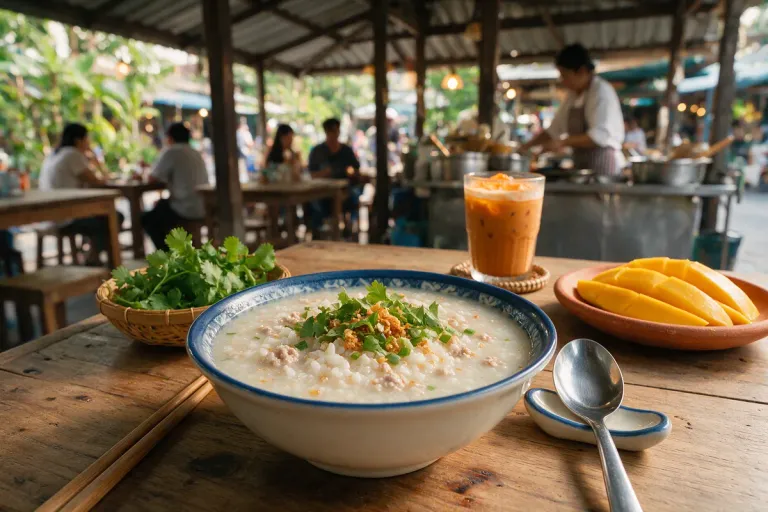
Khao tom means "boiled rice". It is rice simmered in a clear broth, with the grains still whole, and usually pork, prawns or fish added. It is finished with fried garlic, spring onion or celery leaves, coriander and white pepper. Many cooks make it with already-cooked jasmine rice.
Jok is a different dish. The rice, often broken grains, is cooked for a long time until it breaks down into a thick, smooth porridge, then topped with pork balls, ginger, spring onion and often an egg.
There is also khao tom kui, plain rice gruel eaten with a spread of small salty side dishes, a habit linked to Thailand's Teochew Chinese community.
Where they differ
The rice
Spanish caldoso uses round short-grain rice that absorbs a lot of stock and flavour. Thai khao tom uses long-grain jasmine rice, and the broth stays clear.
The flavour
A caldoso carries its flavour in the rice itself: stock, sofrito, and often saffron or pimentón. Khao tom starts mild and is seasoned by the diner, using the condiment set found on Thai tables: fish sauce, chillies in vinegar, dried chilli flakes and sugar.
The time of day
In Spain a caldoso is usually eaten at lunch, the main meal of the day. In Thailand khao tom and jok are breakfast and late-night food, easy on the stomach.
What they share
Both dishes treat the broth as part of the meal, not something to cook off. Both also have to be eaten at once. Rice keeps absorbing liquid after it leaves the heat, so a caldoso left to stand gets thicker and less soupy, and khao tom thickens as it sits. That is why Spanish restaurants often make rice to order, and why it can take 20 minutes or more.
How to order
- At a Spanish restaurant, rice dishes are often made for two or more people. Check the menu note before ordering.
- If you want soupy rice, ask for caldoso. If you want it loose but not soupy, ask for meloso.
- Order it as a main and share it. A caldoso is filling.
- At a Thai stall, ask for khao tom if you want whole grains in broth, and jok for porridge.
Where to try brothy rice
These venues in our directory mention rice beyond paella in their own records:
- Puerto Getaria, Mexico City: chef Iñigo Aramburu's restaurant lists a brothy rice with saffron among its specialities, along with charcoal-grilled fish "Getaria style".
- El Jardin, Nagoya: chef-owner Keisuke Mutsuura, who trained in kitchens around Spain, serves paella and caldoso built on seafood flavours.
- Arroz Spanish Rice House, Bangkok: a Thong Lo house dedicated to Spanish rice, with paella, arroz negro and "different rice dishes". Its record does not name a caldoso, so ask what is on.