Spanish and Thai desserts look nothing alike on a menu, but several of them are built on the same ideas: eggs cooked gently with sugar, egg yolks boiled in syrup, and dough fried in hot oil. This post goes through those overlaps, and the one ingredient that sends the two kitchens in different directions.
Custard: dairy in Spain, coconut in Thailand
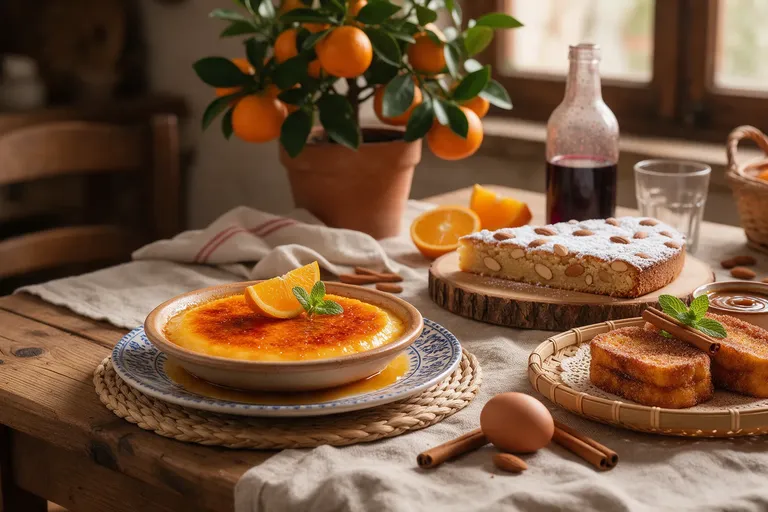
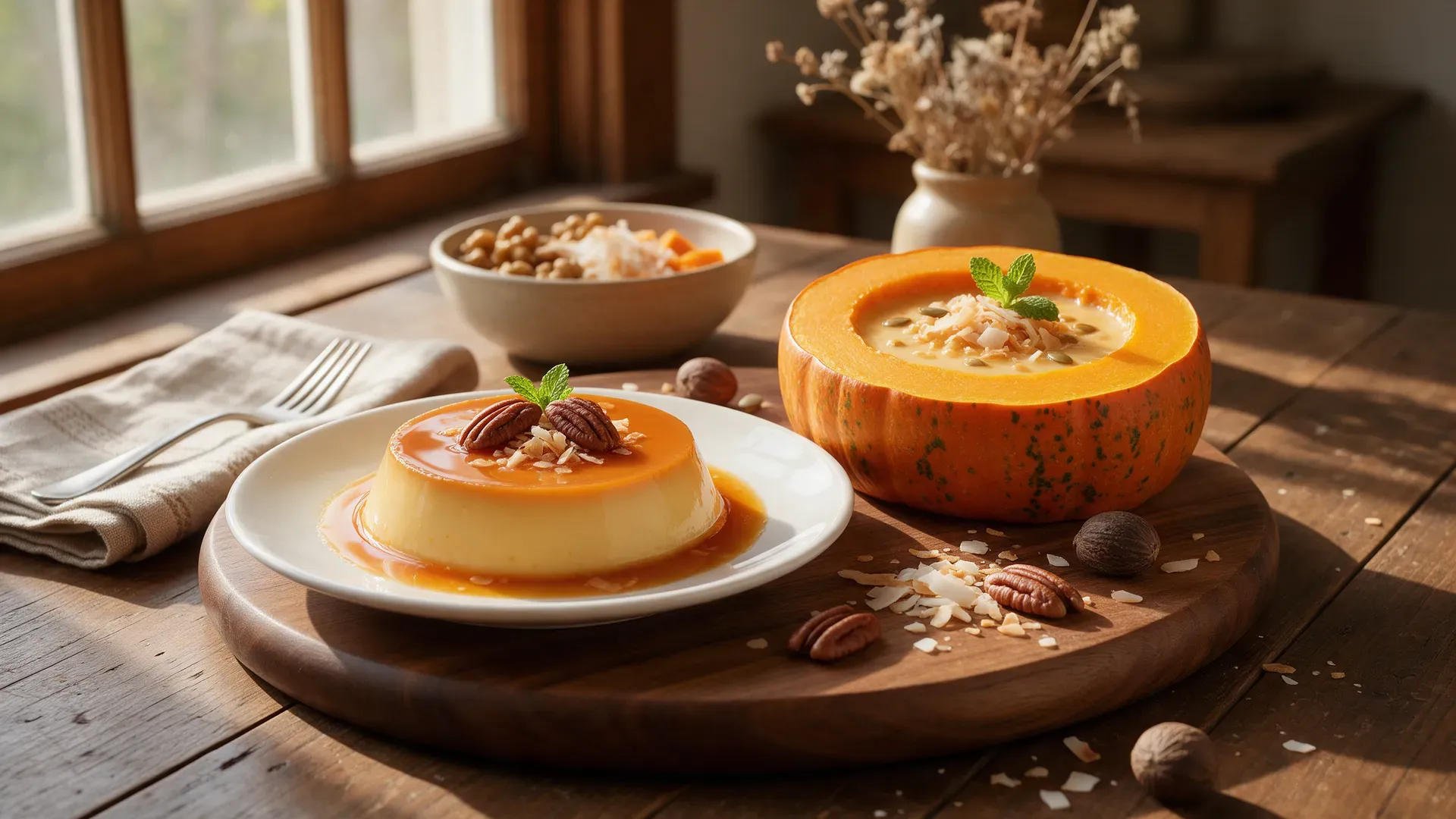
Flan is eggs, milk and sugar baked slowly in a water bath in a mould lined with caramel, then turned out so the caramel runs over the top. Crema catalana is a custard flavoured with lemon peel and cinnamon, with a layer of sugar on top that is burnt to a hard crust. In Catalonia it is traditionally eaten on 19 March, the feast of Saint Joseph.
Thai cooks make custard too. The classic versions use coconut milk, often with palm sugar, where Spanish ones use cow's milk and white sugar, though recipes vary on both sides. Sangkhaya is a coconut and egg custard. One well-known version is sangkhaya fak thong, steamed inside a whole small pumpkin and served in slices. Sangkhaya is also cooked into a soft, often pandan-green dip for bread, and those recipes vary a lot, some using condensed or evaporated milk. Khanom mo kaeng is a baked custard of eggs, coconut milk and sugar, often with taro or mung bean, and the town of Phetchaburi is famous for it.
So the method is familiar on both sides, but the flavour usually is not. A classic Spanish custard tastes of milk, caramel and sometimes citrus; a classic Thai one tastes of coconut and, when it is used, the deeper sweetness of palm sugar.
Egg-yolk sweets
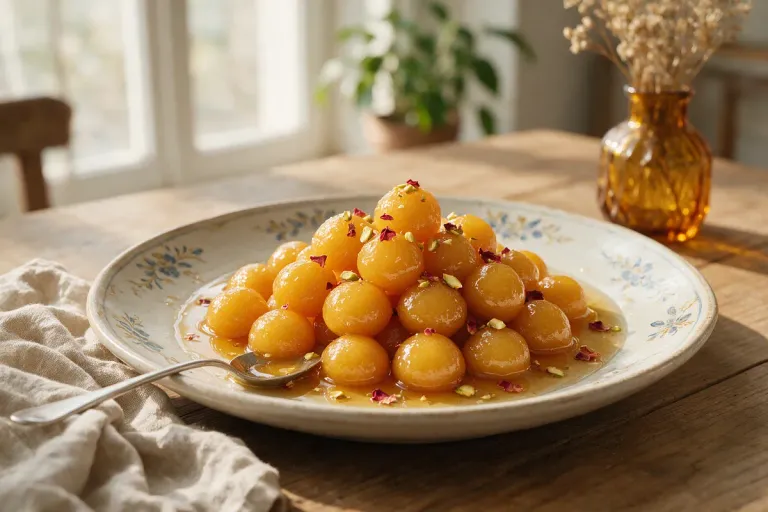
Thailand's golden sweets, thong yip, thong yot and foi thong, are egg yolks cooked in sugar syrup: pinched into flower shapes, dropped as small balls, or drizzled into fine threads. Their origin is commonly credited to Portuguese influence at the court of Ayutthaya in the 17th century, often linked to Maria Guyomar de Pinha. That is an Iberian connection, though a Portuguese one rather than Spanish.
Spain has a parallel tradition, much of it from convents. Yemas de Santa Teresa from Ávila are small balls of candied egg yolk. Tocino de cielo is a dense, very rich yolk and syrup custard. A widely repeated explanation ties it to Jerez, where egg whites were used to clarify wine and the leftover yolks went to sweets. Either way, both countries found ways to turn a lot of egg yolks and sugar into something bright gold.
Fried dough for breakfast
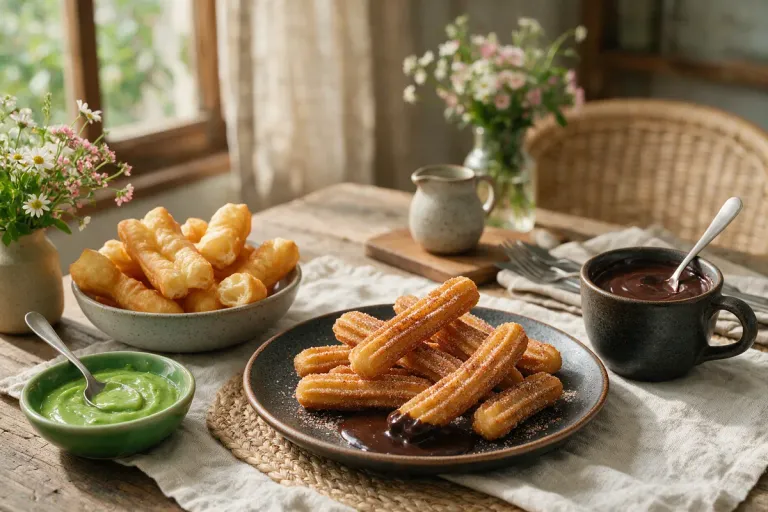
Churros are a simple dough piped through a star-shaped nozzle into hot oil, then dipped in thick hot chocolate. In Spain they are breakfast or an afternoon snack, and in Madrid you will also see porras, a thicker version.
Thailand has patongko, fried dough of Chinese origin, the same family as Chinese youtiao. It is a street breakfast, eaten with warm soy milk (nam tao hu) or dipped in sangkhaya. Different dough and a different dip, but the same habit: something fried and warm first thing in the morning.
Bread made into dessert
Torrijas are slices of bread soaked in milk or wine, dipped in egg, fried and finished with sugar, cinnamon or honey. They are the classic sweet of Semana Santa, the week before Easter. In Thailand, bread with sangkhaya (khanom pang sangkhaya) plays a similar role: plain bread turned into something sweet and filling.
Where to try Spanish sweets outside Spain
These venues in our directory name Spanish desserts in their own records:
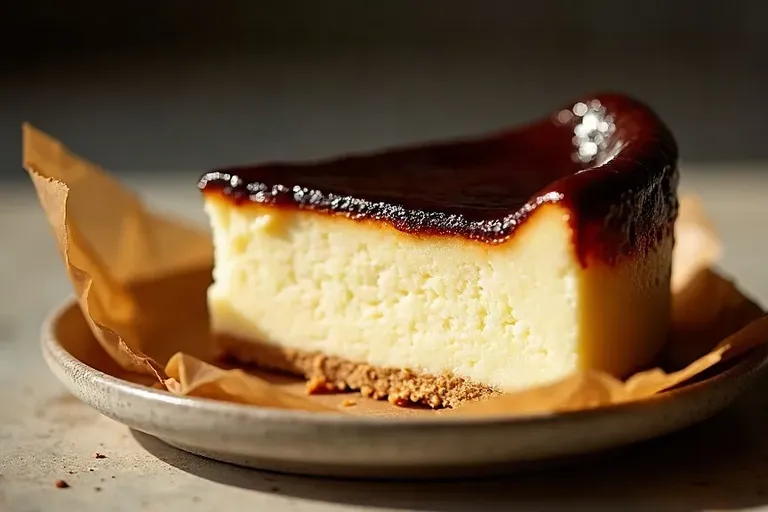
- Mercado 505, Shanghai: lists churros y chocolate and Basque cheesecake.
- Fields Concord, Chengdu: serves torrija with hazelnut cream and rum ice cream.
- Casa Alejandro, Panama City: crema catalana is on a menu that also includes cocido gallego and rabo de toro.
- Otaviano Restaurante, Rio de Janeiro: homemade sweets such as tarta de Santiago, the Galician almond cake.
For more Spain and Thailand comparisons, see our posts on bomba and hom mali rice and olive oil and coconut milk.