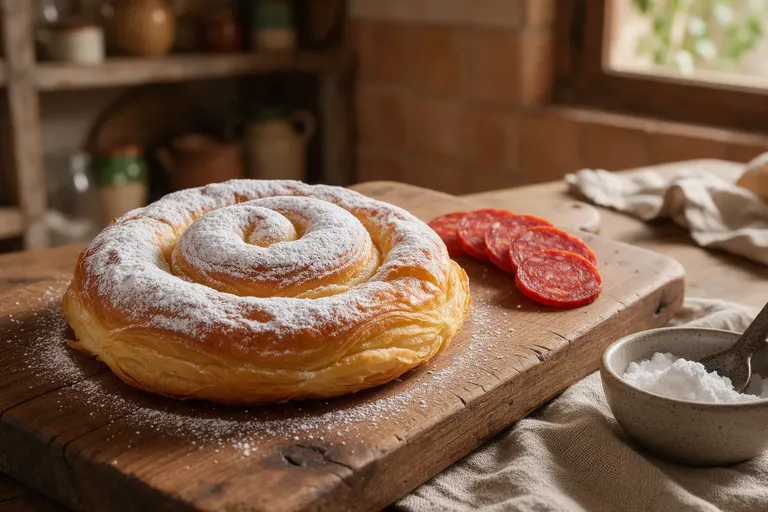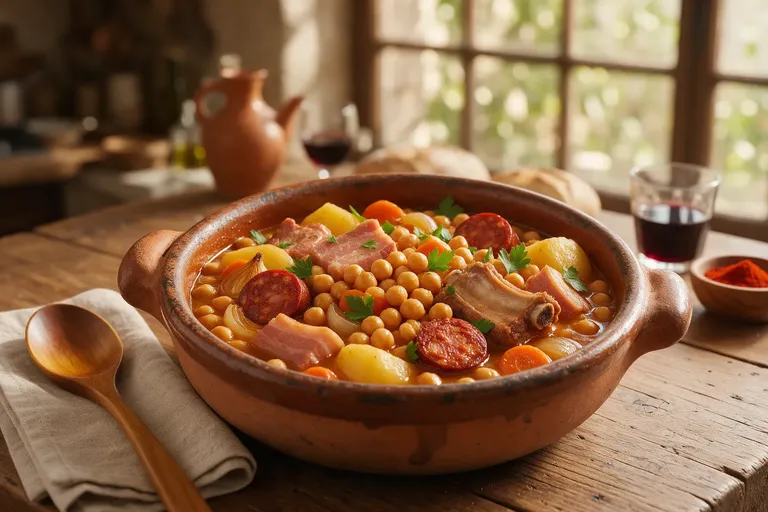
Extremadura is the region in western Spain that borders Portugal, made up of two provinces, Cáceres and Badajoz, with its capital at Mérida. It is known for three products in particular: ham and pork from acorn-fed Iberian pigs, smoked paprika, and a soft sheep's milk cheese you eat with a spoon.
The dehesa and Iberian pork
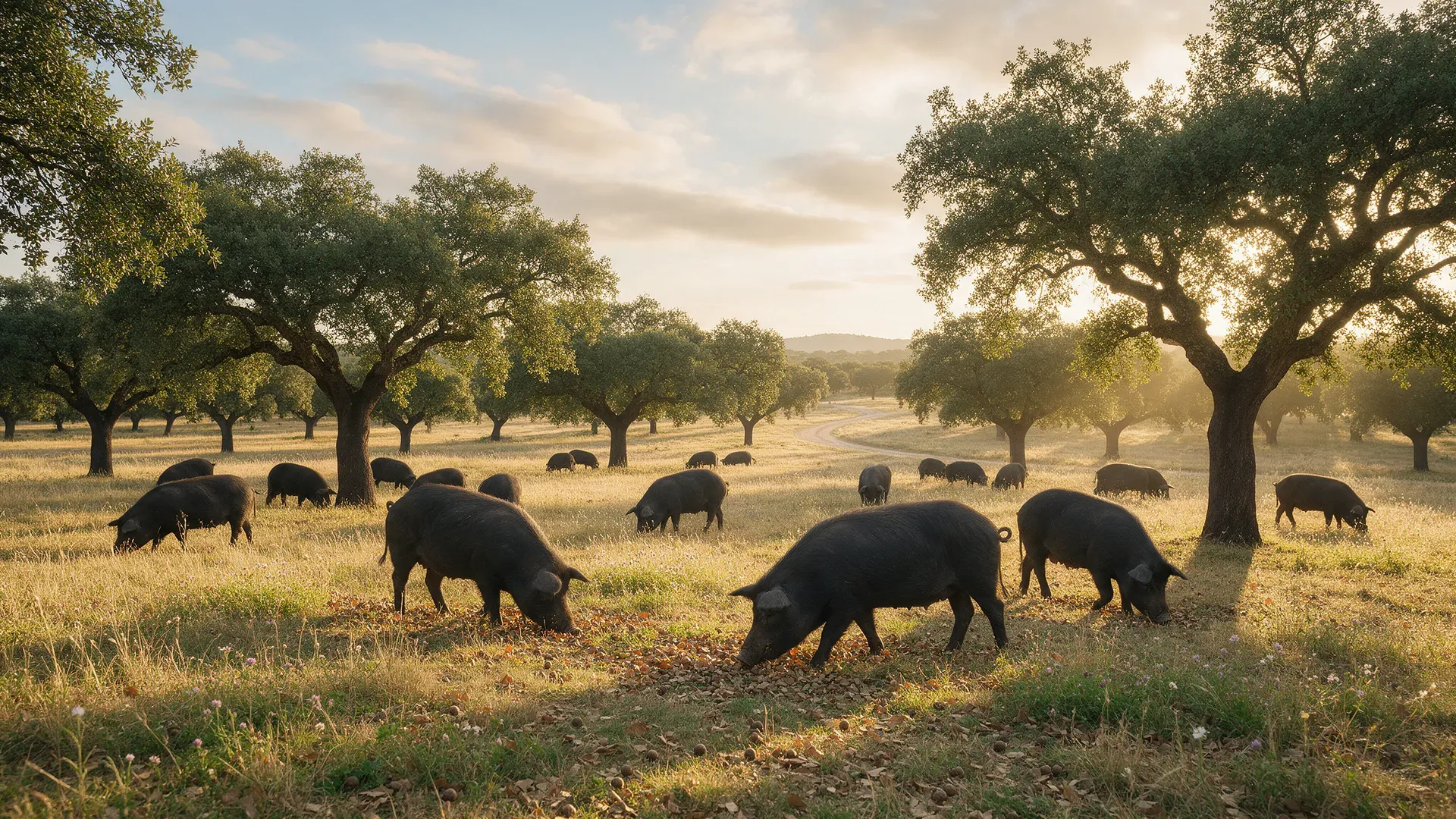
Much of Extremadura is dehesa: open pasture dotted with holm oaks and cork oaks. In autumn and winter the acorns fall, and Iberian pigs are turned out to eat them. That fattening season is called the montanera, and pigs raised this way give the meat sold as bellota (acorn).
Dehesa country is not only in Extremadura. It also covers parts of western Andalusia and Salamanca, and Spain has four protected designations for Iberian ham: Guijuelo, Jabugo, Los Pedroches and Dehesa de Extremadura. So a bellota ham on a menu abroad may come from any of them. Our guide to checking if your jamón ibérico is real covers the label colours, and our piece on secreto, presa and pluma covers the fresh cuts.
Pimentón de la Vera
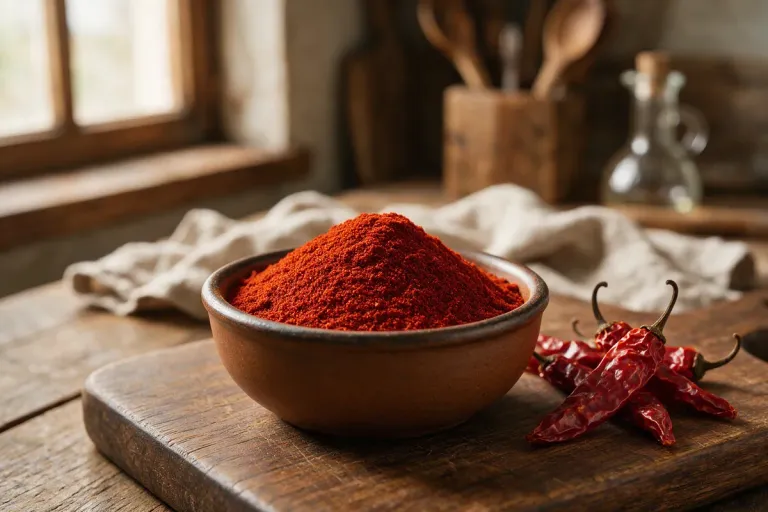
La Vera is a comarca in the north-east of Cáceres province. Its paprika, protected as Pimentón de la Vera DOP, is made from peppers that are dried slowly over oak-wood smoke before grinding. That is where the smoky flavour comes from, and it is the main thing that separates it from ordinary sweet paprika.
It comes in three styles: dulce (sweet), agridulce (bittersweet) and picante (hot). On menus abroad, look for it on pulpo a la gallega, on patatas bravas, in chorizo and in rice dishes. We compared it with Thai dried chillies in Pimentón and Prik.
Torta del Casar and La Serena
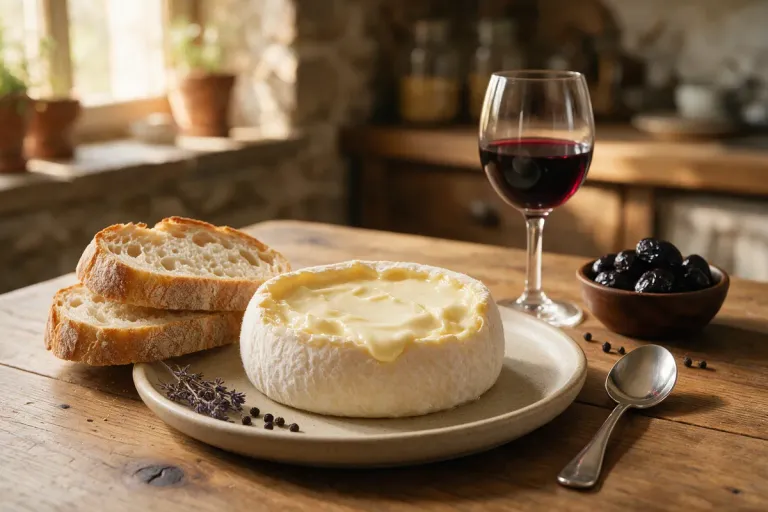
Torta del Casar comes from the area around Casar de Cáceres. It is a raw sheep's milk cheese set with vegetable rennet from a wild thistle (Cynara cardunculus) instead of animal rennet. The thistle gives a slightly bitter edge, and when the cheese is ripe the inside is soft enough to spread. The usual way to serve it is to slice the top rind off like a lid and scoop out the centre with bread.
Badajoz province has a similar cheese, Queso de la Serena, also made from sheep's milk and thistle rennet. Both are protected designations. If a cheese board abroad lists Torta del Casar, expect the soft, spoonable style rather than a firm wedge. Our Spanish cheese guide has more.
Other dishes from Extremadura
- Migas extremeñas: day-old bread, dampened and fried in olive oil with garlic, often with pimentón and pork such as chorizo or pancetta. It began as shepherds' food.
- Caldereta: a lamb stew, the kind of slow pot dish that suits a sheep-farming region.
- Cherries from the Jerte valley: protected as Cereza del Jerte, including the stemless picota.
- Wine: the region's main designation is DO Ribera del Guadiana.
Where to find a link to Extremadura abroad
No restaurant in our directory describes its cooking as Extremaduran. Four records mention the region, and three of them are for the same chef:
- José Tapas Bar, Bermondsey Street, London: the listing describes chef José Pizarro as originally from Extremadura and often called the Godfather of Spanish cooking in the UK.
- Pizarro, also on Bermondsey Street, carries the same description, and so does José Pizarro The Swan Inn Esher in Surrey.
Bellota ham on menus abroad
These listings name acorn-fed ham but do not say which region it comes from, so treat them as bellota examples rather than Extremaduran ones:
- La Casa Iberica - Mercato, Milan: the record says it specialises in Jamón Ibérico de Bellota.
- Little Spain, Hua Hin: huevos rotos with jamón ibérico de bellota is listed as the signature dish.
If provenance matters to you, ask. A menu that names Dehesa de Extremadura, Pimentón de la Vera or Torta del Casar is being specific about where its ingredients come from.