The four main Balearic Islands are Mallorca, Menorca, Ibiza and Formentera, off Spain's east coast. Most visitors know them for beaches. The food is less famous than the coastline, but a few of its products travel well, and you will meet them on Spanish menus and in delis abroad. The islands speak Catalan, with their own local varieties, so menu names often appear in Catalan spelling: ensaïmada, sobrassada, flaó.
This is a short guide to what to look for, island by island.
Mallorca: pastry, sausage and bread
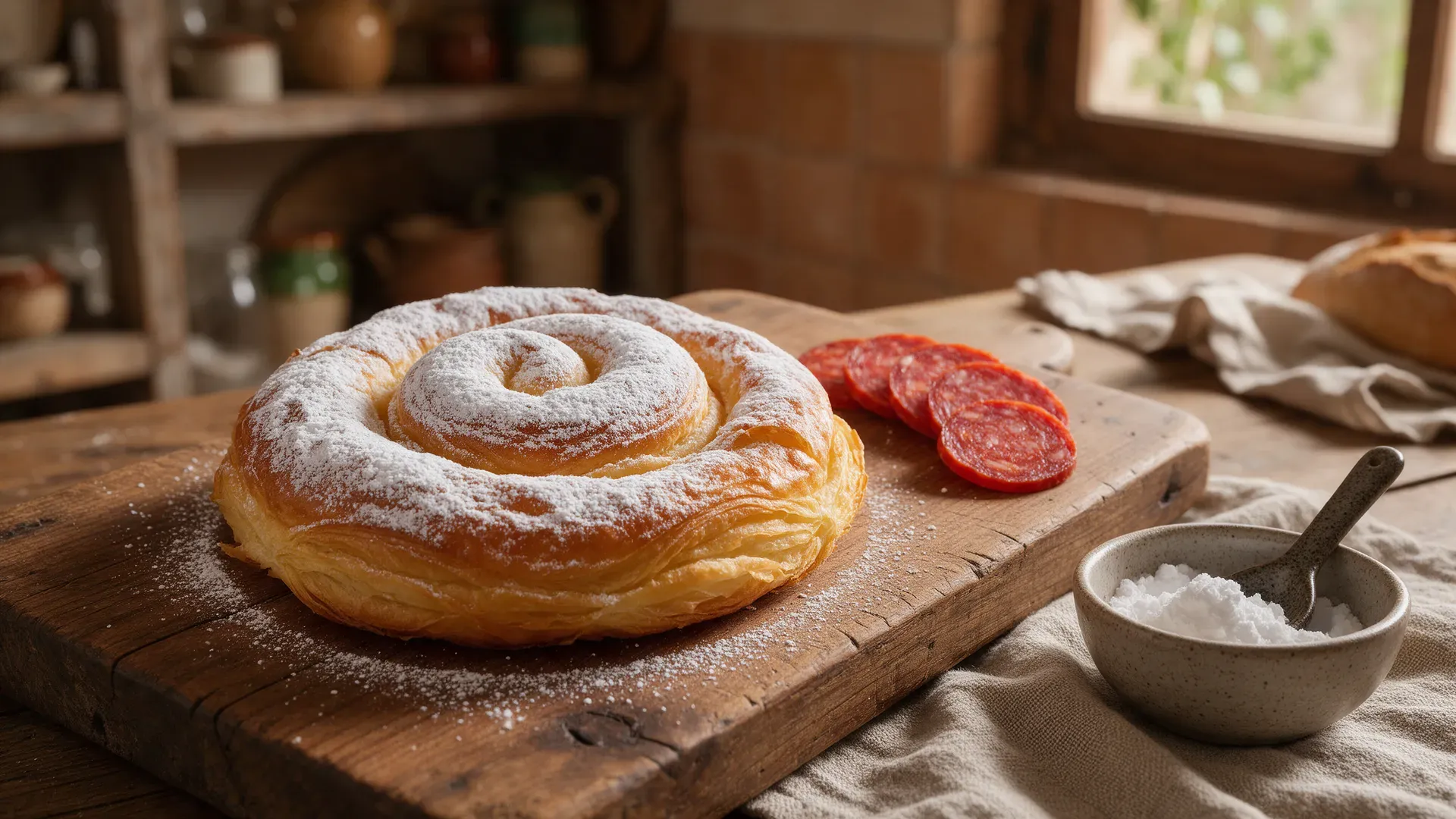
Ensaimada is the island's best-known export. It is a light, coiled spiral of yeast dough, dusted with icing sugar. The name comes from saïm, the pork lard worked into the dough. Ensaïmada de Mallorca is a protected geographical indication (IGP). The plain version is called llisa. Filled versions use cabell d'àngel, a sweet strand-like jam made from a type of squash, or custard. There is also a savoury-sweet version topped with sobrasada and candied pumpkin, ensaïmada de tallades.
Sobrasada is a soft, spreadable cured pork sausage coloured and flavoured with pimentón. Sobrassada de Mallorca also has IGP status. You eat it spread on bread, or warmed so it melts, sometimes with a drizzle of honey. We covered it alongside other Spanish charcuterie in our cured meats guide.
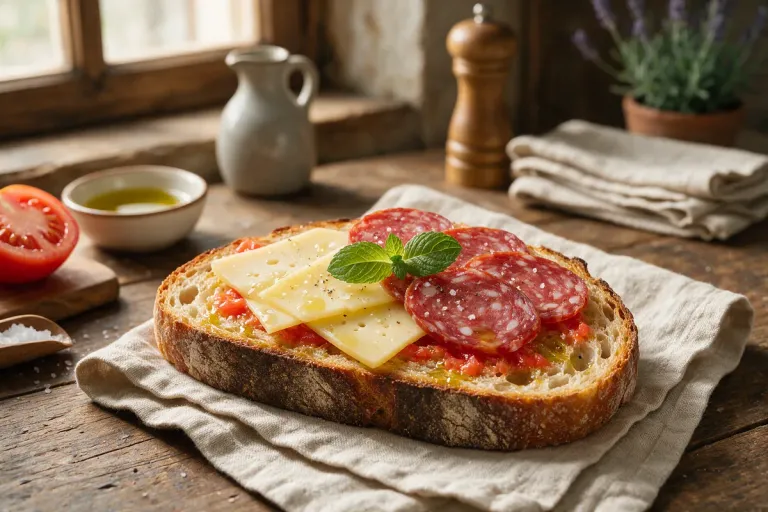
Pa amb oli is Mallorca's everyday snack: bread rubbed with tomato, dressed with olive oil and salt, and topped with cheese or cured meat. Mallorcans traditionally use a local hanging tomato, tomàtiga de ramellet.
Three cooked dishes are worth knowing by name:
- Tumbet: fried potato, aubergine and red pepper layered with tomato sauce, sometimes finished in the oven. It is a close relative of pisto.
- Frit mallorquí: lamb or pork offal fried with potato, peppers, garlic and fennel.
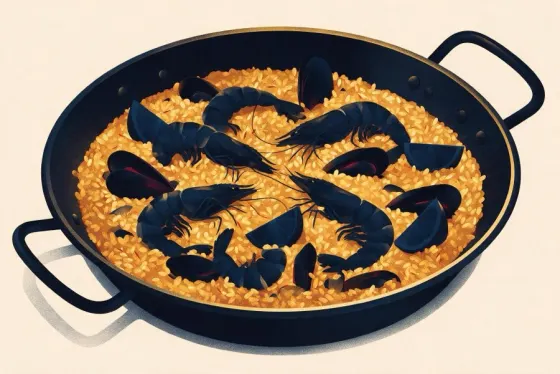
- Arròs brut: "dirty rice", a brothy rice with meat and spices. The spices darken the broth, which is where the name comes from.
Menorca: cheese, lobster stew and gin
Mahón cheese, protected as Mahón-Menorca DOP, is made mainly from cow's milk. It is square with rounded edges. Young cheeses are mild and soft. Aged ones are firmer and sharper, and their rind is often rubbed with oil and paprika, which gives it an orange colour.
Caldereta de langosta is Menorca's celebration dish, a stew of spiny lobster. The fishing village of Fornells, on the north coast, is the place most associated with it. It is expensive, because spiny lobster is.
Menorca was under British rule for much of the 18th century, and gin is one of the things that stayed. Gin de Mahón has its own protected geographical indication. At summer fiestas it is drunk as pomada, gin mixed with lemonade. For how mainland Spain serves gin, see our gin and tonic guide.
Ibiza and Formentera: fish stew and a mint tart
Bullit de peix is an Ibizan fish stew cooked with potatoes. The fish and potatoes are eaten first, then rice is cooked in the leftover broth and served as a second course, in the style of arroz a banda.
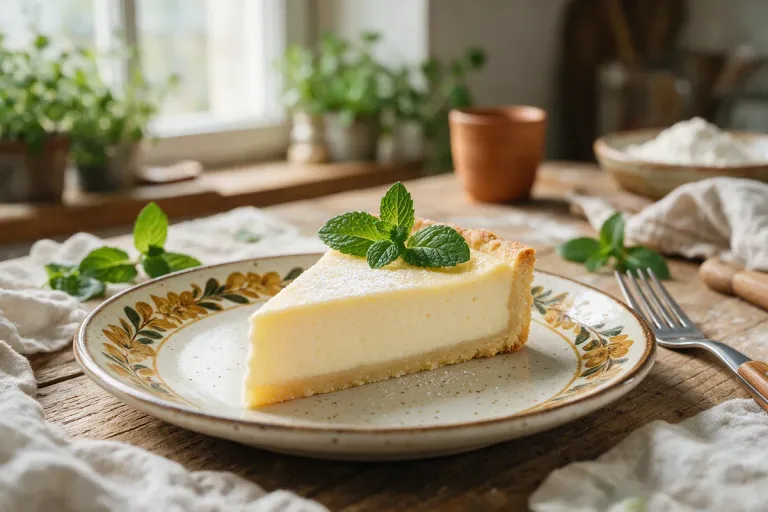
Flaó is Ibiza's traditional cake: a tart of fresh cheese, eggs and mint in a pastry base. It is sweet, and the mint is what surprises people.
Hierbas ibicencas is the island's herb liqueur, anise-based and served as an after-dinner drink. It also has a protected geographical indication.
Ordering Balearic food abroad
Few Spanish restaurants abroad cook a full Balearic menu. More often you will find one or two island products on an otherwise mixed Spanish menu: sobrasada on toast, ensaimada at breakfast, a wedge of Mahón on the cheese board. A few habits help:
- Look for the Catalan spellings on menus and labels. Sobrassada and ensaïmada are the same products as sobrasada and ensaimada.
- If a cheese board lists "Mahón", ask how old it is. The young and aged versions taste quite different.
- At a Spanish deli, the IGP or DOP name on the label (Sobrassada de Mallorca, Ensaïmada de Mallorca, Mahón-Menorca) tells you where the product was made.
Where to find a Balearic accent
Three restaurants in our directory describe a Balearic connection in their own records. None of the records lists specific island dishes, so ask what is on the menu.
- Little Spain in Hua Hin is run by owner Vanessa Humbert, whose family runs a restaurant on Menorca. She cooks from her mother's recipes with ingredients imported from Spain.
- Ibérica on Bondi Road in Sydney calls itself a Spanish Mediterranean restobar that pays homage to the Balearic Islands, with decor inspired by Ibiza and Mallorca, seafood and paellas.
- Tagomago on the Palm Jumeirah in Dubai is a Balearic-inspired venue with a restaurant, bar, pool and beach, serving Spanish Mediterranean food.
For the other regions we have covered so far, start with Galician food explained and Basque food explained.