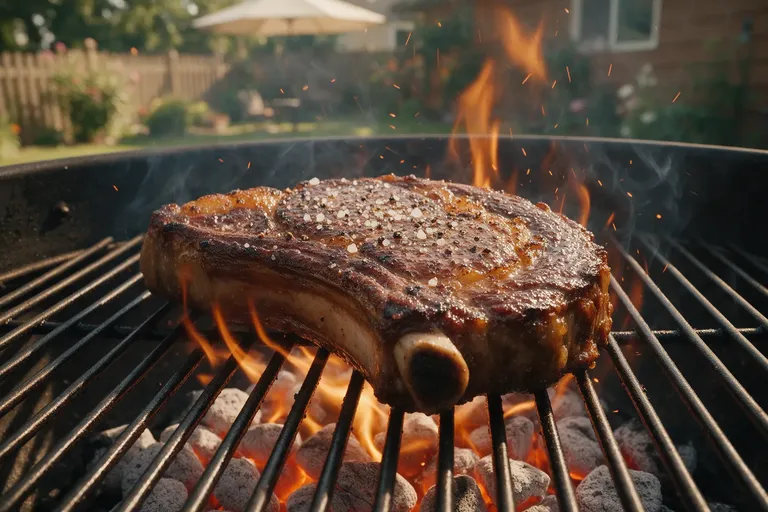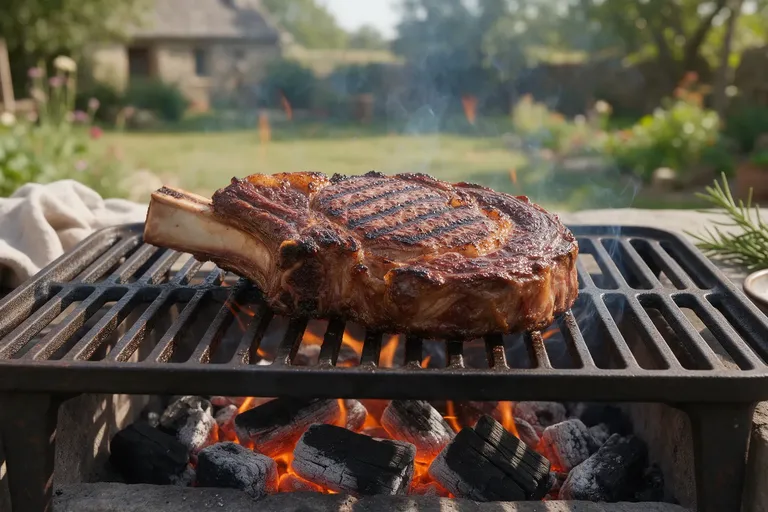
Order steak in a Spanish restaurant and you may be handed something quite different from a single plated portion. The chuletón is a large, thick, bone-in rib steak, grilled hard, sliced and put in the middle of the table. In the Basque Country it goes by txuleta or txuletón, and it is the dish many Basque grill houses and cider houses are built around.
What the words on the menu mean
- Chuleta: a chop. On its own it can mean a lamb or pork chop as well as beef.
- Chuletón: literally "big chop", a thick beef rib steak on the bone.
- Txuleta / txuletón: the Basque spelling of the same thing, common on menus at Basque restaurants abroad.
- Vaca vieja: beef from older cows. In Galicia and the Basque Country this meat is prized for its flavour and its yellow fat.
- Rubia gallega: a cattle breed from Galicia. "Galician steak" on a menu tells you where the beef comes from, not always the breed, so ask if it matters to you.
- Asador: a grill house or roasting house. In the north it usually means meat and fish cooked over coals.
Other cuts appear too, such as solomillo (tenderloin) and entrecot (a boneless steak), but the bone-in rib is the one people mean when they talk about a Spanish steak.
How it is cooked and served
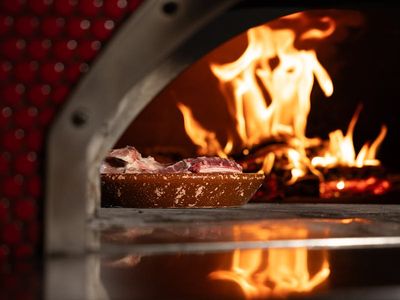
The traditional method is simple. The steak is seasoned with coarse salt and grilled over charcoal or wood embers until the outside is dark and the middle is still red. It then comes to the table sliced, with the bone alongside. Some places serve the slices on a very hot plate so each diner can cook their pieces a little further if they want.
Sides are kept plain: piquillo peppers, fried potatoes, a green salad. Our piquillo peppers guide explains those.
In a Basque cider house, the steak is part of a set menu: a salt cod omelette, fried salt cod with peppers, the txuleta, then Idiazábal cheese with quince paste and walnuts. Our Spanish cider guide covers the cider side of that meal.
How to order one
- Check the price unit. Chuletón is often listed per kilo, or as "S/M" (según mercado, at market price). The final bill depends on the piece you get.
- Ask the weight. A single steak is usually big enough for two or more people. Ask how much it weighs before you agree.
- Say how you want it. Poco hecho means rare, al punto is somewhere around medium, and muy hecho or bien hecho means well done. Kitchens differ, so describe what you want if you are unsure. Vuelta y vuelta means seared quickly on each side. Many grills will steer you towards rare, because that is how the dish is traditionally served.
- Order around it. Since the steak is shared, add a few starters and one or two sides rather than a main each.
- Pick a red. A Tempranillo-based wine is a common match; see our Tempranillo guide and our tips on ordering wine at a Spanish restaurant abroad.
Where to try it
These venues' own records mention chuletón, txuletón or Spanish steaks. Menus change, so ask what is on the day.
- Txula Steak, New York: its record describes a Basque-inspired steakhouse built around an imported Spanish oven, serving 60-day-aged txuletón ribeyes alongside Ibérico pork and Spanish lamb.
- Sagardi Amsterdam: its record mentions a meat cellar where it dry-ages its txuletón steaks, and a Basque grill. Our Amsterdam Spanish weekend post also covers it.
- Parrillan Borough Yards, London: its record lists Galician steaks among the produce cooked over its wood-fired grill, and says guests on the terrace can grill on their own mini parrillas.
- Plan B, Jakarta: its record lists chuletón among its main dishes, along with piglet and paellas.
- Puerto Getaria, Mexico City: its record lists a charcoal-grilled steak with piquillo peppers and fries.
For other grilled and roasted meats, see our guides to cochinillo, lechazo and the asador and Iberian pork cuts.