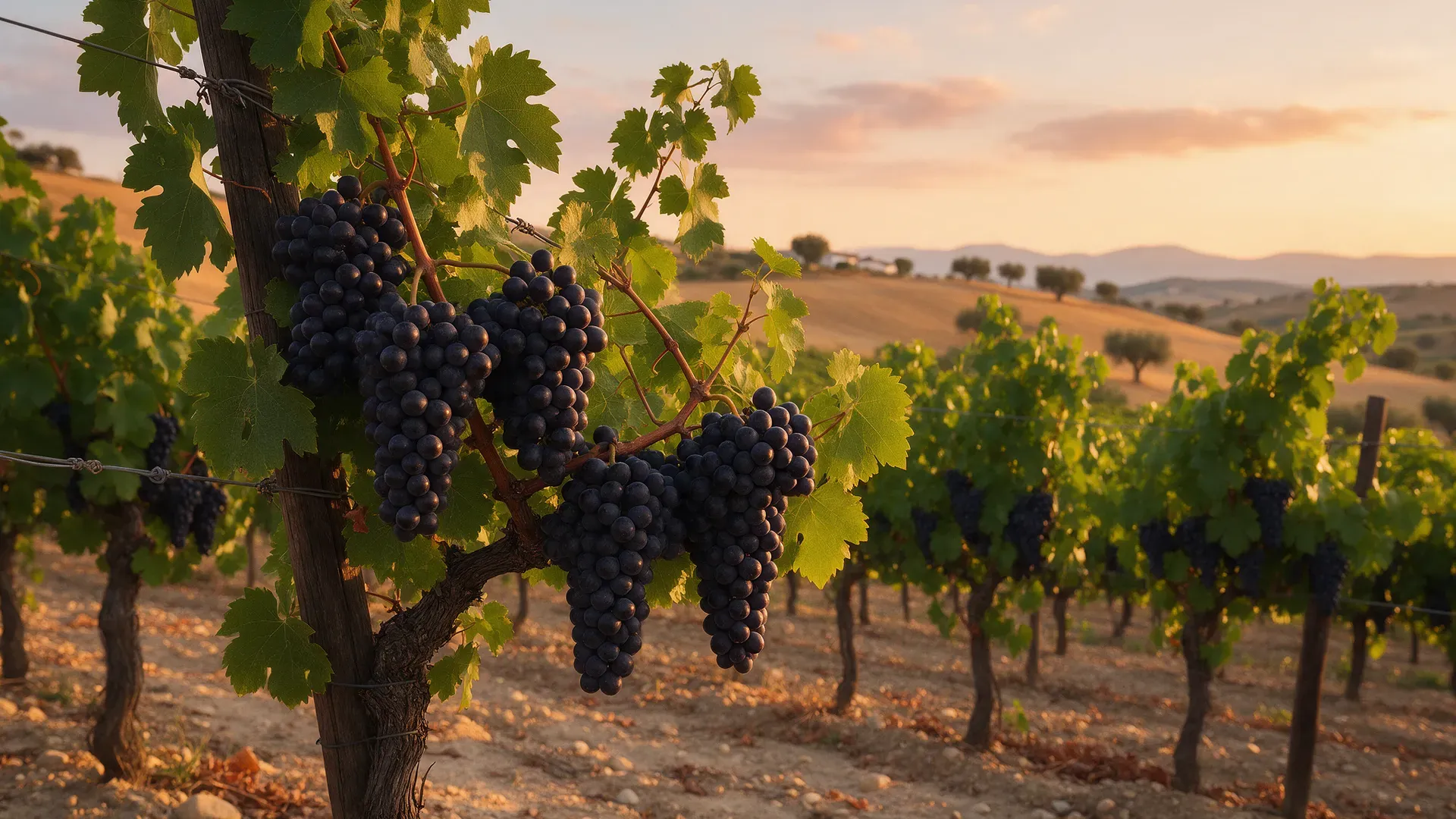
Order a glass of Spanish red in a restaurant abroad and there is a good chance it is Tempranillo, even if the word appears nowhere on the list. Spanish wine is mostly labelled by place, not grape, so the grape hides behind names like Rioja and Ribera del Duero. Learning its aliases makes a Spanish wine list much easier to read.
What Tempranillo is
Tempranillo is a black grape native to Spain and the country's best-known red variety. The name comes from temprano, meaning early, because it ripens earlier than many other red grapes. It is the backbone of most red Rioja and of Ribera del Duero, and it is grown across much of the country.
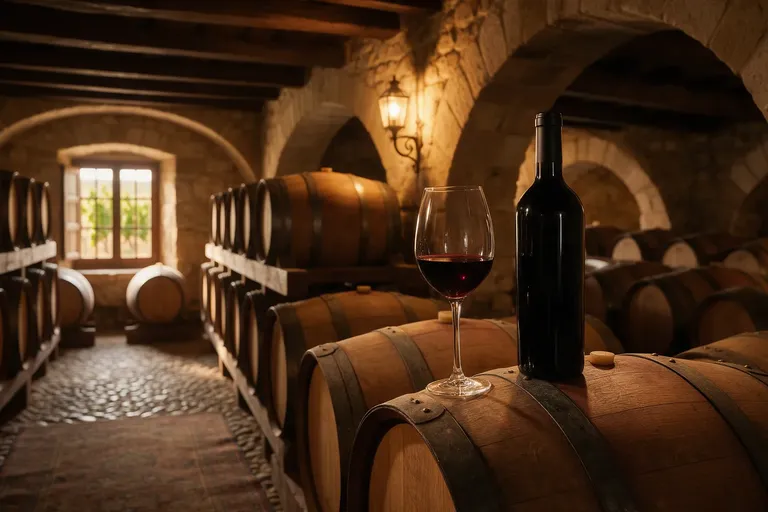
Young Tempranillo tends to be fruity, with red and dark fruit. It takes well to oak ageing, which is why so many Spanish reds are aged in barrel before release. The ageing terms on the label, joven, crianza, reserva and gran reserva, are covered in Crianza, reserva, gran reserva.
The same grape under other names
Tempranillo has been grown in different parts of Spain for a long time, and several regions have their own names for it. These are the ones you are most likely to meet on a wine list:
- Tinto Fino or Tinta del País: Ribera del Duero, in Castilla y León.
- Tinta de Toro: the Toro region, also in Castilla y León.
- Cencibel: La Mancha and Valdepeñas, in central Spain.
- Ull de Llebre: Catalonia. The name means hare's eye.
- Tinta Roriz or Aragonez: Portugal, where it is also an important grape.
If a menu says Tinto Fino or Cencibel and you have enjoyed Tempranillo before, you are on familiar ground.
Rioja and Ribera del Duero
These are the two regions most people associate with the grape, and they use it differently.
Rioja reds are often blends. Tempranillo is usually the main grape, with Garnacha, Graciano and Mazuelo (Carignan) added in different proportions. Some Riojas are 100% Tempranillo. Our Rioja guide goes into the region and its ageing categories.
Ribera del Duero sits on the high plateau along the Duero river. Its reds are made mainly from Tinto Fino, the local name for Tempranillo, and many are made from that grape alone or nearly alone. The region's high altitude means hot days and cool nights during the growing season.
For the wider picture of Spanish regions beyond these two, see Spanish wine beyond Rioja.
How to order it
- Ask for a Rioja or a Ribera if you want Tempranillo. In Spain, people often order red wine by region, as in "un Rioja" or "un Ribera".
- Joven means young: wine released with little or no oak ageing, usually lighter and fruitier.
- Roble, oak, appears on some labels, often for wine with a short time in barrel. It is not an official ageing category the way crianza is.
- Crianza and reserva are official ageing categories, with minimum times in barrel and bottle set by each region's rules.
- If a list shows only region names, ask which of the reds are Tempranillo. Staff should be able to tell you.
Where to try it
These venues in our directory mention Rioja or Ribera del Duero wines, or Rioja's cooking traditions, in their own record:
- Pintxito (Covent Garden, London) has a short list of Basque drinks including Rioja and Txakoli, all served in 75, 125 and 175ml pours, which makes it easy to try more than one.
- Enrique Tomás (Jockey Plaza, Santiago de Surco, Lima) is a wine and tapas bar specialising in ham and cured meats, with Spanish wines from Ribera del Duero and Rioja.
- Galerna (Paris) serves small plates inspired by northern Spain; its chef draws on the culinary traditions of La Rioja, his native region.