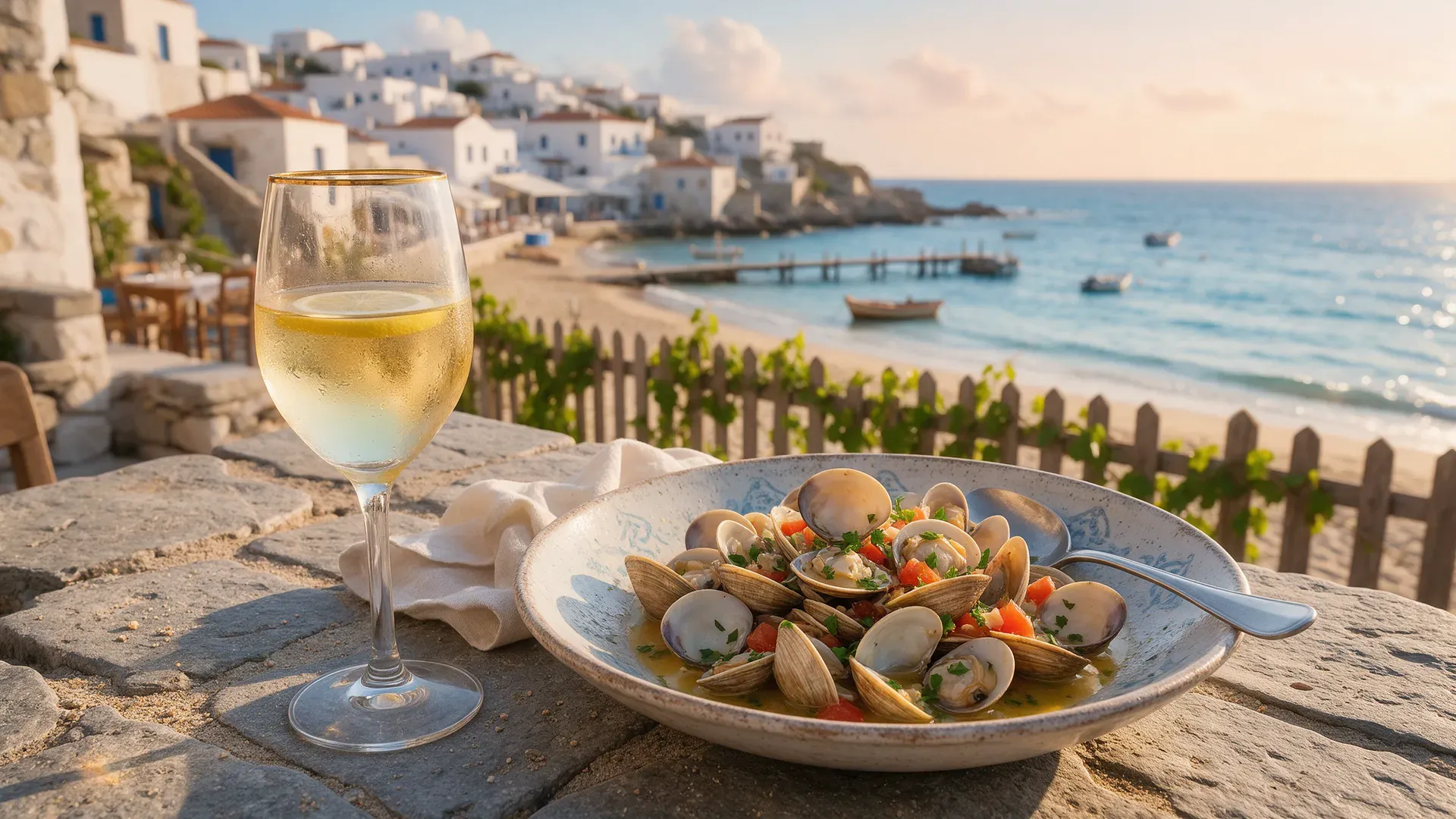
If a Spanish restaurant has a seafood section on its menu, there's a good chance the wine list has an Albariño on it. It's Galicia's best-known white, and a common answer when you ask a Spanish waiter what goes with shellfish. Here's what's behind the name.
The grape and the place
Albariño is a white grape grown mainly in Galicia, in Spain's rainy north-west corner. Its home denomination is Rías Baixas, a DO (denominación de origen) created in 1988 and centred on the province of Pontevedra. The name means "lower estuaries", after the long sea inlets, the rías, that cut into this stretch of coast.
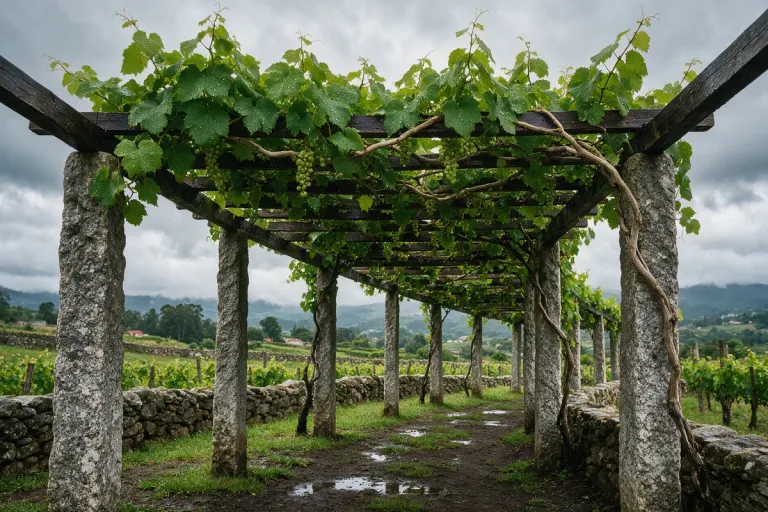
The climate is Atlantic: mild, humid and wet. Growers traditionally train the vines high on pergolas, called parras, held up by granite posts. Lifting the grapes off the ground lets air move through the canopy and helps against rot in a damp region.
Albariño isn't the only grape allowed in Rías Baixas, but it's by far the most planted, and it's the one on most labels.
Reading a Rías Baixas label
The DO is divided into five subzones:
- Val do Salnés, around Cambados on the coast, the largest and most Atlantic.
- O Rosal, near the mouth of the Miño river on the Portuguese border.
- Condado do Tea, inland along the Miño, warmer and drier.
- Soutomaior, the smallest, near Pontevedra.
- Ribeira do Ulla, the newest, in the north of the DO.
Things worth knowing when you pick up a bottle:
- A wine labelled Rías Baixas Albariño must be made entirely from Albariño.
- Bottles labelled with Salnés, Rosal or Condado can be blends, and the Rosal and Condado versions often include local grapes: Loureiro in Rosal, Treixadura in Condado.
- Most Albariño is sold young, within a year or two of the harvest, and that's usually how you'll find it on restaurant lists. Some producers also make versions aged on their lees or in larger vessels that are built to last longer.
Albariño vs Alvarinho
Cross the Miño into Portugal and the same grape is called Alvarinho. It's grown in the north of the Vinho Verde region, most famously around Monção and Melgaço. If a restaurant abroad lists an Alvarinho, it's the same variety from the Portuguese side of the river, made under Portuguese rules.
The wider Vinho Verde region also produces lighter, often slightly spritzy blends that aren't Alvarinho at all, so read the label rather than assume.
What to eat with it
Albariño is usually dry, with fresh acidity and aromas that tend towards citrus, stone fruit and flowers. That acidity is why it's matched with seafood so often. Galician pairings to look for on a Spanish menu:
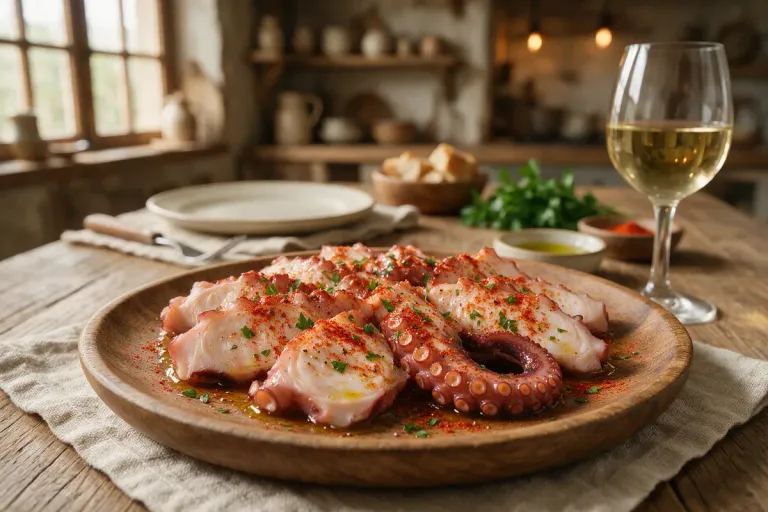
- Pulpo a la gallega: boiled octopus with olive oil, paprika and salt.
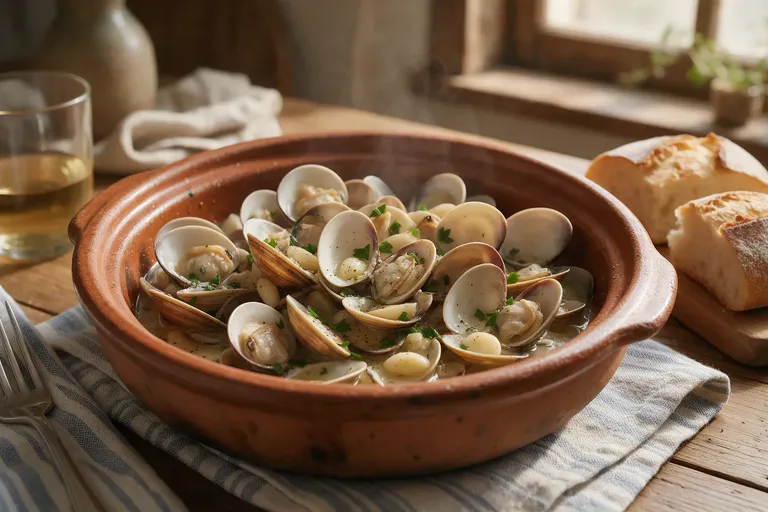
- Almejas a la marinera and mejillones a la marinera: clams or mussels in a wine and garlic sauce.
- Percebes, goose barnacles, if you ever see them.
- Empanada gallega, the Galician pie, often filled with tuna or seafood.
Serve it cold but not ice-cold. Straight out of a very cold fridge, most of the aroma is muted.
In Galicia, the coastal town of Cambados holds a Festa do Albariño every summer. For the rest of the Galician table, see our guide to what to order at a Galician tavern.
Where to look for it abroad
These venues' own directory records mention Albariño or Rías Baixas. Only the first mentions drinking it with food, so at the other two, ask what's open:
- MoVida Next Door, Melbourne: an Andalusian-style bar on Flinders Street where seafood cooked a la plancha is washed down with ice-cold fino or Albariño.
- Vega, Mexico City: part of the Castellano Group. It cooks clams in Albariño and lists more than 80 Spanish wines and spirits.
- Restaurante Guria, Mexico City: a Basque contemporary restaurant whose wine list includes Rías Baixas along with Rioja, Ribera del Duero, Rueda, Txakoli, Priorat and more.
For other Spanish whites worth knowing, see our guides to txakoli and Spanish wine beyond Rioja.