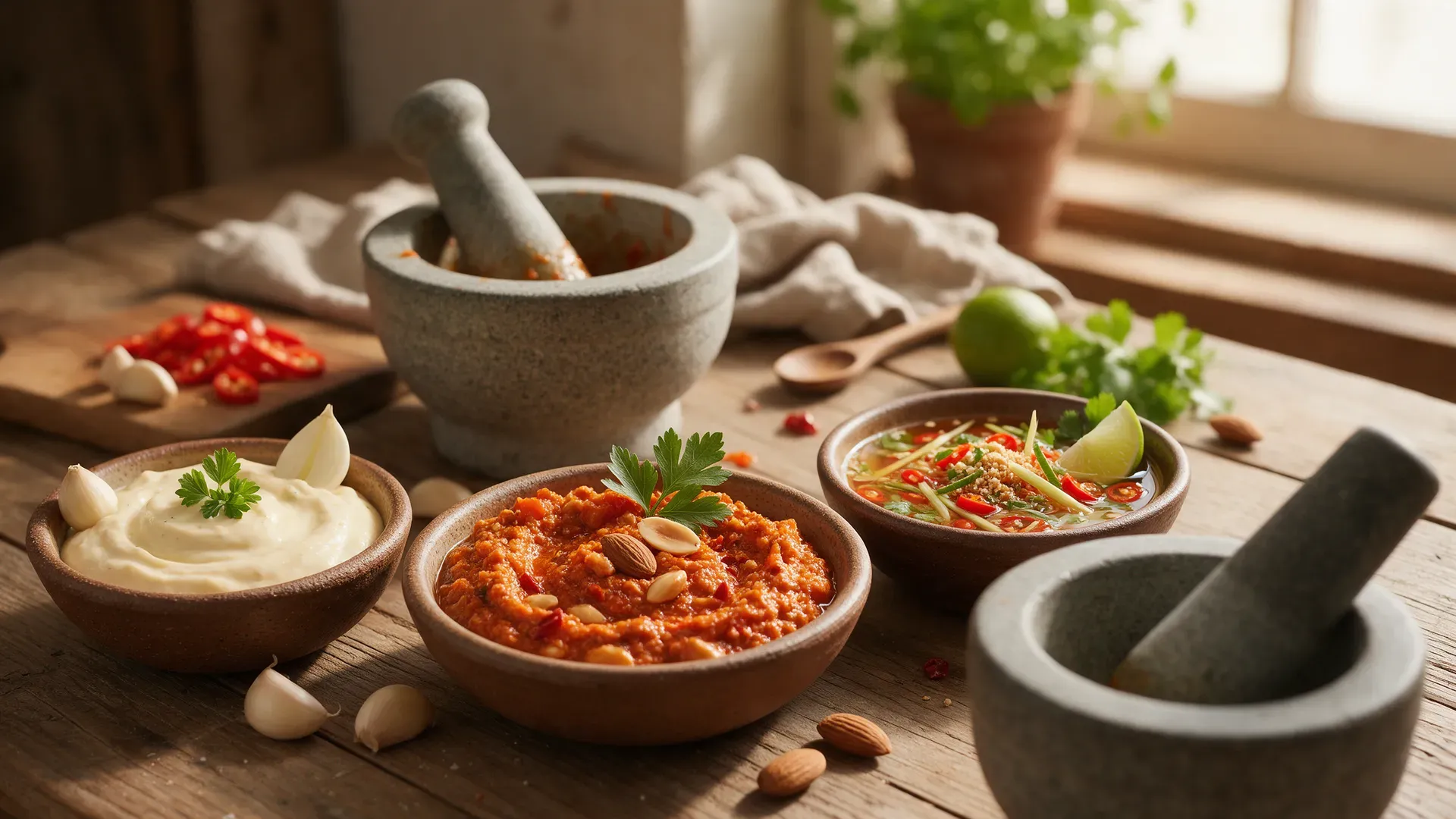
Spanish and Thai cooks both use a mortar for some of their sauces. This post compares two Spanish sauces, alioli and romesco, with two Thai dipping sauces, nam jim jaew and nam jim seafood. All four are served alongside grilled food so diners can add as much as they want. After that they go different ways. The two Spanish sauces get their body from olive oil, nuts and bread. The two Thai sauces are thin and sharp, built on fish sauce, lime, chilli and sugar. Recipes vary from cook to cook; what follows are the standard versions.
Alioli: garlic and oil
The name is Catalan, all i oli, garlic and oil, and that is the traditional recipe. Garlic is pounded to a paste with salt, then olive oil goes in a few drops at a time while you keep working the pestle until the sauce thickens. Done by hand it is pungent, dense and easy to split. Many restaurants make alioli with egg yolk, which makes it much easier to emulsify and closer to a garlic mayonnaise.
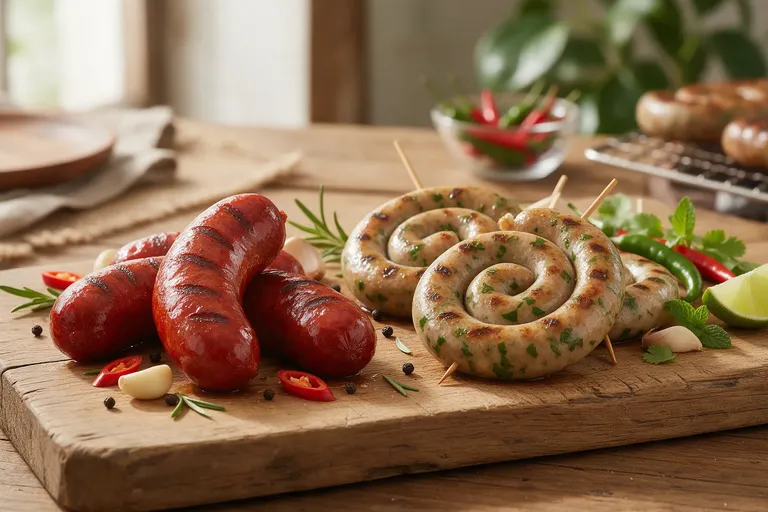
In Spain it goes with grilled meat and sausages, with rice dishes such as arroz negro, and with fried potatoes, where it often sits next to or in place of the spicy sauce on patatas bravas.
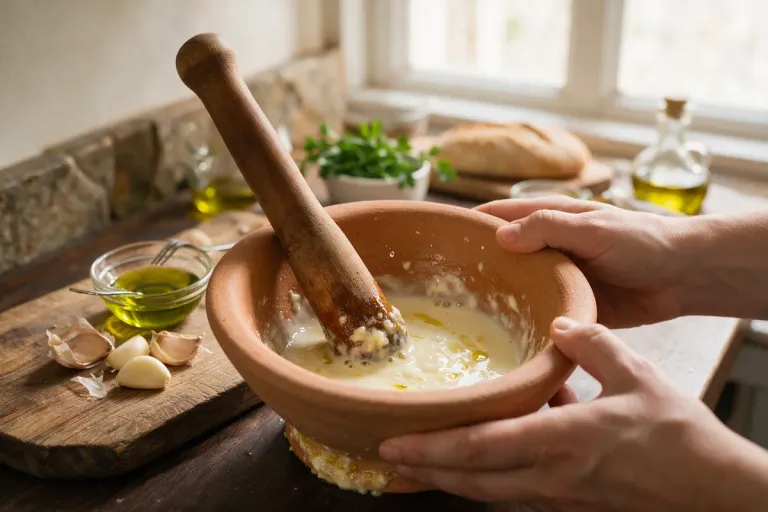
Romesco: peppers, nuts and bread
Romesco comes from Tarragona in southern Catalonia. The base is dried ñora peppers (small, round, sweet and mild), roasted tomatoes and garlic, toasted almonds or hazelnuts, a piece of fried or toasted bread to thicken it, olive oil and a splash of vinegar. Pounded or blended, it ends up coarse and brick red.
It is served with grilled fish and grilled vegetables. Calçots, the long spring onions charred over fire at a Catalan calçotada, are dipped in a closely related sauce, often called salvitxada.
Nam jim: Thailand's dipping sauces
Nam jim simply means dipping sauce, and Thai cooking has a lot of them. Two you will see often:
- Nam jim jaew. The Isan sauce for grilled meat such as gai yang (grilled chicken) and kor moo yang (grilled pork neck). Fish sauce, lime juice, dried chilli flakes, a little sugar and khao khua, toasted ground rice, which gives it a nutty, slightly gritty texture.
- Nam jim seafood. Green chillies, garlic and coriander pounded together, then loosened with lime juice and fish sauce and balanced with sugar. Hot and sour, for grilled prawns, squid and fish.
The simplest of all is nam pla prik, fish sauce with sliced chillies and often a squeeze of lime, a common table condiment at Thai meals.
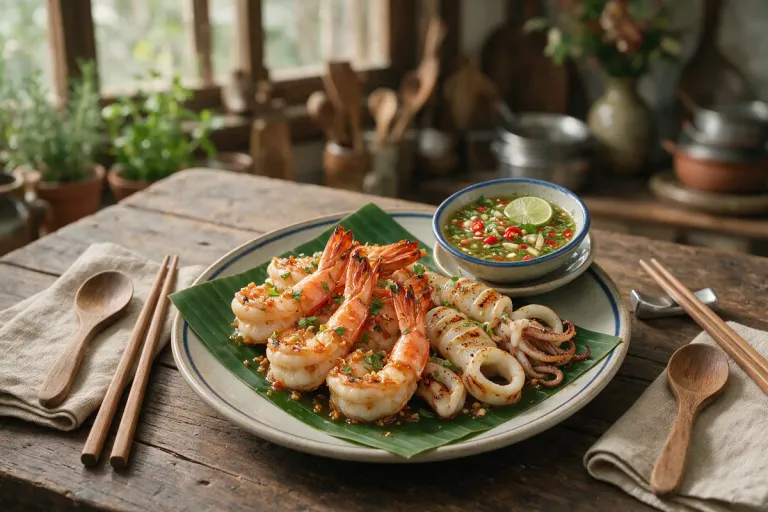
Where the two traditions meet
Both kitchens put a sauce next to grilled food. Spain pairs alioli or romesco with grilled meat, fish and vegetables. Thailand pairs nam jim jaew with grilled chicken and pork and nam jim seafood with grilled shellfish.
The difference is in the base. Alioli is an emulsion of oil, and romesco is thickened with nuts and bread, so both cling to food and add richness. The two Thai sauces are liquid and work by contrast: salt from fish sauce, sourness from lime, heat from chilli, a little sweetness to round it off.
A tip for Thai diners in a Spanish restaurant: use alioli sparingly, because it is rich and very garlicky. Romesco has almost no chilli heat, since ñoras are mild. If you want heat, look for brava sauce or pickled guindilla peppers.
Where to try them
These venues in our directory name alioli or romesco in their own listings:
- Poster Bar by José, London: spicy prawn fritters with lemon alioli, at the Royal Academy of Arts on Burlington Gardens.
- Brasa, Washington DC: open-fire cooking, with butifarra (Catalan sausage) with mongetes (white beans) and alioli among its classics.
- Padron, Warsaw: its listing names padron peppers with romesco.
For Spanish restaurants in Thailand, start with our Bangkok page.