Castilla y León covers most of Spain's northern plateau and is the country's largest region by area. It has nine provinces: Ávila, Burgos, León, Palencia, Salamanca, Segovia, Soria, Valladolid and Zamora. Winters are long and cold, and the cooking reflects it, with roasts, cured meats, pulses and bread at its core. These are the dishes to look for on a menu.
The roasts: lechazo and cochinillo
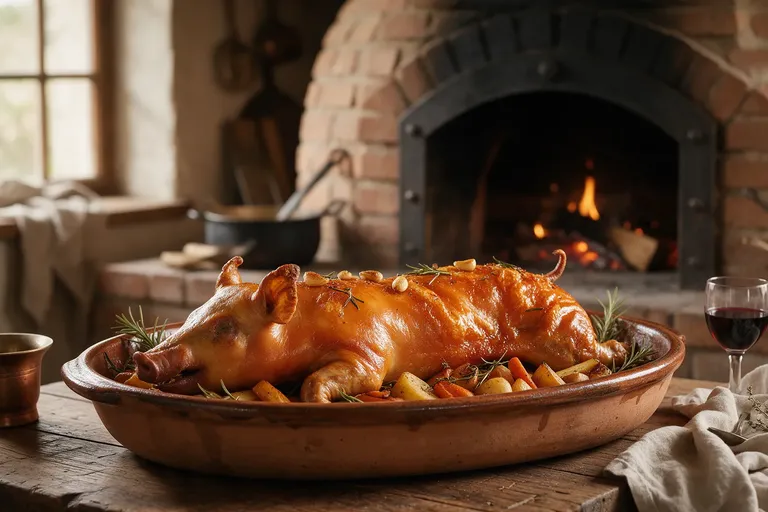
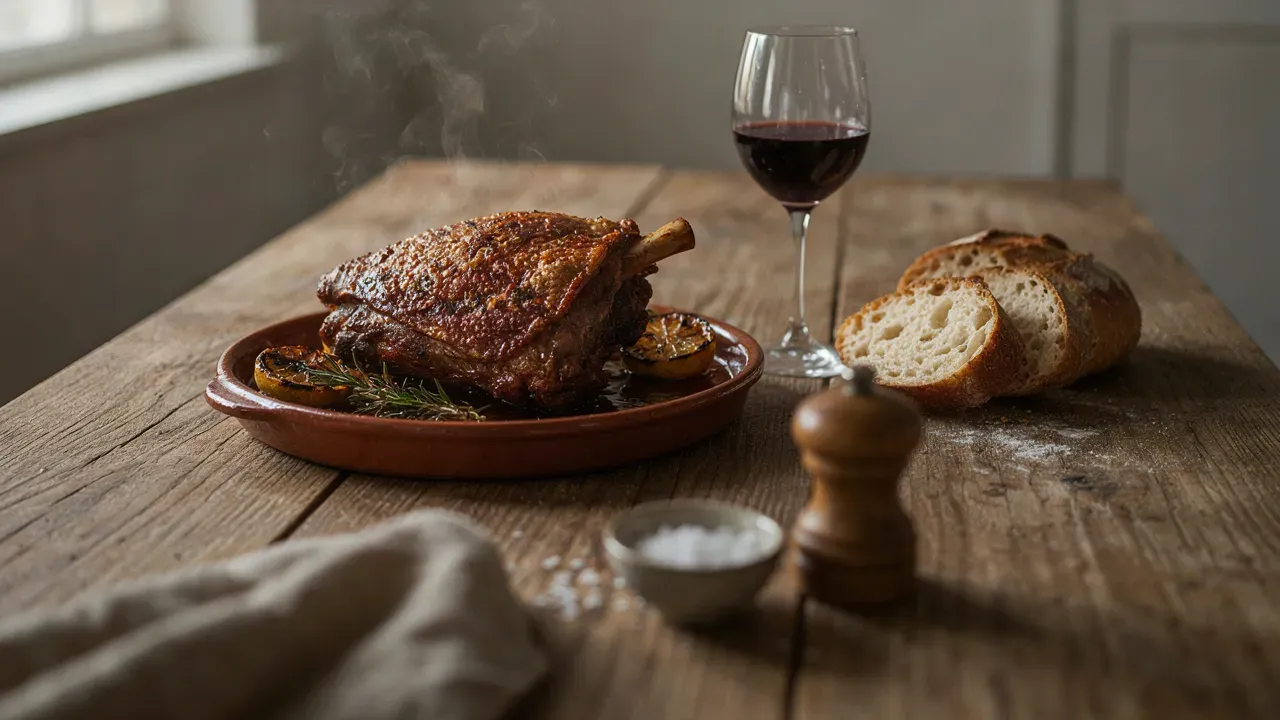
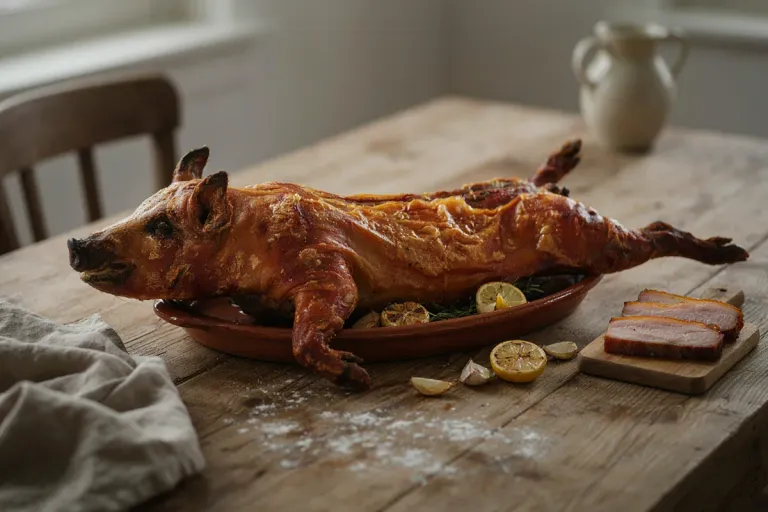
The region's most famous dishes come out of wood-fired ovens. Lechazo is milk-fed lamb, traditionally roasted in a clay dish with little more than water and salt. Aranda de Duero in Burgos and Sepúlveda in Segovia are two towns known for their asadores. Cochinillo, suckling pig, is the speciality of Segovia. We cover both in more detail in our piece on Castile's wood-oven roasts.
Both are usually ordered by the portion or by the quarter, and a roast is often the whole meal, with a salad and bread on the side.
Sausages and cured meats
Morcilla is made all over Spain, but the Burgos version is the one most people know. Morcilla de Burgos is filled with rice and onion as well as blood, and it is usually sliced and fried until the outside crisps.
Cecina de León is beef that is salted, smoked and air-cured, then sliced thin like ham. From the Bierzo area of León comes botillo, pork pieces stuffed into a casing, smoked and then boiled, traditionally served with potatoes and cabbage. Salamanca province is home to Guijuelo, one of the main protected names for Iberian ham.
Pulses, soups and the cold-weather table
Pulses matter here. Judiones de La Granja are large white beans from Segovia, stewed with chorizo and other pork. Salamanca's La Armuña area is known for lentils and Fuentesaúco in Zamora for chickpeas, and both have protected names.
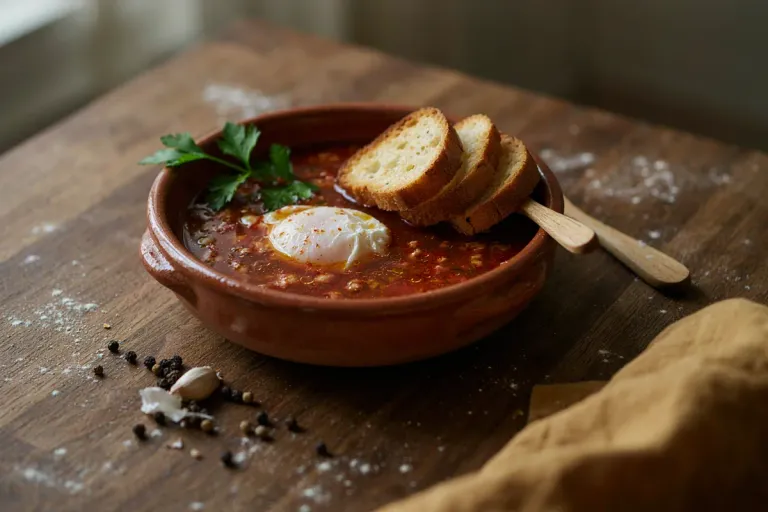
Sopa de ajo, also called sopa castellana, is a garlic soup made with stale bread, pimentón and usually an egg, sometimes with a little ham.. It is a winter dish.
Cheese, beef and sweets
Zamorano is a hard sheep's milk cheese from Zamora, and Valdeón is a blue cheese from the mountains of León. Ávila has its own protected beef, from the Avileña-Negra Ibérica breed, often served as a chuletón. For dessert, Ávila is known for yemas de Santa Teresa, small sweets made from egg yolk and sugar, and Astorga in León for mantecadas, a kind of buttery sponge cake.
The region also makes wine: Ribera del Duero, Rueda, Toro, Cigales and Bierzo are all here. In the city of León, bars are known for serving a free tapa with each drink.
Where to try Castilian cooking abroad
- La Caja de Música, Taipei: founded in 2011 by two Castilian-Leonese chefs, from Valladolid and Burgos (our profile).
- El Patio, Bonn: a family restaurant whose owners are from Salamanca, with many Castilian specialities and a wood-fired oven used for dishes not on the daily menu.
- La Cocina del Bizco, Mexico City: a tavern focused on the cooking traditions of Madrid and Castilla.
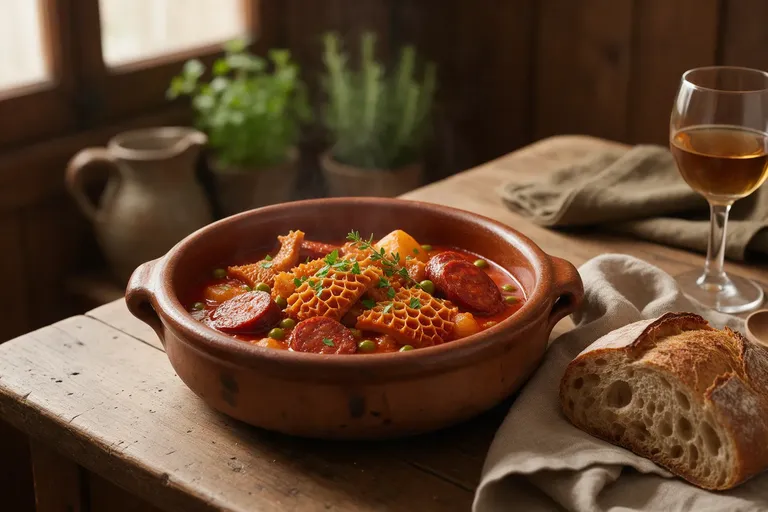
- La Encina, Bogotá: the menu lists cochinillo segoviano alongside paella, callos and rabo de toro.